
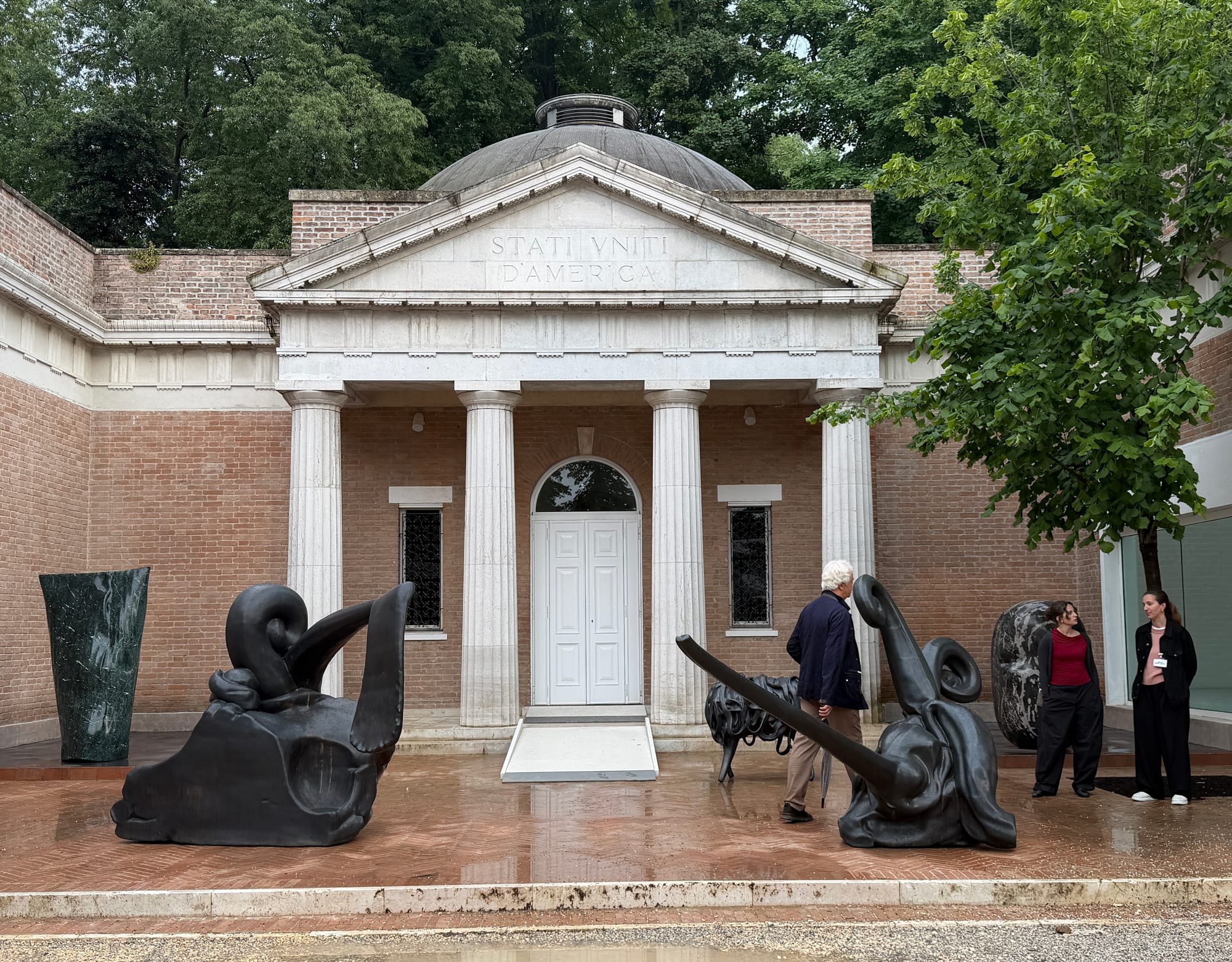
The US Pavilion at the 2026 Venice Biennale features sculptor Alma Allen's exhibition "Call Me the Breeze," curated by Jeffrey Uslip. The show presents untitled, amorphous sculptures in bronze, wood, and stone, including Colorado Yule marble. The selection process was controversial: after the Trump administration excluded the National Endowment for the Arts, the State Department initially picked artist Robert Lazzarini and curator John Ravenal, but that plan collapsed. The American Arts Conservancy, a new nonprofit led by Jenni Parido (a former pet food store operator with Mar-a-Lago ties), then took over, hiring Uslip, who approached Barbara Chase-Riboud and William Eggleston before settling on Allen. Donors include businessman John Phelan and fashion designer Tommy Hilfiger.
This matters because the US Pavilion at the Venice Biennale is a high-profile platform for American art on the world stage. After powerful, historically engaged presentations by Jeffrey Gibson and Simone Leigh in previous editions, critics see Allen's inoffensive, abstract works as a retreat from meaningful cultural dialogue. The chaotic, opaque selection process—marked by political interference and amateur leadership—raises serious questions about how the US represents itself internationally and whether art can be reduced to a decorative commodity for wealthy collectors. The review argues the pavilion reflects a broader cultural blandness and a failure of institutional stewardship.