
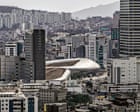
Photographer Paul Tulett has captured the stark, concrete landscapes of South Korea in his new book, *Brutalist Korea*, published by Prestel. The photo series highlights a range of architectural landmarks, from Tadao Ando’s minimalist Jeju Glass House and Zaha Hadid’s futuristic Dongdaemun Design Plaza to the playful geometry of the Paju Kindergarten. Tulett’s work documents how the raw, monumental aesthetic of Brutalism has evolved from the country’s postwar industrialization into a sophisticated tool for modern urban experimentation.
This visual survey matters because it recontextualizes South Korea’s rapid urban development through the lens of architectural preservation and artistic identity. By showcasing both mid-century relics like the Jeju Stadium and contemporary reinventions like MVRDV’s Chungha Building, the collection argues that concrete architecture is a living part of Korean visual culture. It challenges the perception of Brutalism as merely cold or functional, revealing instead a nuanced dialogue between the country's historical memory and its avant-garde future.