
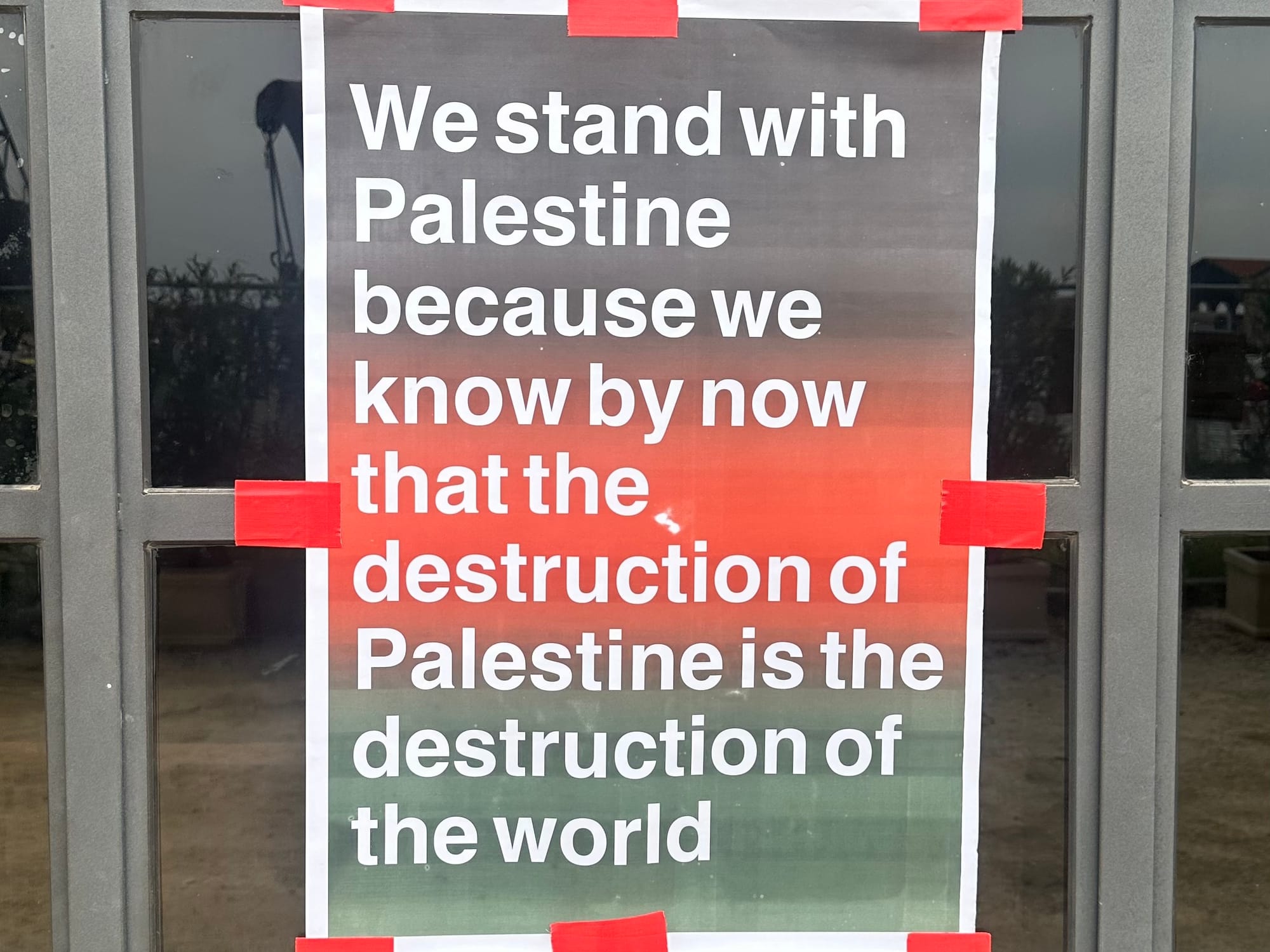
On May 8, 2026, a 24-hour strike organized by the Art Not Genocide Alliance (ANGA) and several Italian activist groups brought the 61st Venice Biennale to a standstill. Approximately 27 of the 100 national pavilions closed fully or partially in solidarity with protesters demanding Israel’s exclusion from the event, including those of Austria, Belgium, France, Great Britain, Japan, South Korea, and Ukraine. Over 3,500 people marched through Venice, with speakers including artist Gabrielle Goliath and curator Caroline Dumalin. The main exhibition, "In Minor Keys," curated by the late Koyo Kouoh, closed by late afternoon, and riot police were stationed outside the Arsenale. The Israeli pavilion, already shuttered during previews, remained closed.
The strike caps weeks of escalating protest at the Biennale, following the resignation of the international prize jury over Golden Lion eligibility rules tied to International Criminal Court charges, a boycott by Italy’s culture minister over Russia’s participation, and the European Commission’s suspension of a €2 million grant to the Biennale Foundation. This action highlights the increasing politicization of major international art exhibitions, as cultural institutions become arenas for geopolitical protest and debates over institutional complicity. The scale of participation—27 pavilions and thousands of marchers—signals a significant shift in how artists and nations leverage the Biennale platform for political advocacy.