
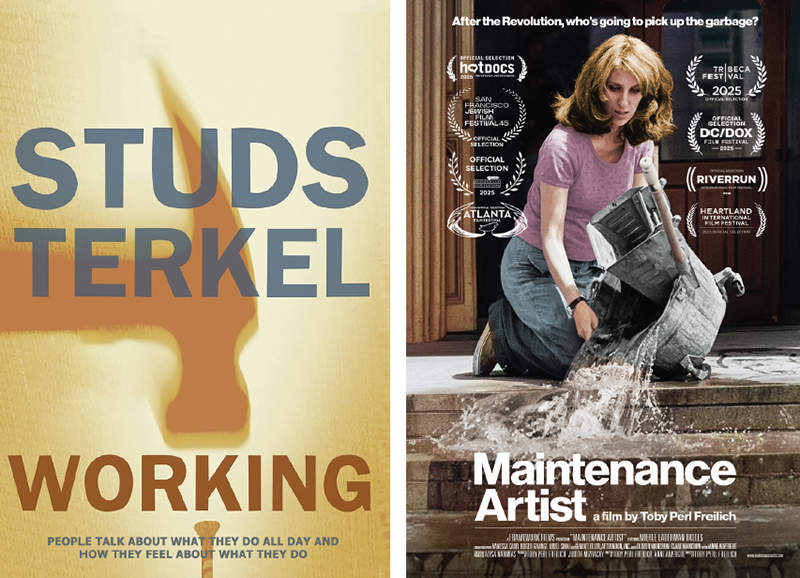
This article explores the work of artist Mierle Laderman Ukeles, who in 1969 wrote her "Manifesto for Maintenance Art" after experiencing a crisis of meaning following the birth of her first child. She proposed that routine maintenance tasks—like cleaning, cooking, and laundry—could be redefined as art when performed in public, particularly in museums. The article traces her early exhibitions at the Wadsworth Athenaeum, where she swept and mopped as performance, and her later projects interviewing passersby on New York City sidewalks and embedding herself in a Manhattan office building, where she invited workers to declare their maintenance tasks art.
The article matters because it connects Ukeles's pioneering maintenance art to broader questions about labor, respect, and social esteem, echoing themes from Studs Terkel's 1974 book "Working." It challenges the art world and society to consider how invisible, repetitive work is valued and whether expressions of respect can translate into better pay and conditions. By framing maintenance as both art and essential labor, Ukeles's work remains relevant to contemporary discussions about care work, economic inequality, and the boundaries of artistic practice.