
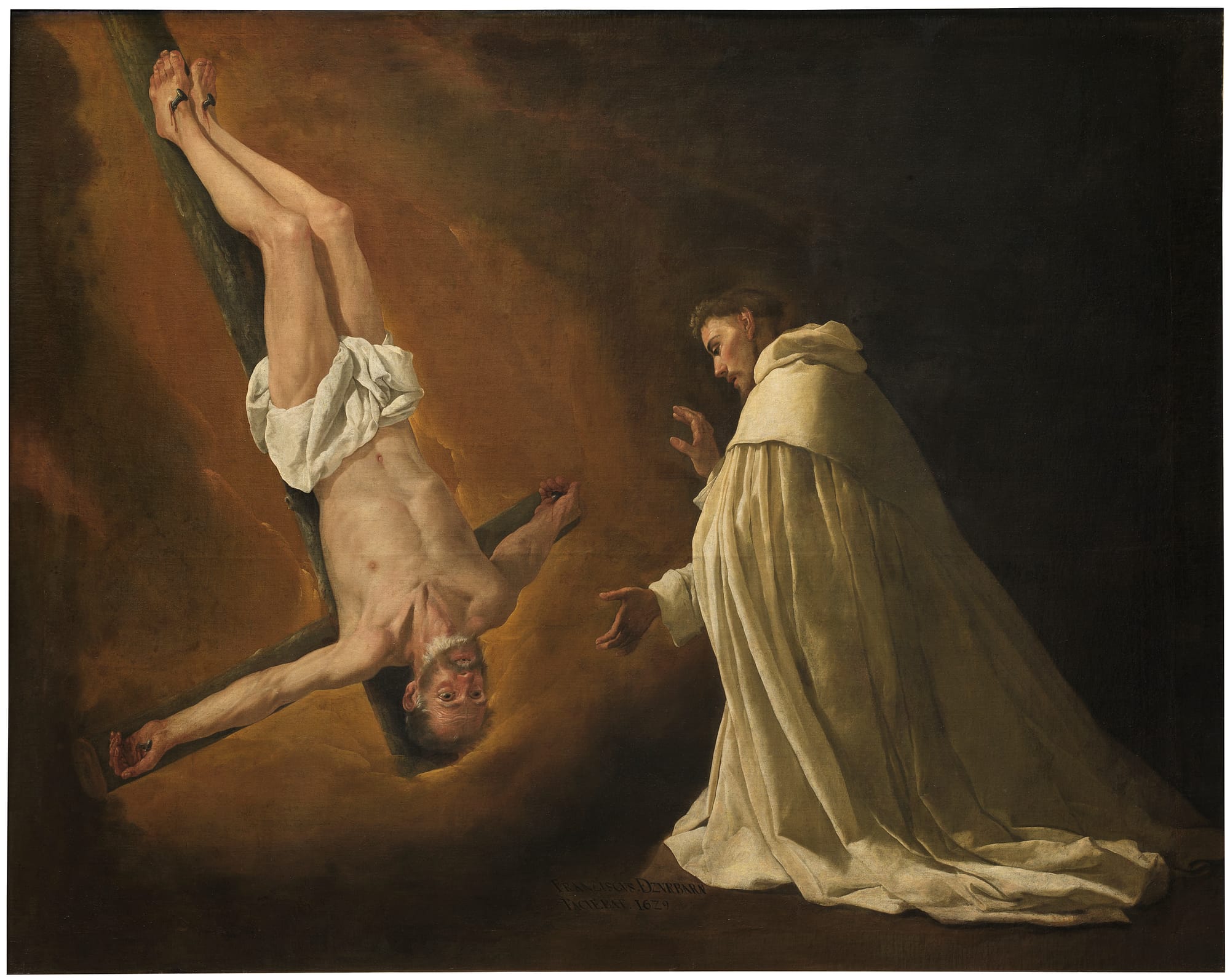
An exhibition of Francisco de Zurbarán's 17th-century religious paintings at London's National Gallery prompts a critic to question whether the artist's personal faith influenced his artistic skill. The show features monumental works from Spanish churches and monasteries, displayed dramatically against black walls, including crucifixion scenes, monks, and saints. The critic notes that no personal records of Zurbarán survive—only contracts—leaving his beliefs unknown, and compares him to Agnolo Bronzino, who painted pious scenes but wrote obscene verses. A small painting of a crucified Christ with a painter, possibly a self-portrait of Bronzino, is presented as ambiguous evidence of faith.
This matters because it challenges the assumption that religious art requires sincere belief from its creator, raising broader questions about the relationship between an artist's personal convictions and the quality or authenticity of their work. The exhibition, which travels to the Louvre and the Art Institute of Chicago, also highlights how imperial wealth and church patronage fueled the production of religious art in 17th-century Spain, with Zurbarán's studio producing 120 works for the Spanish Americas. The review invites viewers to consider whether artistic excellence can be separated from the artist's inner life.