
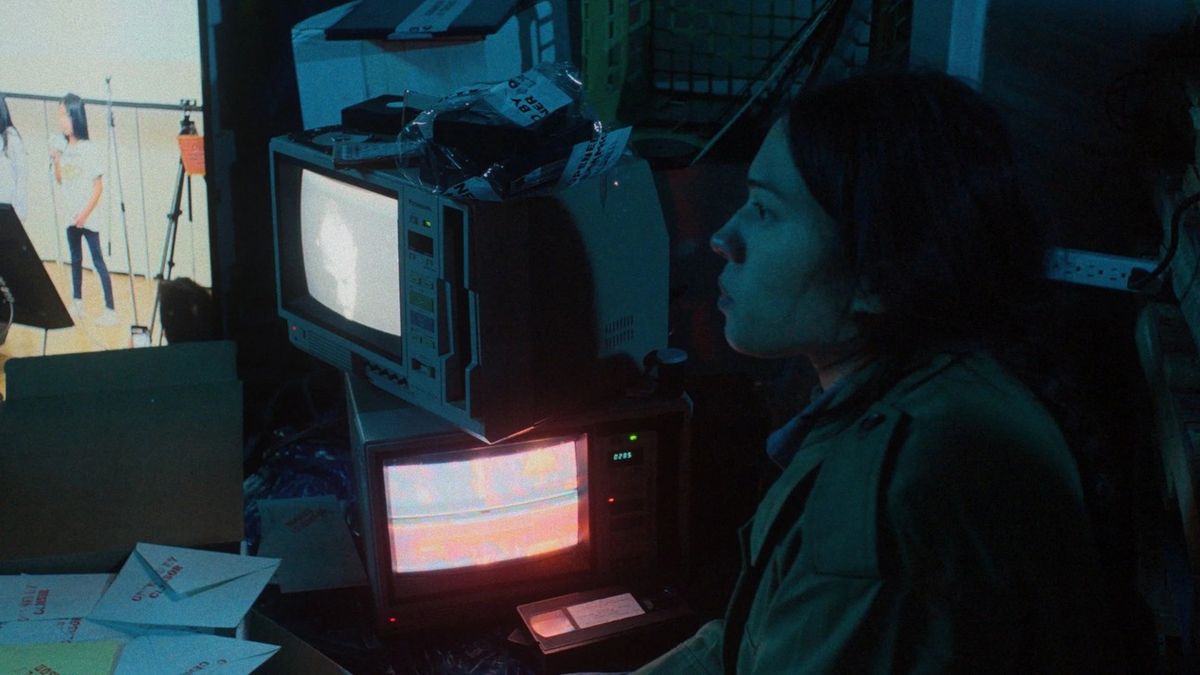
Film Notes has published Qingyuan Deng's essay exploring the intersection of Lacan's concept of retroactive meaning and Eve Kosofsky Sedgwick's distinction between paranoid and reparative reading, as applied to recent artists' films and moving-image installations. The essay examines how works like Alison Nguyen's installation "Perforation, Ellipse" at New York's Storefront for Art and Architecture use cinematic techniques—such as perforations, splices, and missing scenes—to hold the temporal gap between an event and its belated political comprehension, focusing on the censorship of Vietnamese bolero songs after the American War.
This matters because it addresses a critical formal problem in political cinema: how to build structures that can simultaneously accommodate paranoid anticipation and reparative openness to surprise. By analyzing how artists use material destruction, archival fragments, and narrative fiction to create meaning that arrives retroactively, the essay offers a framework for understanding how art can respond to state censorship and historical trauma. The work demonstrates that holes in cultural memory are not voids but generative occasions that reshape meaning over time.