
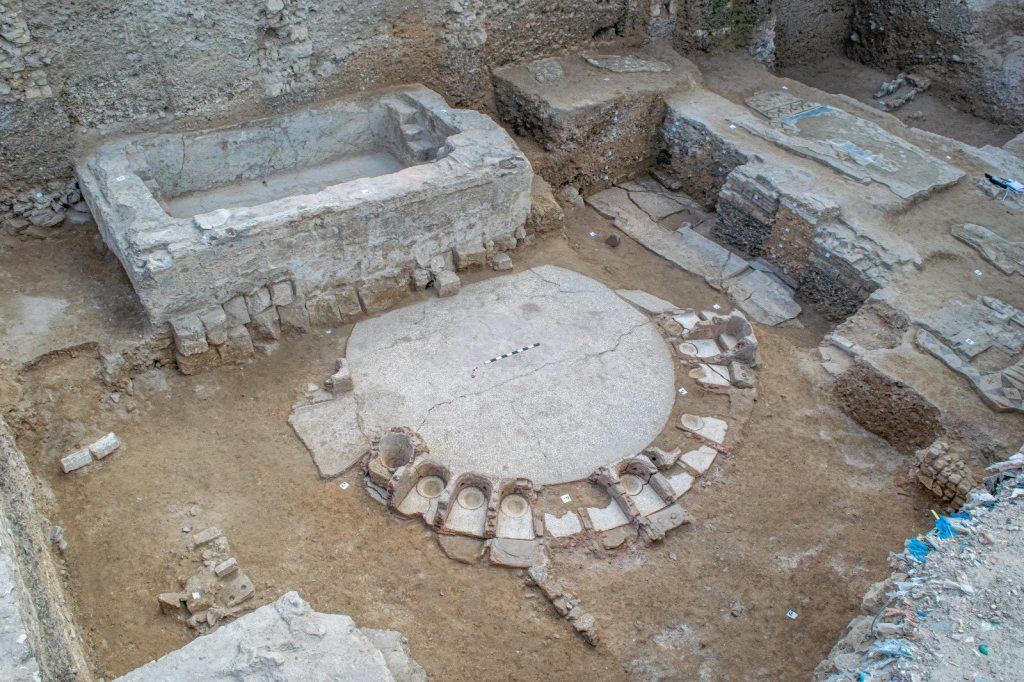
An excavation in the Moharam Bek neighborhood of Alexandria, Egypt, has uncovered a significant trove of artifacts from the Greek, Roman, and Byzantine periods, including statues of deities such as Bacchus, Asclepius, and Minerva, as well as coins, lamps, ceramic vessels, a public bathhouse, mosaic flooring from a Roman villa, and advanced water systems. The discovery was announced by Egypt’s Ministry of Tourism and Antiquities and reported by Greek City Times, with officials from the Supreme Council of Antiquities highlighting the site’s comprehensive view of ancient residential and service architecture.
The find matters because it provides rare, layered evidence of urban life in ancient Alexandria over roughly 400 years, demonstrating the city’s role as a sophisticated urban center with architectural innovation and a high standard of living. The artifacts will help researchers reconstruct the city’s layout and understand how its inhabitants adapted across the Ptolemaic, Roman, and Byzantine eras, with plans to display some items at the Graeco-Roman Museum in Alexandria.