
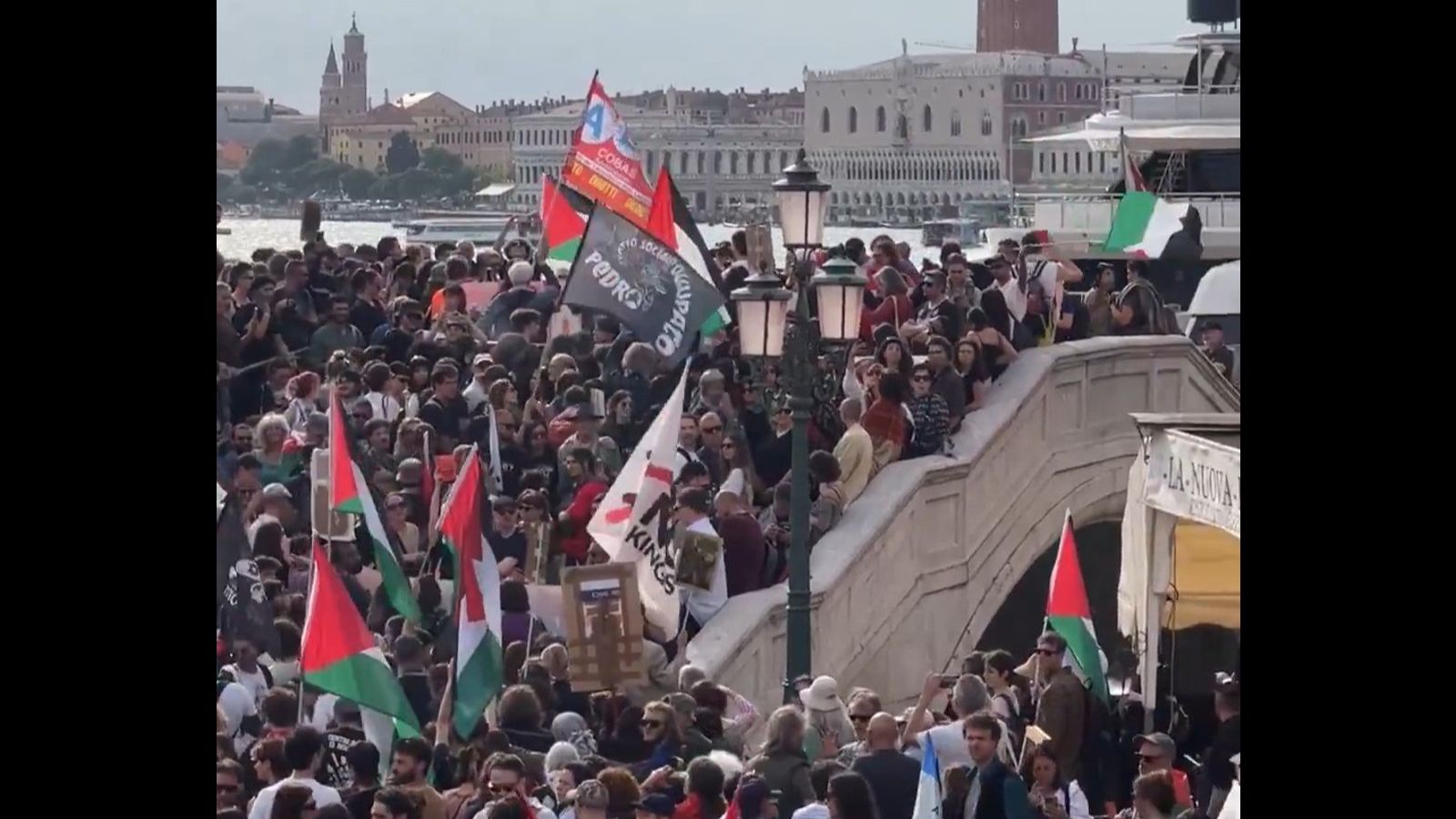
Thousands of artists, cultural workers, and protesters marched through Venice on May 8, 2026, one day before the opening of the 61st Venice Biennale, to protest the Israeli genocide in Gaza and Lebanon. The strike, organized by the Art Not Genocide Alliance (ANGA), led to the closure of approximately 27 of the Biennale's 100 national pavilions, with signs reading "We Stand with Palestine." The Israeli pavilion remained closed and guarded by armed police, who clashed with protesters. Meanwhile, the European Commission threatened to suspend €2 million in EU grants to the Biennale Foundation over its decision to allow Russia to participate, citing incompatibility with EU sanctions and the invasion of Ukraine.
This protest marks the largest political action in the history of the Venice Biennale, highlighting the growing intersection of global art events with urgent geopolitical crises. The strike and calls for boycott reflect a deepening divide within the art world over institutional complicity in war and human rights abuses, particularly regarding Israel's actions in Gaza and the Trump administration's cultural policies. The simultaneous pressure from European institutions against Russia's participation underscores the Biennale's role as a contested diplomatic stage, where funding and political condemnation increasingly shape exhibition decisions.