
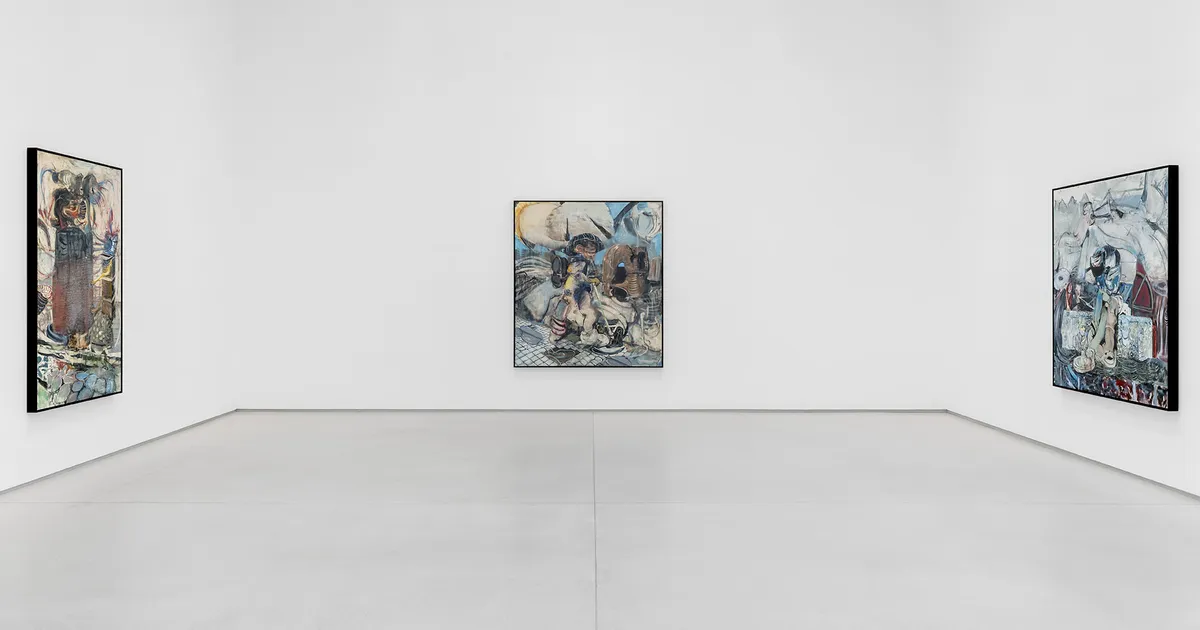
Adrian Ghenie's exhibition "Roman Campagna" at a Paris gallery presents a series of paintings and charcoal drawings that subvert the romantic cliché of an artist's transformative encounter with Rome. Ghenie populates landscapes inspired by the Appian Way with grotesque, alien-headed figures hunched over smartphones, urinating on monuments, or weeping at sunsets, using brown and grey tones punctuated by bright colors. The works reference Francis Bacon and William S. Burroughs, and include direct allusions to Bacon's reinterpretation of van Gogh's self-portrait, as well as a copy of a Pompeii mosaic. The show also features large charcoal drawings on paper that reveal Ghenie's process of constructing his contemporary, alienated figures.
The exhibition matters because it demonstrates how a leading contemporary painter engages with art history and the eternal theme of Rome while injecting his signature dark, absurdist vision. By juxtaposing ancient ruins with modern technology and grotesque bodies, Ghenie critiques the incongruity of contemporary existence in spaces meant for contemplation. The show also offers insight into his working method through the preparatory drawings, making it significant for understanding his artistic practice and his place in the lineage of painters influenced by Bacon and van Gogh.