
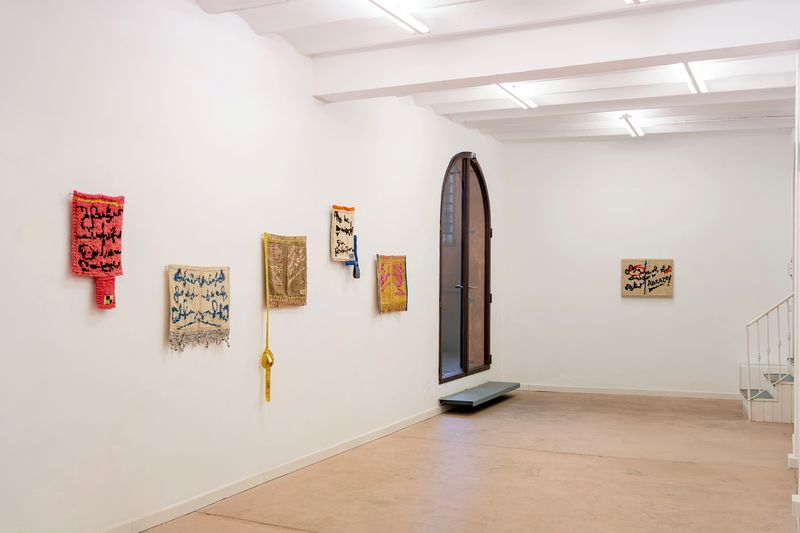
Lucrecia Lionti, an Argentine textile artist from Tucumán, is the subject of a feature examining her solo exhibition "Grafismos desterrados" at Sorondo Projects in Barcelona (2026). The article details how Lionti's practice, spanning over fifteen years, merges modern art with craft, using textiles as a political and affective device. It highlights her involvement since 2018 with the feminist collective La Lola Mora – Trabajadoras de las Artes de Tucumán, and her recent exhibition at MALBA titled "Fabril la mirada." The show presents works where language becomes material—woven, knotted, and frayed—featuring illegible marks that blur writing and drawing, evoking loss and exile.
This matters because Lionti's work challenges entrenched hierarchies in modernism, such as the separation between high art and manual labor, or between art and craft. By appropriating the heroic rhetoric of modern abstraction and infusing it with feminized, domestic, and popular techniques, she critiques the very foundations of modernist purity. Her approach—contaminating modern language with excluded forms of sensibility and work—offers a powerful model for rethinking art's relationship to politics, affect, and labor, particularly from a Latin American feminist perspective. The exhibition at Sorondo Projects marks a culmination of her inquiry into language as texture and structure, pushing the boundaries of textile art into urgent, embodied expression.