
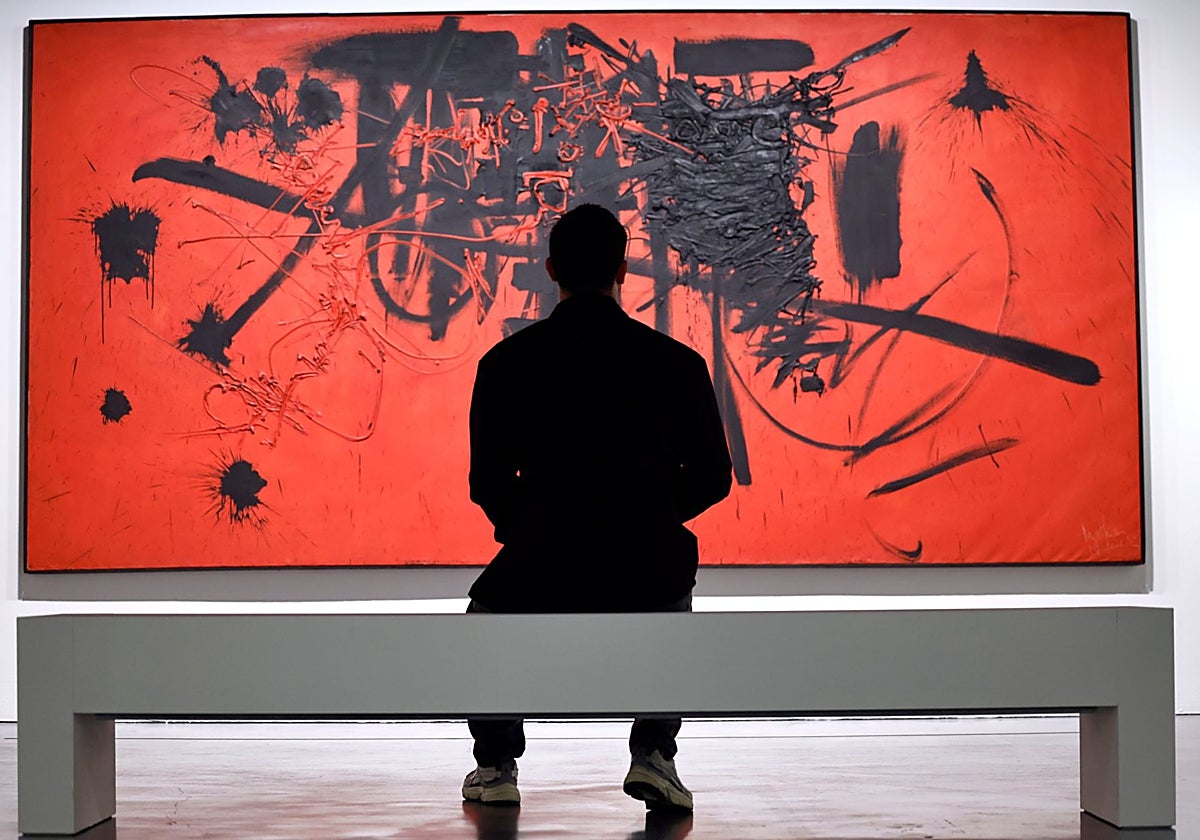
The Centre Pompidou Malaga has opened the exhibition 'Gesture and Matter. International Abstractions (1945–1965)', running until September, featuring around 30 works by 26 artists. The show highlights abstract art as a post-World War II response, with key pieces including Jackson Pollock's 'Number 26A. Black and White' and Kazuo Shiraga's 'Planet Nature', painted with his feet while suspended from ropes. Co-curated by Anne Foucault and Christian Briend, the exhibition traces abstraction's development from Paris and New York to Asia and Europe, emphasizing painting as a full-body, performative act of freedom.
This exhibition matters because it reframes abstraction not as a single movement but as an international trend that emerged from the trauma of war, connecting iconic figures like Pollock with lesser-known innovators such as Shiraga and Wols. By bringing together historic works from the Pompidou Centre in Paris—currently closed for renovation—the show offers a rare opportunity to see masterpieces like Pollock's first French exhibition piece in a new context, underscoring the enduring power of abstract art to express rebellion and liberation across cultures.