
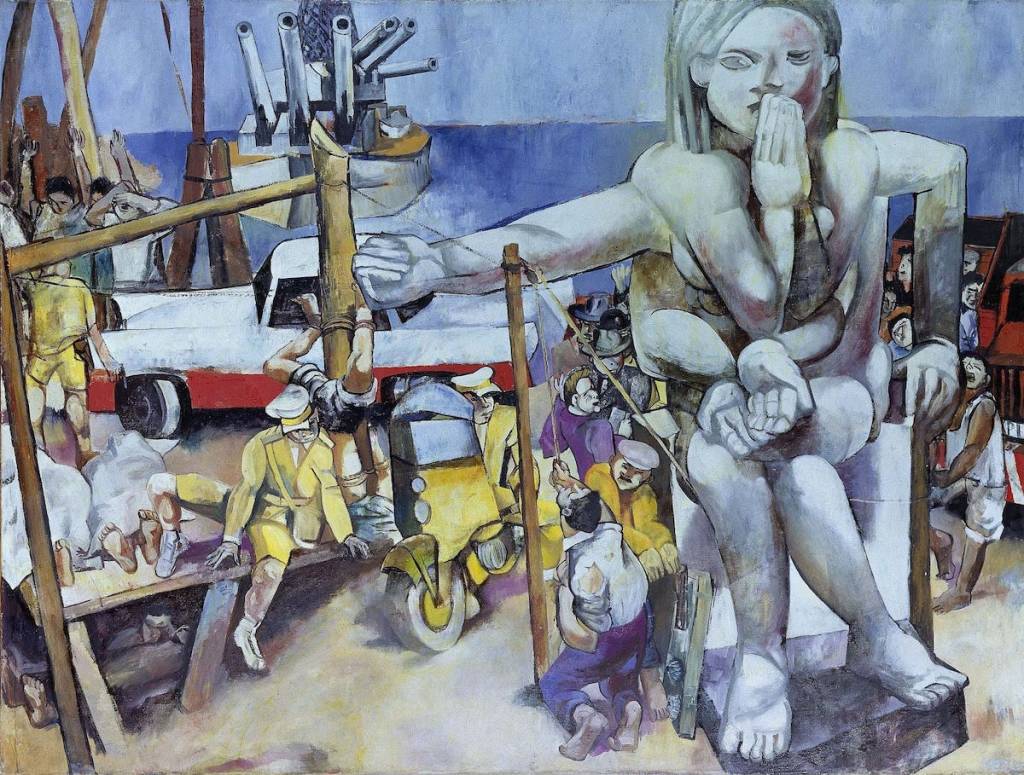
Harald Metzkes, the German painter known for his classically indebted and symbolically rich works created after World War II, died at age 97 in Brandenburg. His death was confirmed by his son, sculptor Robert Metzkes. Metzkes gained prominence in East Germany for rejecting socialist realism, instead developing a distinctive style that combined poetic imagery, references to classical modernism, and deeply symbolic visual worlds. The Neue Nationalgalerie is currently showing his painting "Removal of the Six-Armed Goddess" (1956) in an exhibition titled "Extreme Tension. Art between Politics and Society Collection of the Nationalgalerie 1945–2000."
Metzkes' career matters because he represents a generation of artists who navigated the constraints of East German cultural policy while maintaining artistic independence. His refusal to implement state demands and his creation of a personal "world theater" made him a significant figure in postwar German art. His work, influenced by artists like Max Beckmann and Pablo Picasso and the atmosphere of the first documenta, demonstrates how individual creative vision can persist under political pressure, offering a counter-narrative to state-sanctioned art.