
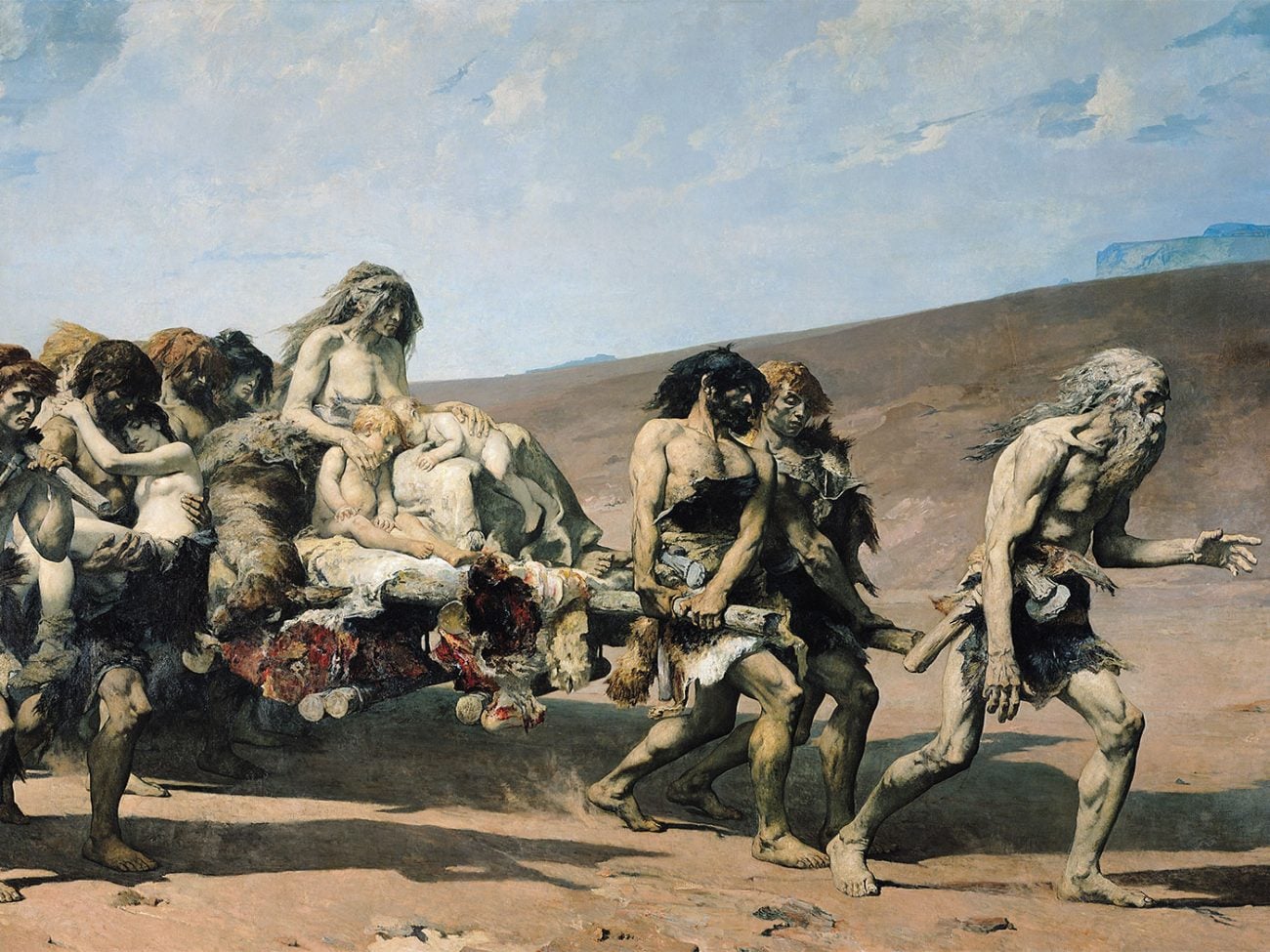
Beaux Arts Magazine analyzes Fernand Cormon's monumental 1880 painting "Caïn," currently held at the Musée d'Orsay. The article describes the scene: a prehistoric, weary clan trudges through a desert, led by a haggard patriarch, with a tired mother on a litter and hunters carrying game. Cormon's work is presented as the antithesis of classical triumph, evoking a melancholic, post-traumatic atmosphere. The painting is linked to the biblical story of Cain, who killed his brother Abel and was condemned to exile, and is accompanied by verses from Victor Hugo's poem "Conscience."
The analysis matters because it repositions a major 19th-century academic painting within contemporary discourse on the origins of human consciousness and civilization. By focusing on Cormon's depiction of prehistoric humanity as a state of exhaustion and moral burden, the article challenges traditional heroic narratives of progress. It also highlights how a Salon painting can engage with deep philosophical and psychological questions about guilt, exile, and the human condition, making it relevant to current art historical and cultural debates.