
Dolce Vita war gestern
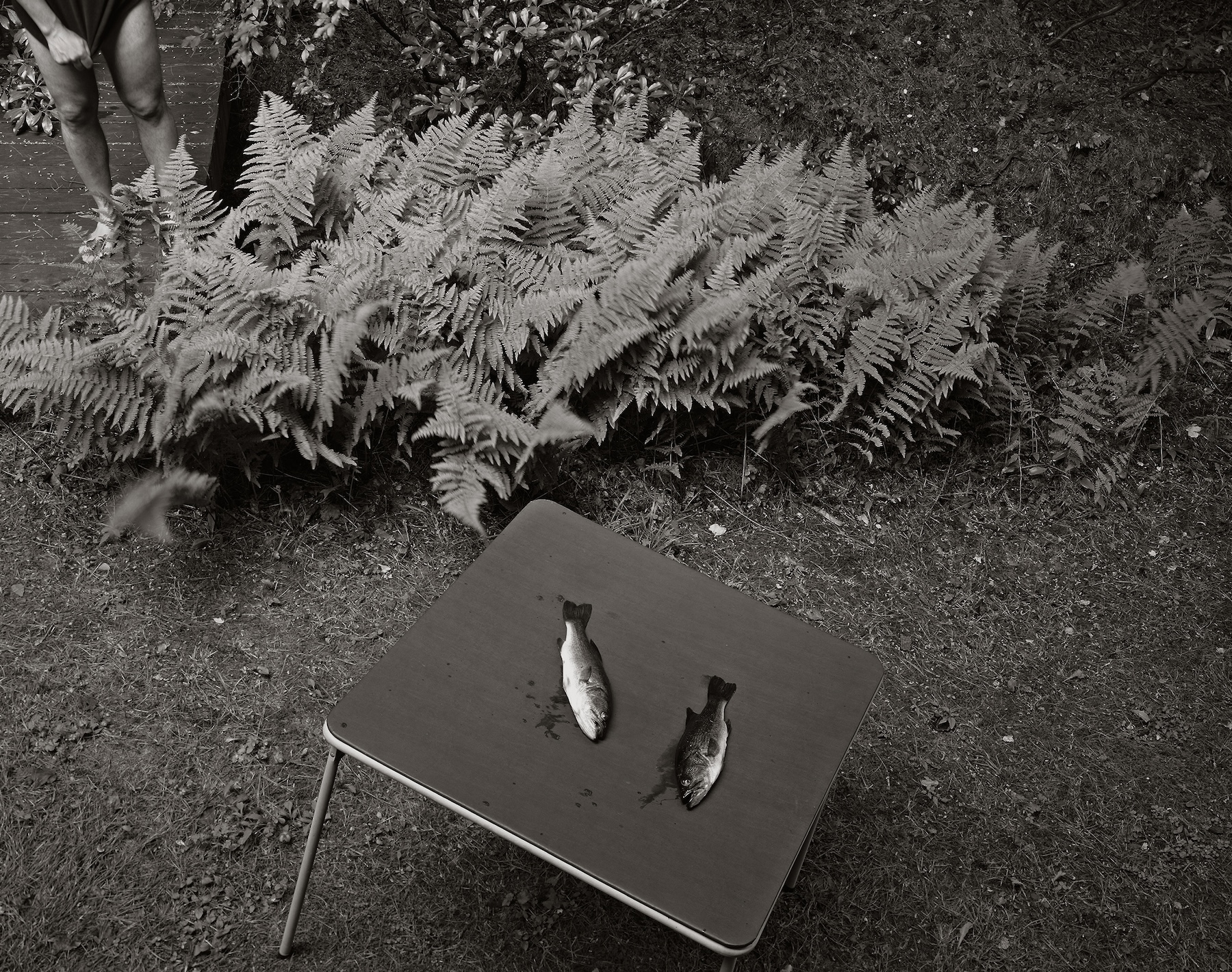
Andrea Modica's new photobook "Italian Story" collects four decades of photographs taken in Italy, beginning with her first trip there in the late 1980s. Born in 1960 to a family with roots in Sicily and Naples, Modica received a Fulbright scholarship to travel to Sicily and photograph the origins of the Catholic imagery, gender roles, and family structures she experienced growing up in New York. The book, however, is not a documentary of her heritage; instead, it presents dreamlike, surreal images—motionless bodies in water, dead fish, figures behind mosquito nets, Madonna statues—that resist clear narrative or identity politics. Modica works with an 8x10 large-format analog camera and prints using the historic platinum-palladium process, giving the images a timeless, collaborative quality.
This matters because "Italian Story" challenges conventional expectations of both Italian imagery and autobiographical photography. The title plays on the Italian word "storia," which can mean story, history, situation, or even trouble, reflecting Modica's interest in ambiguity over fixed meaning. By weaving together images of strangers, family members, students, and lovers across decades, Modica creates a network of relationships and moods rather than a chronological narrative. The book stands out in contemporary photography for its rejection of identity politics and its embrace of surrealist influence, offering a deeply personal yet open-ended meditation on memory, place, and the act of seeing.