
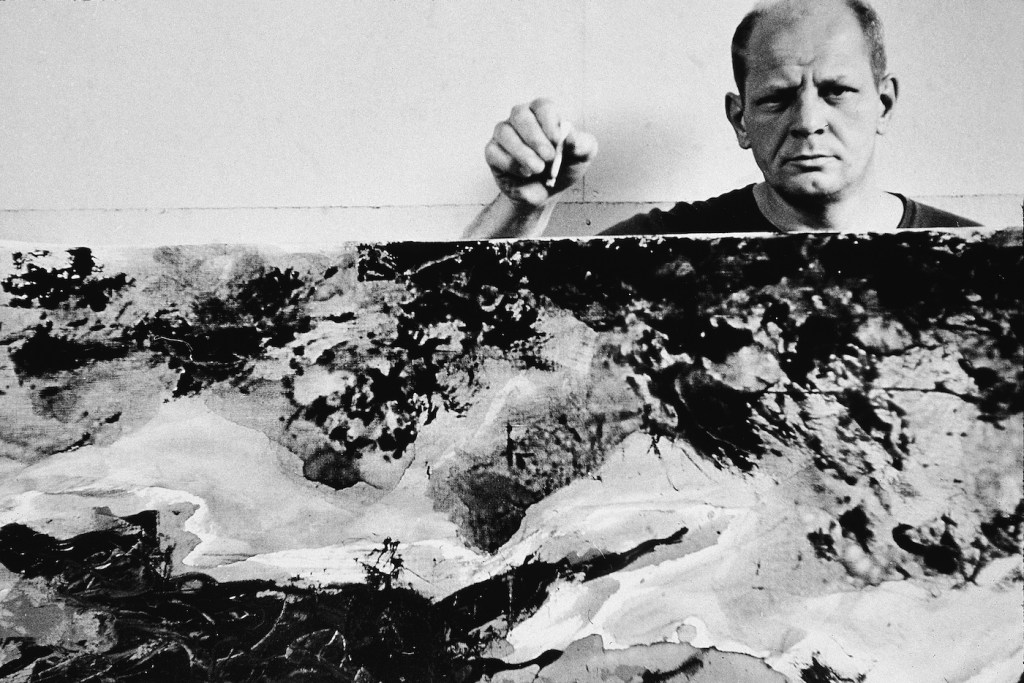
The article traces Jackson Pollock's transformative yet destructive rise to fame, focusing on his move to East Hampton with Lee Krasner, his development of drip painting in a small unheated barn, and the influence of predecessors like Janet Sobel and Max Ernst. It details his 1948 debut at the Betty Parsons Gallery, the mocking 1949 Life Magazine feature that ironically catapulted him to celebrity, and photographer Hans Namuth's documentation of his process, which revealed the deliberate nature of his technique.
Why it matters: Pollock's story exemplifies how commercial success and media exposure can both elevate and unravel an artist. The article underscores the tension between public mythmaking—fostered by Krasner and Peggy Guggenheim—and the reality of artistic labor, as Namuth's films demystified Pollock's spontaneity. This narrative remains relevant to ongoing debates about authenticity, market pressures, and the psychological toll of fame on artists.