
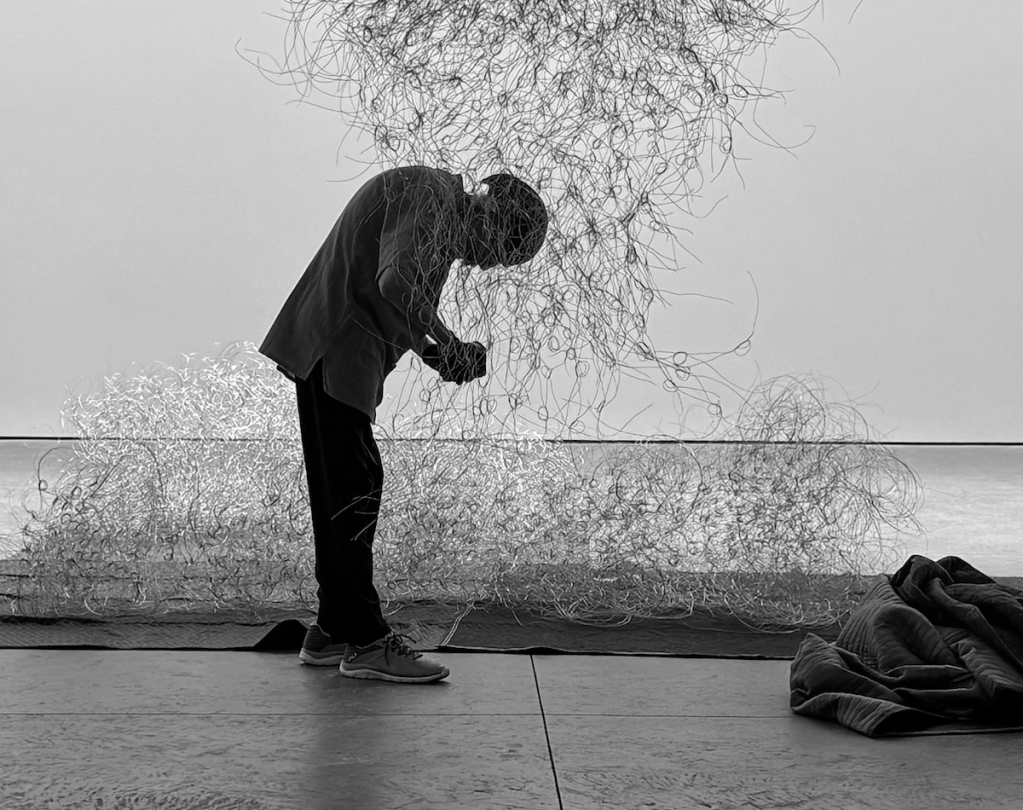
Alan Saret, an artist known for his chaotic wire sculptures and colored-pencil drawings that helped define the 'anti-form' movement of the late 1960s and early '70s, died on Tuesday at age 81. His death was announced by Karma, the New York gallery that staged three exhibitions of his work since 2022. Saret's breakthrough came with a 1968 exhibition at Bykert Gallery, leading to inclusion in Harald Szeemann's landmark show 'When Attitudes Become Form' at Kunsthalle Bern in 1969. His wire sculptures, made from crushed and bent industrial materials, were collected by institutions including the Museum of Modern Art and the Whitney Museum. He also created 'Gang Drawings' by dragging multiple colored pencils across paper, surveyed by the Drawing Center in 2007.
Saret's death matters because he was a key but underrecognized figure in Post-Minimalist and Process Art, whose work challenged Minimalist order with unruly, entropic forms. His inclusion in 'When Attitudes Become Form' and his permanent installation at MoMA PS1 (a hole carved into a brick wall from 1976) cement his historical significance. The recent attention from Karma and his cult following, noted by critics like Michael Kimmelman, underscore his enduring influence on contemporary sculpture and drawing. His passing closes a chapter on a generation of artists who prioritized process over product, leaving a legacy of eccentric, breathing sculptures that visualize invisible forces.