
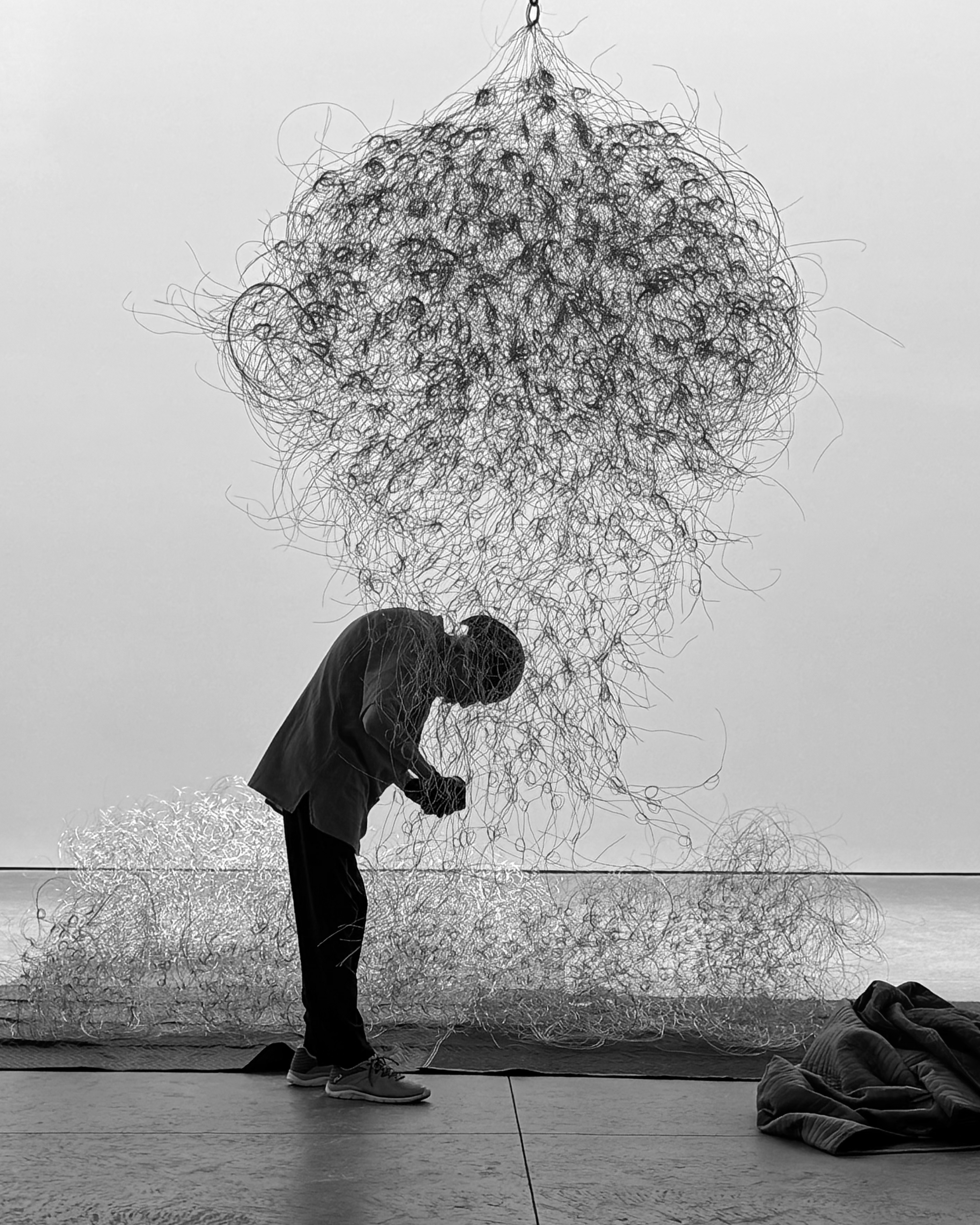
Alan Saret, the spiritually ambitious Post-Minimalist sculptor known for his ethereal wire sculptures and 'Gang Drawings,' has died at age 81. Born on Christmas Day 1944 in New York City, Saret studied architecture at Cornell University under Paolo Soleri and later studied art at Hunter College under Robert Morris. He debuted at SoHo's Bykert Gallery in 1967, participated in landmark exhibitions including Morris's '9 in a Warehouse' and 'Live in Your Head: When Attitudes Become Form,' and won a Guggenheim fellowship in 1969. After a period of obscurity, a 2007 Drawing Center exhibition reintroduced his work to a new generation. His gallery, Karma, confirmed his death, noting his pursuit of 'ensoulment' through art informed by spirituality, mathematics, nature, and the built environment.
Saret's death marks the loss of a key figure in Post-Minimalism who defied easy categorization and influenced generations of artists with his innovative use of humble materials like chicken wire and rubber. His career trajectory—from early success to decades of obscurity to rediscovery—reflects the cyclical nature of art-world recognition. His inclusion in seminal exhibitions like 'When Attitudes Become Form' and his founding role at 112 Greene Street (now White Columns) underscore his lasting impact on the alternative art space movement and the evolution of sculpture beyond Minimalist orthodoxy.