
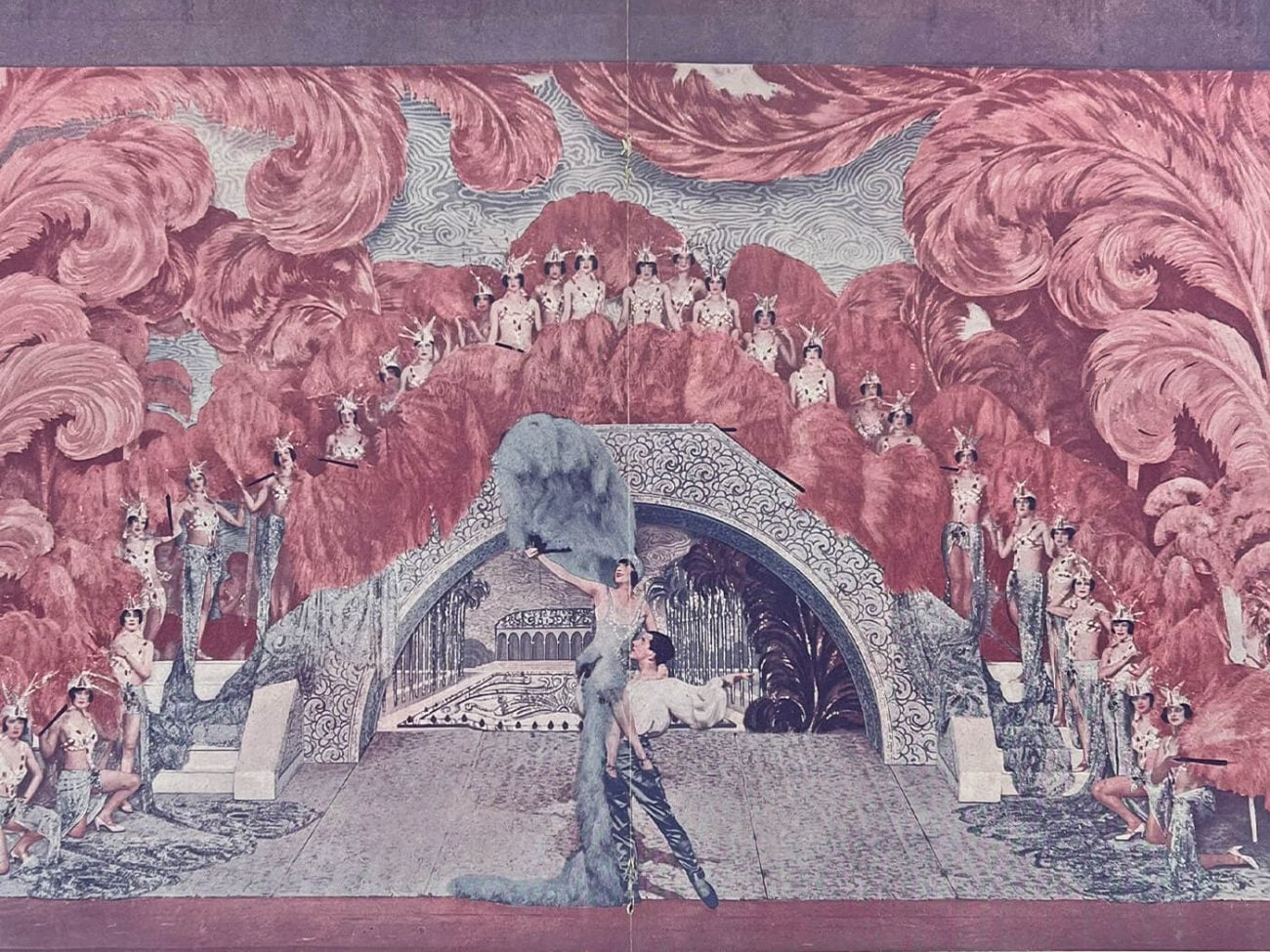
The article explores the life and legacy of Mistinguett (Jeanne Florentine Bourgeois), the iconic French dancer and artistic director of the Moulin Rouge during the Roaring Twenties. It details her rise from a debut at the Casino de Paris in 1893 to creating the famous "valse chaloupée" with Max Dearly, her appointment as artistic director of the rebuilt Moulin Rouge in 1924, and her revolutionary music-hall revues featuring elaborate feathered costumes, a signature staircase descent, and the introduction of jazz and ragtime. The piece also highlights her collaboration with designer Charles Gesmar, her rigorous perfectionism in overseeing every aspect of productions, her parallel film career of some 40 movies, and her previously little-known role as a spy during World War I, as revealed in a 2025 biography by Bruno Fuligni.
This matters because Mistinguett represents a pivotal figure in the fusion of visual art, performance, and popular culture that defined modern Parisian entertainment. Her story illustrates how the cabaret and music-hall became a crucible for artistic innovation, influencing fashion, dance, and the liberation of women's bodies on stage. By rediscovering her contributions—including her wartime espionage—the article underscores the enduring cultural significance of the Moulin Rouge as a symbol of artistic freedom and excess, and challenges the historical erasure of female performers who shaped the visual and performative arts of the early 20th century.