
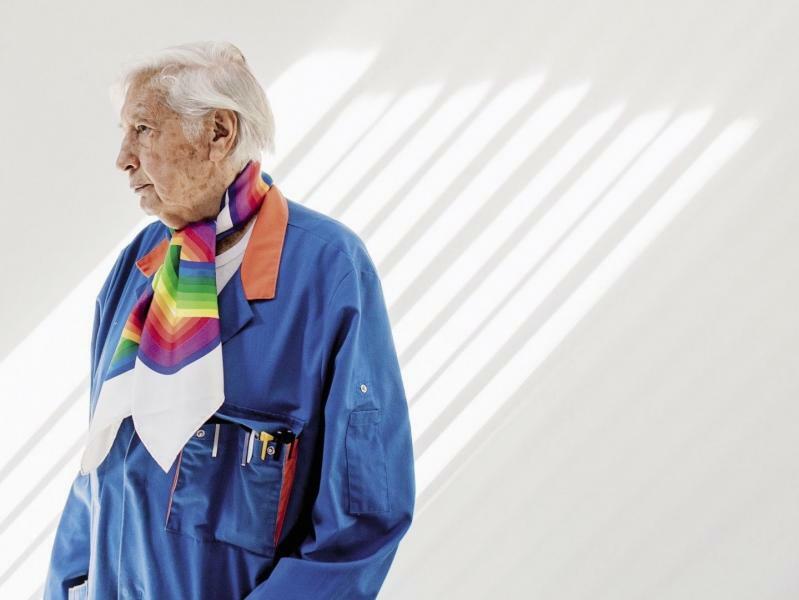
Julio Le Parc, the Argentine-born artist known for his pioneering work with light and movement, died on Saturday in Paris at the age of 97. He had been hospitalized at the American Hospital of Paris due to declining health. His son Yamil confirmed the news, noting that Le Parc was excited about an upcoming Tate London exhibition scheduled to open on June 11. Le Parc was a co-founder of the Groupe de Recherche d'Art Visuel (GRAV), a collective that challenged the traditional art system by emphasizing spectator participation. He won the Grand Prix International de Peinture at the 1966 Venice Biennale and was awarded France's Chevalier de l'Ordre des Arts et des Lettres and later the Légion d'honneur.
Le Parc's death marks the loss of a major figure in kinetic and op art, whose work transformed how audiences experience art through light, color, and movement. His installations—including his iconic suspended spheres—are held in prominent institutions worldwide, from the Hirshhorn in Washington to the Palais de Tokyo in Paris and MALBA in Buenos Aires. His legacy extends beyond his art: he was a politically engaged artist who used his practice to challenge authority and support social causes. His passing closes a chapter on a career that spanned nearly seven decades and influenced generations of artists.