
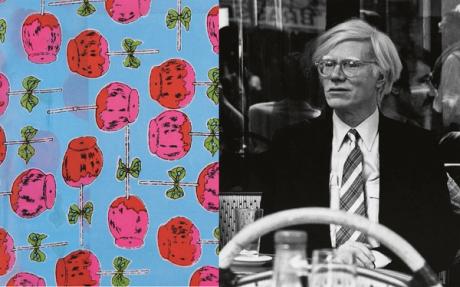
A new publication by Montreal-based curator Paul Maréchal, titled *Andy Warhol: The Complete Textiles and Fashion*, catalogs over 200 textile designs by Andy Warhol, spanning from border patterns in the 1950s to screen-printed garments from the 1960s through the 1980s. The book explores Warhol’s early commission for an awning at the Fleming-Joffe boutique in St. Louis, his 1966 use of cellulose and cotton dresses from Abraham & Straus as silk-screen supports, and his late 1970s hand-printed T-shirts featuring logos like Brillo, Hershey, Campbell’s soup, and Coca-Cola. Maréchal argues that these textile works paved the way for Warhol’s Pop aesthetic.
This book matters because it fills a significant gap in Warhol scholarship, highlighting how his commercial textile and fashion work directly anticipated and informed his iconic Pop art language of repetition and everyday imagery. By documenting an under-researched aspect of Warhol’s practice, Maréchal’s catalogue reshapes understanding of the artist’s creative evolution and challenges the boundary between fine art and commercial design.