
Der dritte Raum
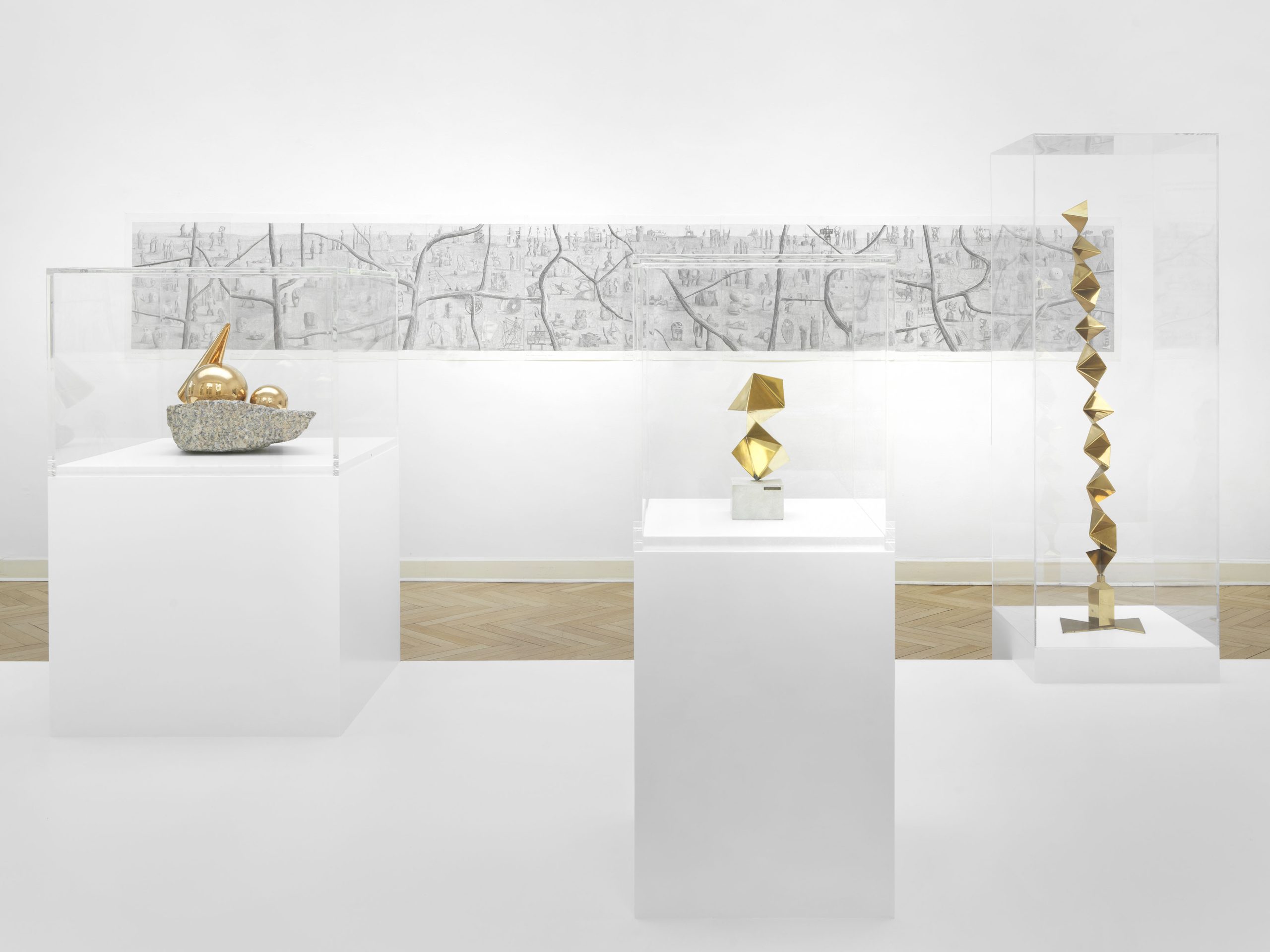
The article reports on a new exhibition at the Georg Kolbe Museum in Berlin dedicated to British Constructivist artist Marlow Moss (1889–1958). Moss, who inspired Piet Mondrian and was part of the Parisian avant-garde, developed the 'double line' as a compositional element before Mondrian, yet her work remained largely unknown for decades. Curated by Lucy Howard and Elisa Tamaschke, the exhibition takes a thoughtful approach, presenting Moss's fragmented oeuvre alongside works by contemporary artists Leonor Antunes, Tacita Dean, Florette Dijkstra, and Ro Robertson to open up dialogues across time and space. The show highlights Moss's life marked by persecution, exile, and queer identity, as well as the loss of much of her early work in World War II and the mysterious disappearance of her late work after a 1994 posthumous exhibition in Arnheim.
This exhibition matters because it challenges the traditional art-historical canon by bringing attention to a marginalized figure whose contributions to abstraction and Constructivism have been overlooked. By refusing to simply slot Moss into existing hierarchies, the curators instead create a 'third space' that resonates with contemporary queer and feminist discourses. The show also underscores the ongoing need to recover and re-evaluate the work of artists who were erased or sidelined due to gender, sexuality, or historical circumstances, making it a significant contribution to both art history and current cultural conversations about inclusion and representation.