
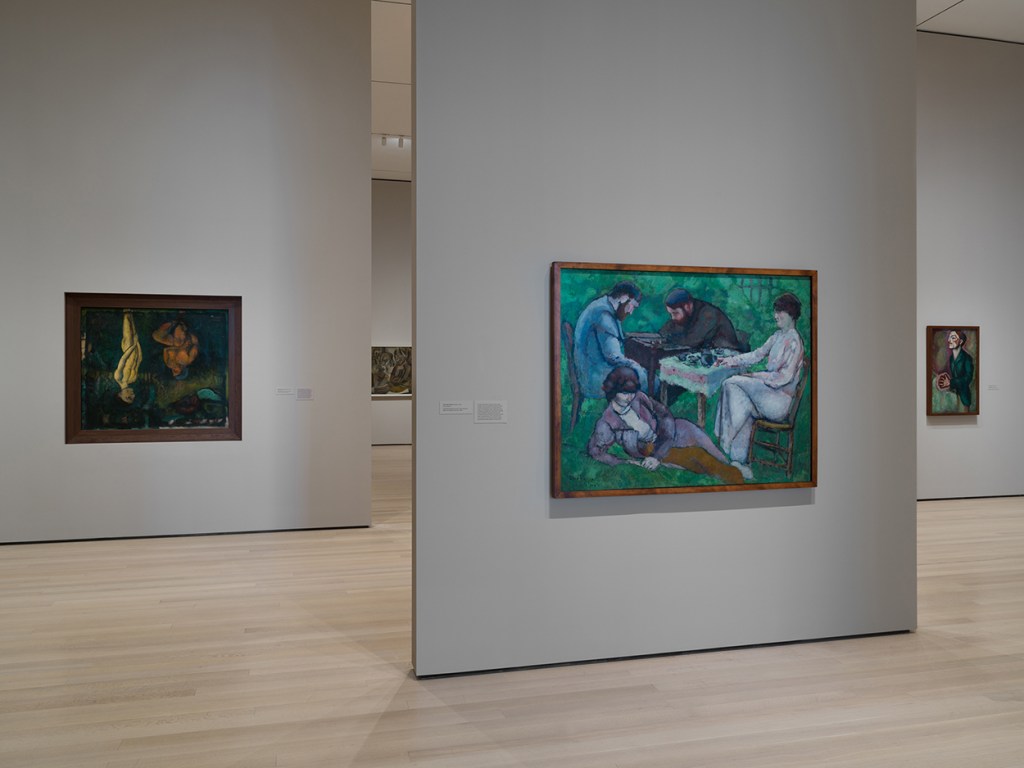
A new retrospective at the Museum of Modern Art (MoMA) in New York surveys the full career of Marcel Duchamp, featuring 300 works across media. The exhibition traces his evolution from early paintings—such as a placid chess scene of his brothers and the watercolor *Woman Hack Driver* (1907)—through his iconic readymades like *Pharmacy* (1914) and *Nude Descending a Staircase* (1911–12), to the monumental *The Bride Stripped Bare by Her Bachelors, Even* (The Large Glass, 1915–23). It is the first comprehensive survey of Duchamp's oeuvre since 1973, and includes reproductions, facsimiles, and even contemporary caricatures from the American press.
This retrospective matters because it challenges the common perception of Duchamp as a purely conceptual provocateur, revealing instead a sincere and labor-intensive investment in painting and craft during his early years. By juxtaposing his lesser-known canvases with his readymades and mechanomorphic experiments, the show highlights how Duchamp’s radical ideas emerged gradually from a deep engagement with traditional artistic methods. The exhibition also underscores his enduring influence on conceptual art, while reminding viewers that his most famous works were born from a complex dialogue between handiwork and intellect.