
I cimiteri di Firenze raccontano una storia alternativa della città tra arte e memoria
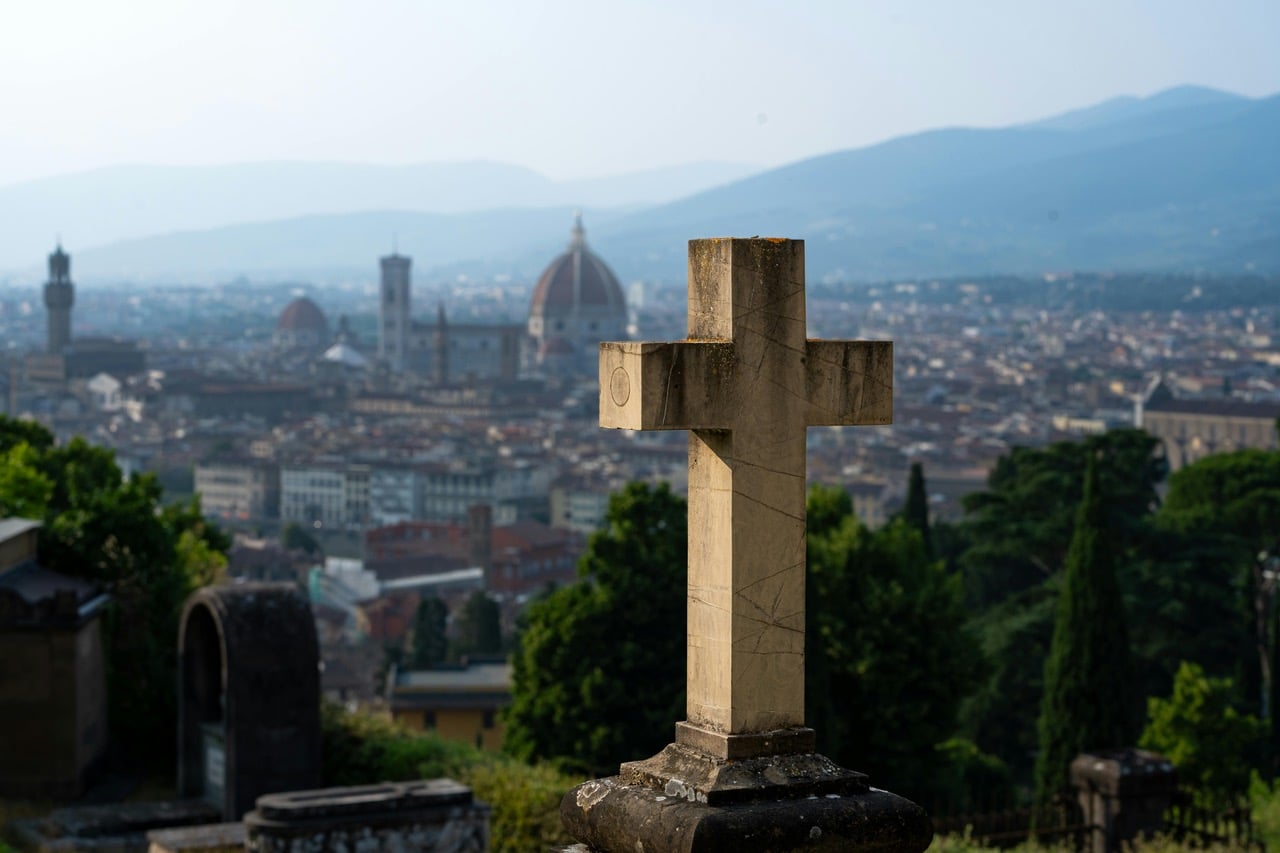
The article explores three historic cemeteries in Florence, Italy—Cimitero Porte Sante, Cimitero degli Inglesi, and Campo Santo dei Pinti—presenting them as open-air museums where art, architecture, and local history converge. Porte Sante, inaugurated in 1848, overlooks the city from San Miniato al Monte and contains tombs of cultural figures such as Carlo Collodi, Vasco Pratolini, Pellegrino Artusi, Ottone Rosai, and Franco Zeffirelli. The Cimitero degli Inglesi, built in 1828, served as a multi-denominational burial ground for non-Catholics and inspired Arnold Böcklin's painting "Isola dei Morti." The Campo Santo dei Pinti, constructed in 1747, is noted as the only all-male cemetery in the world, originally serving the hospital of Santa Maria Nuova and managed by the Venerabile Arciconfraternita della Misericordia.
This article matters because it reframes cemeteries as vital cultural archives that offer an alternative narrative of Florence's history, emphasizing the intersection of art, memory, and social identity. By highlighting these lesser-known sites, it encourages a broader understanding of how burial grounds function as repositories of artistic heritage and collective memory, challenging the perception of cemeteries as mere spaces of death. The piece also underscores the role of local institutions, such as the Misericordia, in preserving these unique cultural landmarks.