
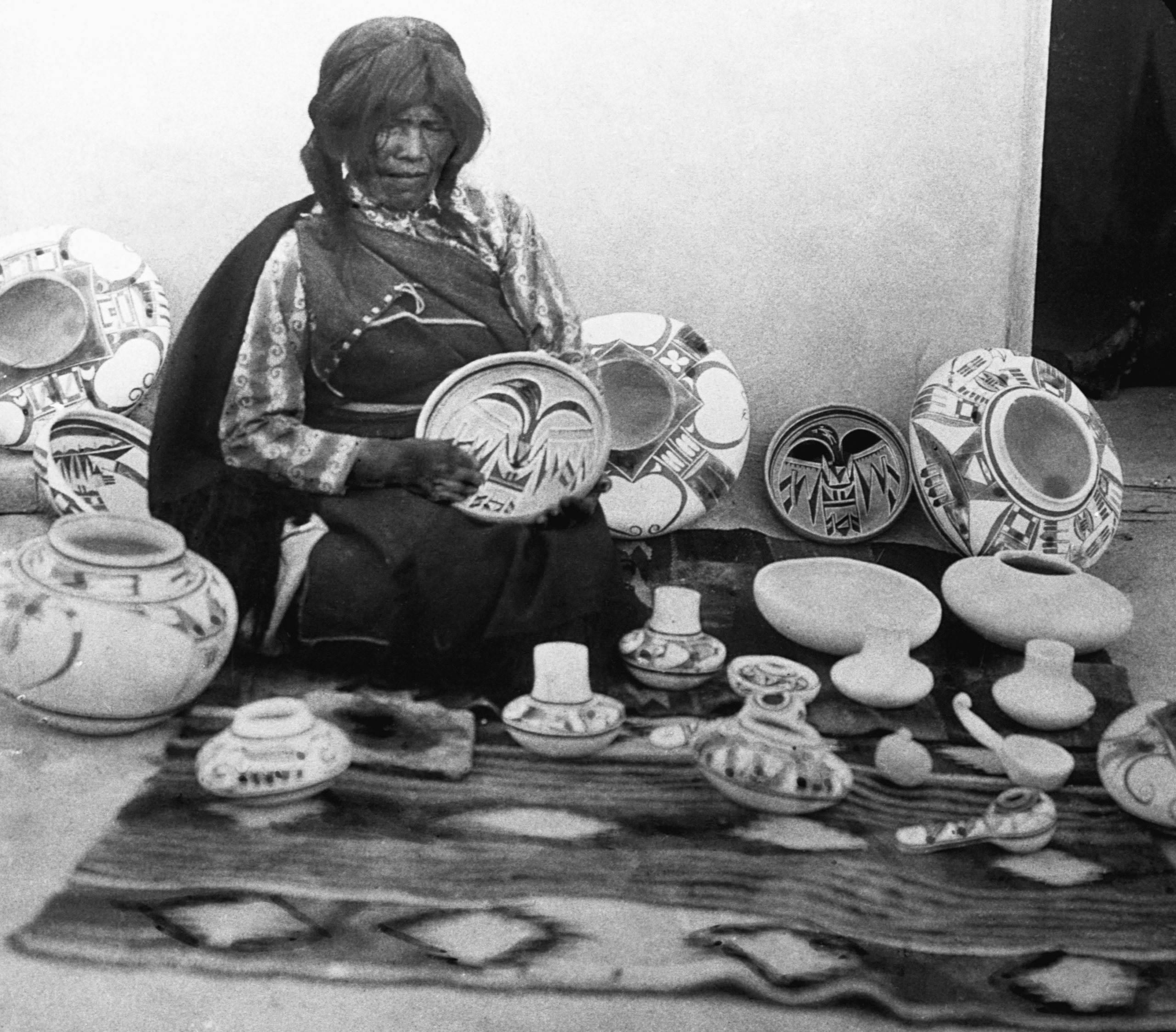
The Hopi-Tewa artist Nampeyo (1859–1942) is being celebrated as a foundational figure in modern ceramics for her role in the Sikyátki Revival. By studying ancestral pottery shards from archaeological excavations, Nampeyo revitalized centuries-old techniques and motifs, transforming Pueblo pottery into a globally recognized art form. Her career spanned from selling works at regional trading posts to becoming a celebrated figure who demonstrated her craft at the Grand Canyon and exhibited at major fairs in Chicago.
Nampeyo’s legacy is currently seeing a significant institutional resurgence, marked by recent acquisitions by the New York Historical and the Metropolitan Museum of Art, as well as major exhibitions at the De Young Museum and the Minneapolis Institute of Art. This shift reflects a broader effort within the art world to recognize Native American women artists not just as craftspeople, but as individual masters whose innovations bridged the gap between ancient tradition and modern expression. Her market presence remains strong, with a record auction price of $350,000, signaling her enduring importance to both collectors and historians.