
Il capolavoro teosofico del Vittoriale: la maschera egizia millenaria che d’Annunzio trasformò in una croce
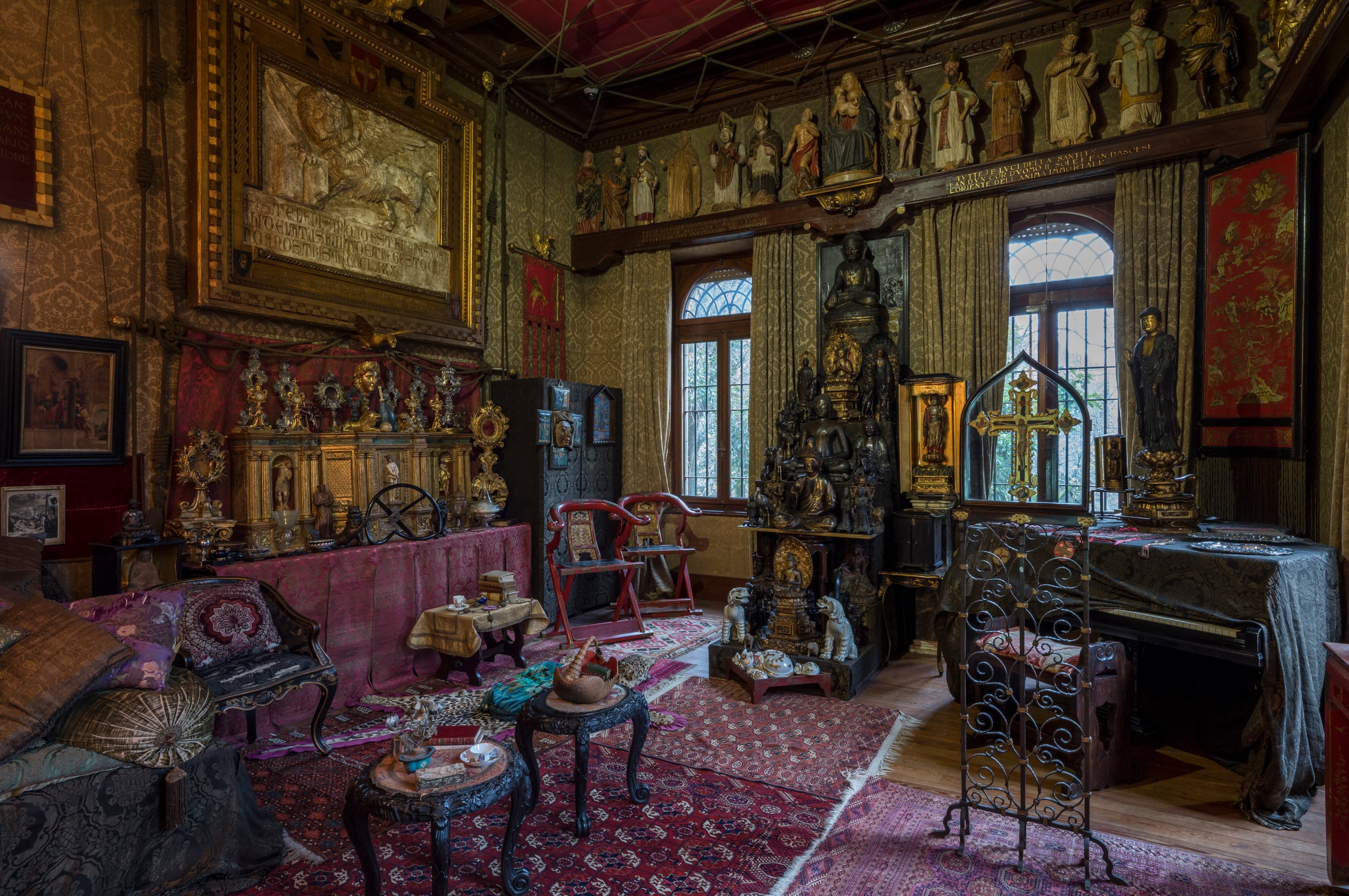
An extraordinary syncretic artwork hidden within the Vittoriale degli Italiani in Gardone Riviera is brought to light: a polychrome cross that combines a 3,500-year-old Egyptian funerary mask with early 20th-century enamel plaques depicting the Passion of Christ. Created by Gabriele d'Annunzio and the master enameller Giuseppe Guidi, the piece was assembled in the Stanza delle Reliquie, where d'Annunzio gathered symbols from all religions to affirm human eternity. The mask, from the New Kingdom of ancient Egypt, is placed at the center of four copper enamel panels showing the Last Supper, Christ's condemnation, Crucifixion, and Deposition, framed in minimal wooden borders as d'Annunzio demanded.
This work matters because it represents a radical theological and psychological inversion: the female Egyptian funerary mask, originally a transfiguration into the goddess Isis, becomes the focal point of Christian Passion scenes, subverting traditional iconography. Long overlooked by mainstream criticism, the piece exemplifies d'Annunzio's private theology and the alchemical craftsmanship of Guidi, whose enamel work was described in alchemical terms. The article reclaims this forgotten masterpiece as a key example of early 20th-century syncretism and applied arts, challenging the neglect of such hybrid works in art historical discourse.