
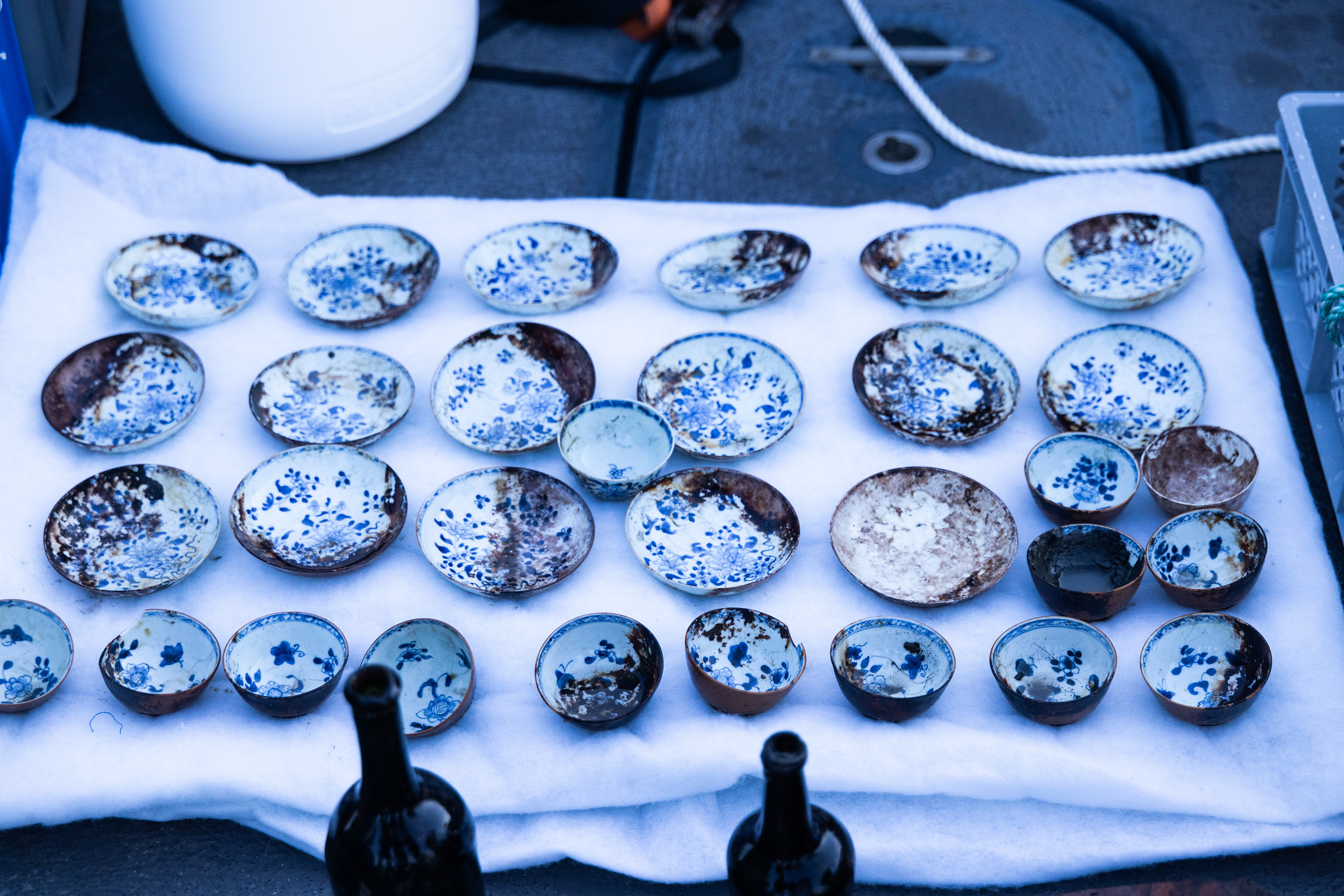
In late 2025, Norwegian watchmaker and commercial diver Espen Saastad discovered a 250-year-old merchant vessel upright 2,000 feet underwater in the strait between Norway and Denmark. The ship, dubbed "the Porcelain Wreck," holds an exceptionally well-preserved cargo of Chinese ceramics, along with chandeliers, goblets, textiles, and crates believed to contain tea, herbs, and medicines. Saastad reported the find to authorities, and in May 2026 a team from the Norwegian Maritime Museum conducted a preliminary investigation, whose results were published on June 1. The ship is typical of 18th-century merchant galleys, but its origin, destination, and cause of sinking remain unknown.
The discovery is significant because it offers a rare, undisturbed time capsule of 18th-century Northern European trade and consumer culture, when Chinese porcelain, silk, and tea were status symbols supplied by East India companies. Backed by 2.9 million Norwegian Krone ($300,000), the project is described as a "new era for Norwegian archaeology." The full contents will eventually be displayed at the Norwegian Maritime Museum in Oslo, providing unprecedented insight into the period's maritime commerce and bourgeois appetites.