
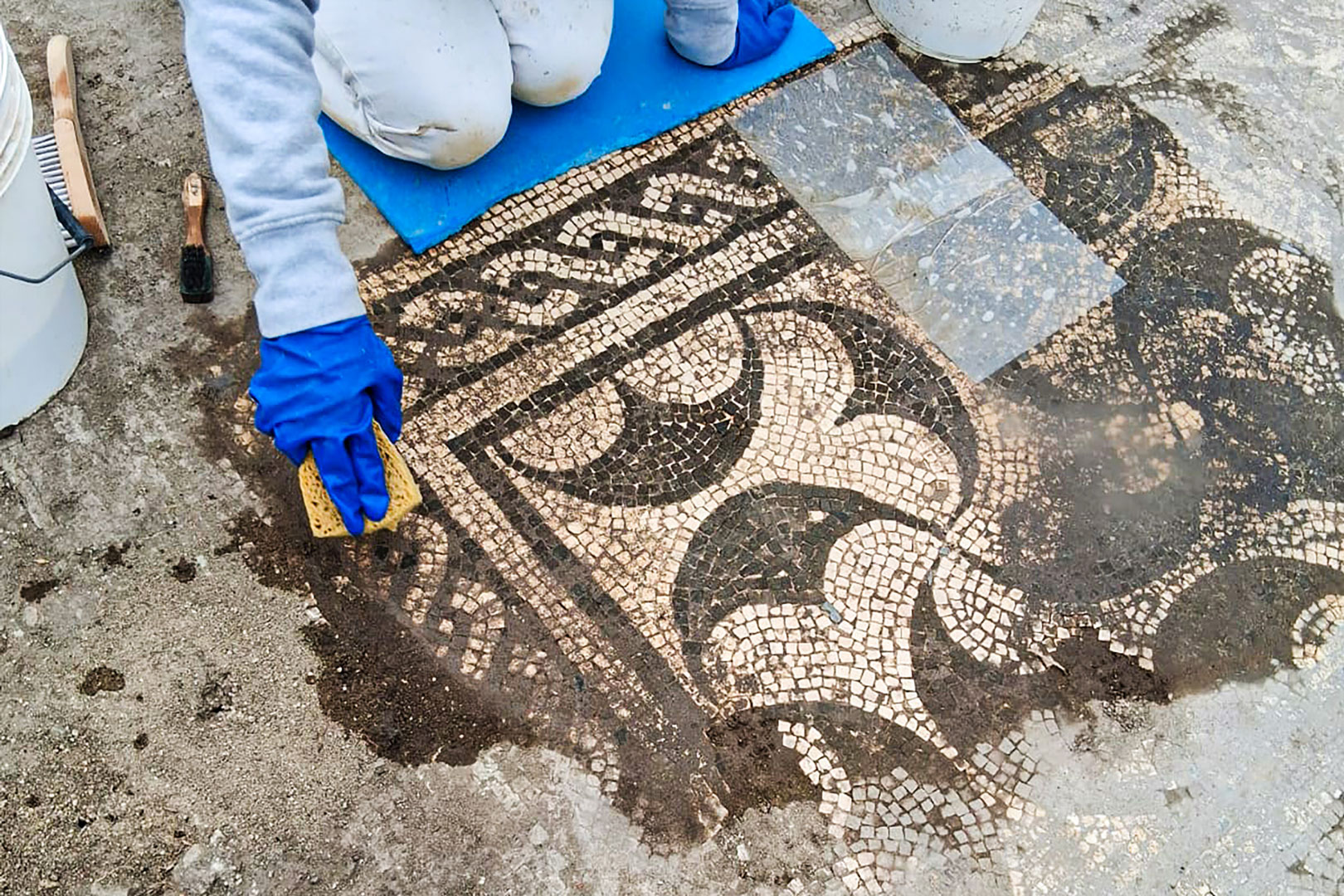
A Roman imperial-era villa has been discovered at Castel di Guido, 13 miles west of Rome, after authorities intervened in a clandestine excavation by looters. The villa, linked to the Antonine dynasty and the ancient rest stop Lorium, features intact rooms with 1.5-meter-tall walls, floral and geometric mosaics, painted plaster, and an impluvium basin. A broken marble statue possibly depicting the god Silvanus was also recovered. The site will open for free public tours on June 20.
This discovery matters because it reveals a well-preserved example of an elite Roman residence tied to emperors like Hadrian, Antoninus Pius, and Marcus Aurelius, offering new insights into imperial-era architecture and daily life. The fact that the find was prompted by illegal digging highlights ongoing challenges in protecting cultural heritage from looters, while the rapid response by Italian authorities demonstrates effective collaboration between police and cultural officials to salvage and secure archaeological treasures.