
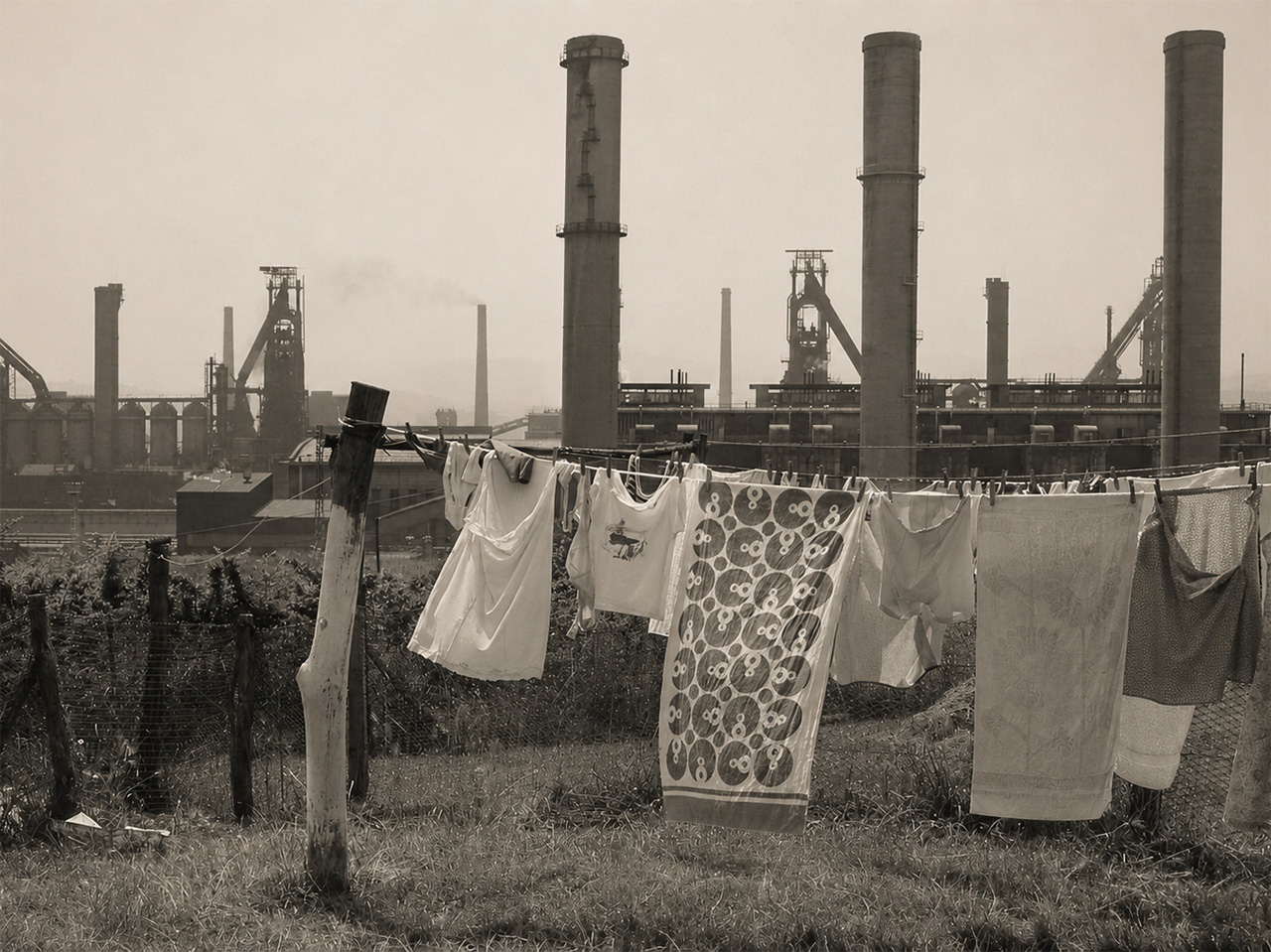
Spain's new Bienal Climática has opened in Avilés, a northern Spanish town, featuring over 40 artists across 13 venues, many of which are former industrial sites. The exhibition, on view until 20 September, includes large-scale cyanotype fabrics by Agnes Essonti, video projections by Alba Matilla, and textile works by Asunción Molinos Gordo, all addressing ecological and industrial themes. The biennial was conceived by Madrid-based foundation Atelier ITD, which secured €1 million in funding from the Spanish government, and aims to attract 90,000 visitors.
The Bienal Climática matters because it positions contemporary art as a tool for addressing the climate crisis and industrial transition, while also serving as a catalyst for Avilés's regeneration from a heavily polluted industrial hub to a greener future. By using former factories, a steel company training center, and other repurposed spaces, the biennial directly engages with the city's identity and environmental legacy, offering a model for how art can facilitate dialogue around decarbonization and social change in post-industrial European cities.