
Dipingere l’acqua. Dalle piscine di David Hockney indietro fino al fiume di Piero della Francesca
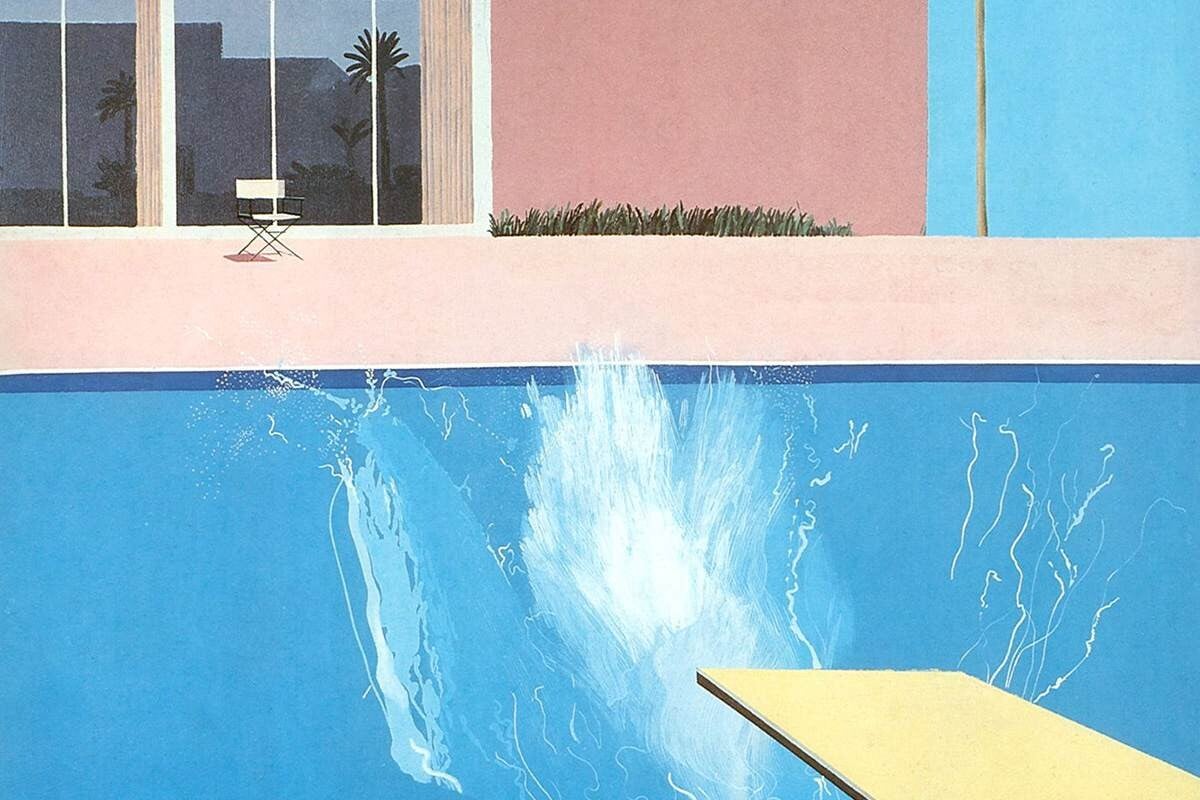
This article draws a visual and conceptual comparison between the depiction of water in Piero della Francesca's 15th-century painting 'Battesimo di Cristo' (c. 1437-1445) and David Hockney's iconic swimming pool paintings from 1960s Los Angeles. It argues that in both cases, water is not represented as a flowing natural element but as a static, planar surface—a liminal space where the body ceases to be active and becomes pure image. The text explores how Piero's water functions as an optical plane and a threshold between states of being, while Hockney's pools serve as a cultural dispositif for the continuous exposure of the body to the desiring gaze.
The comparison matters because it reveals a surprising continuity across five centuries of Western painting, linking Renaissance秩序的 with modern Californian visual culture. By juxtaposing Piero's measured, almost archetypal nude with Hockney's fragmented, gaze-produced bodies, the article challenges conventional art-historical narratives and offers a fresh lens for understanding how artists use water as a device to explore the relationship between body, space, and spectatorship. It also underscores Hockney's own acknowledged debt to Piero della Francesca, positioning the English artist within a longer tradition of formal and perceptual inquiry.