
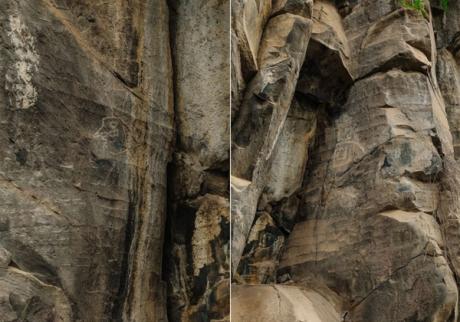
Archaeologists from Mexico’s Instituto Nacional de Antropología e Historia (INAH) have identified 16 petroglyphs and cave paintings near the Tula River in Hidalgo. The artworks span over 4,000 years, ranging from prehistoric times through the Mesoamerican Postclassic period and into the early colonial era. The discovery, which includes depictions of the rain god Tláloc and various anthropomorphic figures, was made during archaeological salvage work for a new passenger rail line connecting Mexico City and Querétaro.
This find is a significant milestone for Mesoamerican archaeology because it provides a continuous record of cultural and symbolic evolution in a single geographic context. The site’s preservation has become a matter of national policy, leading President Claudia Sheinbaum Pardo to reroute the multi-billion dollar railway project to protect the immovable heritage. The iconography also suggests previously unknown cultural exchanges between central Mexican civilizations and the Mogollon cultures of the northern deserts.