
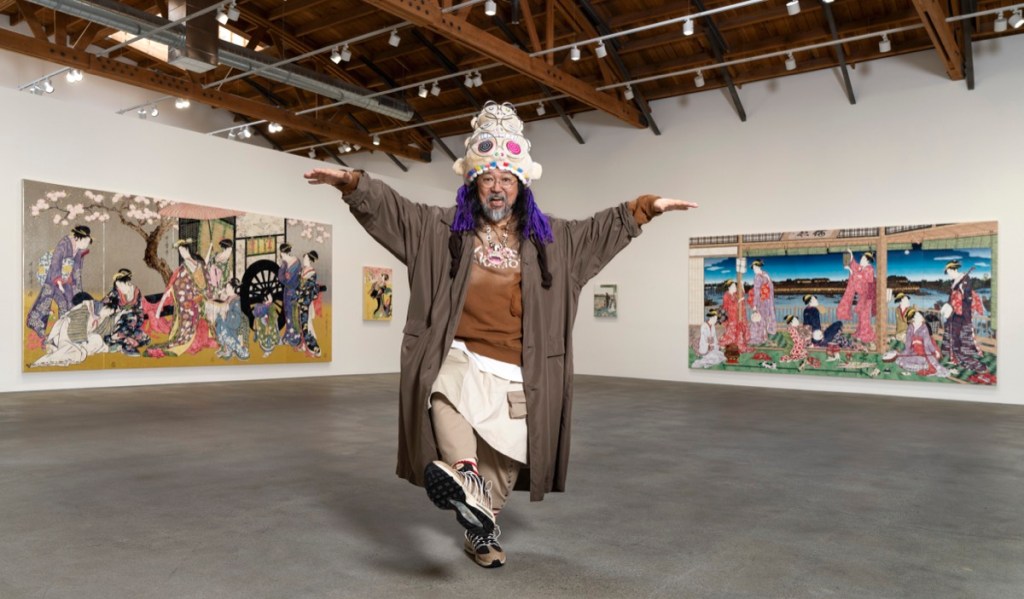
Takashi Murakami’s latest exhibition at Perrotin Los Angeles, titled “Hark Back to Ukiyo-e: Tracing Superflat to Japonisme’s Genesis,” marks a significant return to his academic roots in Nihonga (traditional Japanese painting). The show features 24 compositions, including four monumental canvases that took over three years to complete, blending Edo-period woodblock aesthetics with 19th-century Impressionism and contemporary Pokémon imagery. The artist describes this body of work as a reflection on the non-linear nature of time and the physical manifestation of memory.
This exhibition is significant because it bridges the gap between Murakami’s world-famous 'Superflat' pop aesthetic and the rigorous historical training he once sought to distance himself from. By engaging with the legacy of the Tohoku earthquake and the spiritual iconography of the Edo period, Murakami moves beyond mere commodity art into a more metaphysical exploration of human suffering and healing. The show reinforces his status as a pivotal figure who successfully collapsed the boundaries between high art, mass media, and historical tradition.