filter_list Showing 11 results for "CRO" close Clear
dashboard All 260 museum exhibitions 168article local 38article news 21article culture 11trending_up market 8person people 5rate_review review 4article policy 3candle obituary 2
date_range Range Today This Week This Month All
Subscribe

Martin Schongauer in 2 Minutes

Martin Schongauer en 2 minutes

Martin Schongauer (c. 1445–1491), the Alsatian painter, draftsman, and engraver, is celebrated as the greatest German copperplate engraver before Albrecht Dürer and one of the first artists to achieve pan-European fame in his lifetime. The article outlines his life and career, from his early training in his father's goldsmith workshop in Colmar to his studies at the University of Leipzig and travels through Flanders, where he absorbed the influence of Rogier van der Weyden and Dirk Bouts. It highlights his 116 copper engravings, signed with the monogram 'M+S', which elevated engraving to a high art and circulated from Spain to Bohemia, inspiring Dürer and the young Michelangelo. Key works discussed include the painting 'La Vierge au buisson de roses' (1473) and the engraving 'La Tentation de saint Antoine' (c. 1470–1475).

« Le monde entier semble s’être mis en mouvement, animé par une soif d’expériences culturelles »

The article explores the transformation of cultural travel for artists and art lovers, contrasting the arduous, unknown journeys of historical figures like Eugène Delacroix, Paul Gauguin, and Ella Maillart with today's accessible, curated experiences. It describes how contemporary artists such as Ólafur Elíasson, JR, and Marina Abramović now use travel itself as a medium, creating works that engage with climate change, social issues, and presence. Destinations like the Venice Biennale, AlUla in Saudi Arabia, Naoshima in Japan, and Le Voyage à Nantes are highlighted as hubs where art and travel merge into immersive, sensory experiences.

Writer Thomas Clerc casts a tender fictional gaze on Montmartre's 'daubs'

L’écrivain Thomas Clerc pose, à travers une fiction, un regard tendre sur les « croûtes » de Montmartre

French writer and essayist Thomas Clerc has published a new fiction titled "Croûtes" as the fifteenth volume in the "Fléchette" collection by éditions sun/sun. The book draws inspiration from a single autochrome image taken from the Musée Albert-Kahn's "Archives de la planète" (1909–1931), specifically a one-minute film shot in March 1927 at the Foire aux croûtes in Montmartre, Paris. Clerc's narrative tenderly and humorously explores the life of an amateur painter and the infinite possibilities of so-called "croûtes"—a French slang term for amateurish or kitsch paintings that exist outside institutional recognition.

Beyond the Needle: Chilean Artist Felipe Abel on Chiaroscuro, Symbolism, and the Evolution of Modern Tattooing

Chilean tattoo artist Felipe Abel (born Felipe Arriagada), who has a background in graphic design and a decade of experience in black-and-grey micro-realism, is preparing to join Noble Art Studio in Brooklyn. He is also developing a new series of oil paintings focused on mythology, theology, and esotericism, expected to debut in a formal exhibition around 2027. Abel, who has held guest spots in over 20 cities across 10 countries including studios like Sasha Tattooing in Paris and The White Whale in Milan, uses chiaroscuro and a recurring floating orb motif in his work, drawing influence from photographer Sebastião Salgado and painter Guillermo Lorca.

Scandal in Florence's Skyline? After the Black Cube and the White Cylinder, the Prism That Impales Santa Croce Appears

Scandalo nello skyline di Firenze? Dopo il cubo nero e il cilindro bianco spunta il prisma che impalla Santa Croce

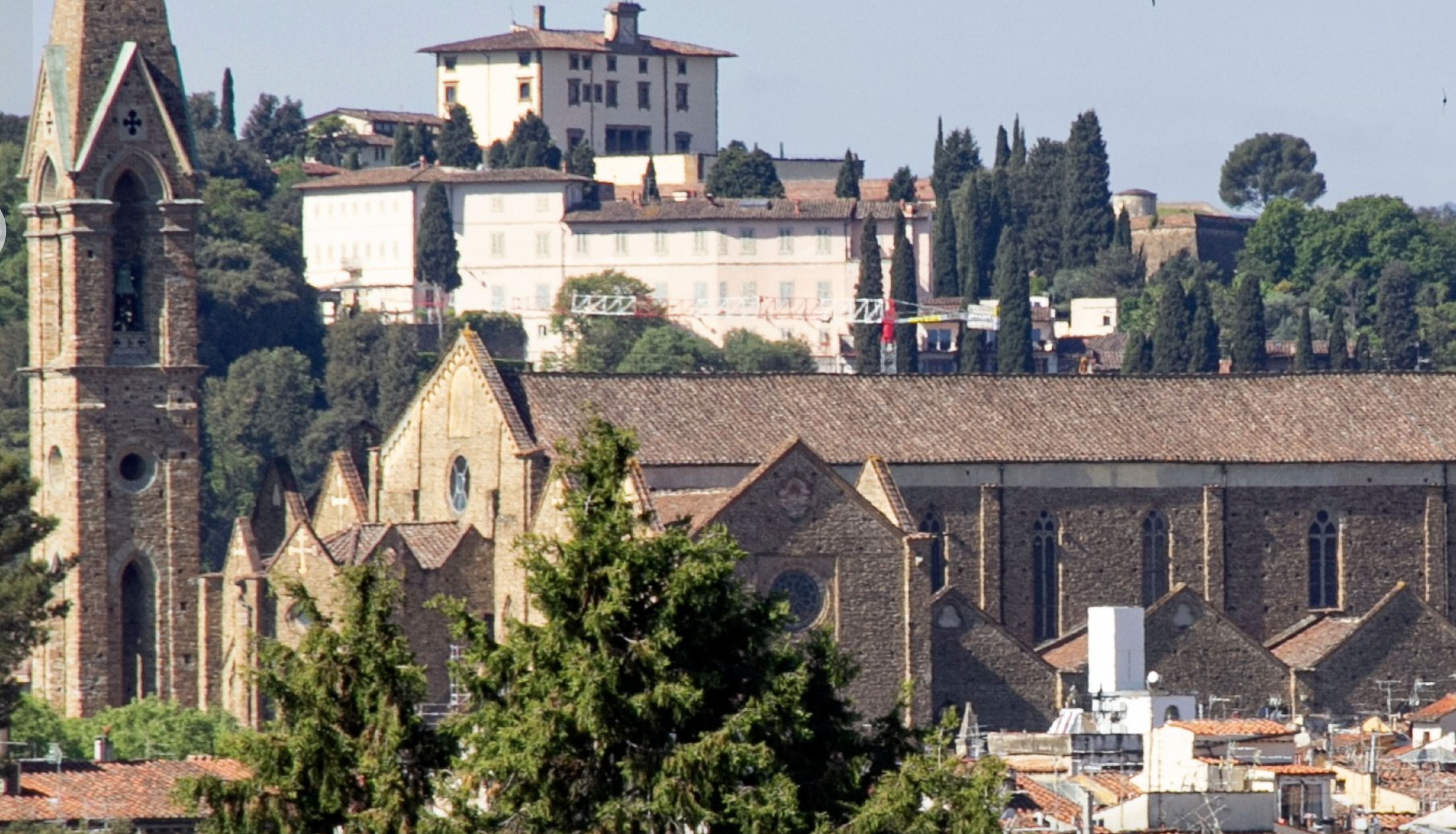
A cylindrical antenna installed by the telecom company Iliad in Florence has sparked controversy after it was reported that, from certain angles, it visually overlaps with iconic landmarks such as Brunelleschi's Dome and Giotto's Campanile. The article traces a pattern of periodic scandals in Florence, including a previous uproar over the so-called "Cubo Nero" (a new building replacing a decaying theater), and notes that the antenna has actually been in place since 2023 without earlier outcry. Local artist Giacomo Costa recently photographed another white prismatic antenna in Via Ghibellina, within the UNESCO zone, that obstructs the view of Santa Croce, fueling further debate.

An Interactive Archive Celebrates the Wide Ranging Projects Inviting ‘Unruly Play’

Amsterdam-based studio Imagination of Things, co-founded by Vitor Freire and Monique Grimord, has launched "Unruly Play," an interactive digital archive featuring 169 artworks, designs, games, and participatory projects. The repository includes notable works such as Rael San Fratello's "Teeter-Totter Wall" and the Wind Phone project, alongside a 12-foot puppet that travels the world. The archive is searchable by theme or through a shuffle feature, aiming to showcase projects that invite surprise, camaraderie, and unexpected encounters with imagination and joy.

Water Samples from Around the World Melt into Dima Rebus’ Dreamy Paintings

London-based artist Dima Rebus creates large-scale watercolor paintings using water samples collected from strangers around the world. In her series "Floaters," she freezes the crowdsourced water with pigments, then lets it melt across paper to form abstract color fields, later adding figures and aquatic landscapes. Each sample arrives with a letter, building an archive of rain, rivers, seas, oceans, and glaciers that serve as both material and human message.

In plane sight: how the gilded elite live – in pictures

Photographer Will Vogt's second monograph, *Behind the Hedges*, offers an intimate glimpse into the lives of America's gilded elite, featuring images of his own social circle at hunting estates, weddings, exclusive club lunches, and golf weekends. The book, published by Schilt Publishing, includes quotes by Vogt and text by editor Jennifer Garza-Cuen from her essay 'Posture of Privilege,' capturing a world of inherited wealth and tradition.

Sur Arte Radio et dans une expo, l’enquête d’Adrianna Wallis sur les traces de sa grand-mère peintre spoliée par les nazis

Artist Adrianna Wallis (born 1981) discovers that her paternal grandmother, painter Diane Esmond (1910–1981), was a victim of Nazi looting during World War II. After being contacted by historians Patricia Helletzgruber and Sophie Juliard, Wallis learns that much of Esmond's work was systematically destroyed by the ERR, the Nazi organization responsible for art theft in occupied countries. This revelation sparks a personal investigation that becomes a podcast for Arte Radio titled "Il restera la gravité," blending documentary, autobiographical inquiry, and sound installation. Wallis delves into archives, examining microfilms and lists that detail 46 of Esmond's paintings—each methodically described and declared destroyed, such as "Woman in blue evening dress: annihilated."

From Micro to Mega, Jon McCormack’s Striking Photos Reveal Nature’s Patterns

Photographer Jon McCormack, who grew up in the Australian Outback and has traveled to all seven continents, has a new book titled "Patterns: Art of the Natural World," forthcoming from Damiani Books. The project emerged during the pandemic when limited travel led him to revisit local spots and develop a patient, attentive approach to capturing nature's hidden harmony and symmetry. The book features 90 images ranging from microscopic crystals to aerial views of flamingos in Kenya, along with text contributions from fellow photographers and conservationists.

Final book in trilogy asks: What is the future of the art world?

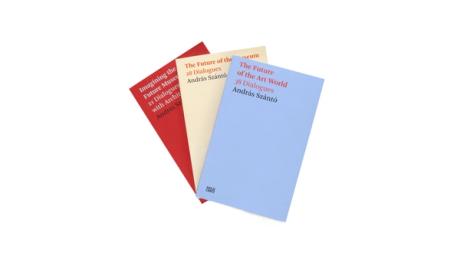
Cultural strategist András Szántó has published the third and final volume of his trilogy on the future of museums, titled *What Is the Future of the Art World?*. The book features dialogues with a wide range of art-world figures—including gallerists José Kuri and Atsuko Ninagawa, collectors Alain Servais and Sylvain Levy, artists William Kentridge and Holly Herndon & Mathew Dryhurst, curator Fatoş Üstek, network scientist Albert-László Barabási, former Art Basel director Marc Spiegler, and Sheikha Al-Mayassa Al Thani—who discuss topics such as the definition of the art world, its rules, and its future trajectory. Szántó notes that there is no consensus on whether the art world is still expanding or entering a phase of slowdown, with different regions moving on divergent paths.