filter_list Showing 24 results for "Ging" close Clear
dashboard All 427 museum exhibitions 255article local 94article culture 24article news 15trending_up market 14person people 10rate_review review 8candle obituary 3article policy 2gavel restitution 2
date_range Range Today This Week This Month All
Subscribe

Here’s How Stars at the 2026 Met Gala Nodded to Art History

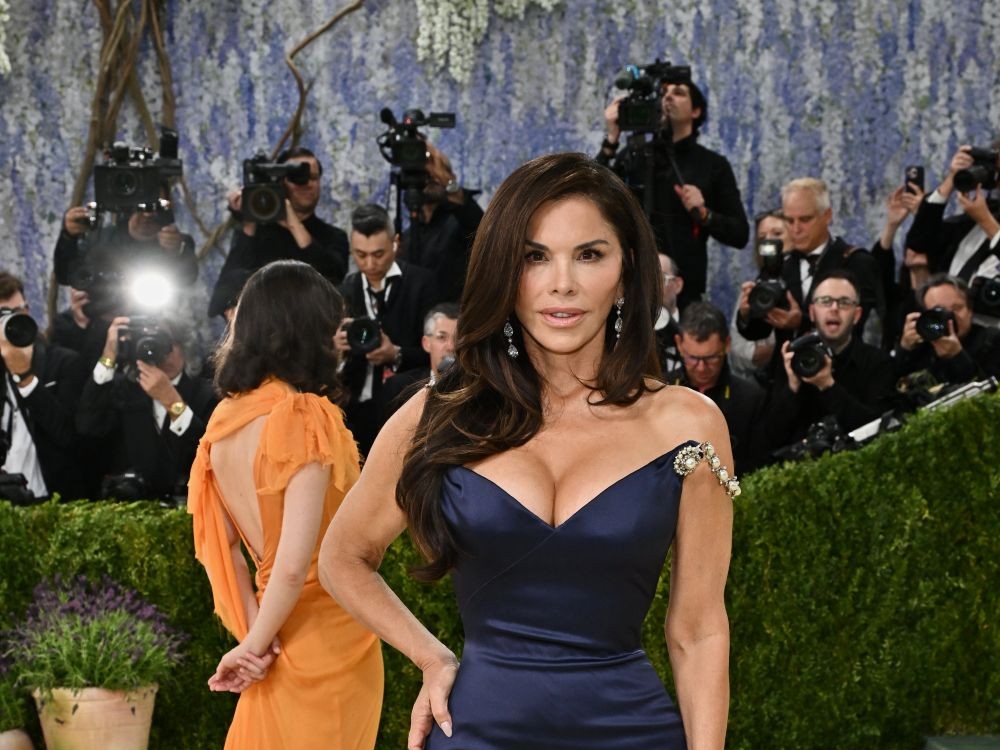
The 2026 Met Gala, themed "Fashion Is Art," saw celebrities and fashion figures wearing outfits directly inspired by or referencing iconic artworks and art historical movements. Notable nods included Chloe Malle in a gown referencing Frederic Leighton's *Flaming June*, Lauren Sánchez Bezos in a Schiaparelli dress echoing John Singer Sargent's *Madame X*, and Hunter Schafer channeling Gustav Klimt's portrait *Mäda Primavesi*. Other attendees like Anne Hathaway, Hailey Bieber, and Karan Johar also drew from specific paintings, sculptures, and poems, while stylist Law Roach wore a hand-painted piece by Gabonese artist Naïla Opiangah.

7 Books We’re Looking Forward to in May

ARTnews has published a list of seven art books to look forward to in May 2026, covering a wide range of topics from contemporary theory and AI imagery to historical biographies and the Venice Biennale. Featured titles include Dena Yago's collected writings 'That Figures,' Victoria Johnson's biography of Frederic Church 'Glorious Country,' Trevor Paglen's 'How to See Like a Machine,' Nicholas Fox Weber's 'Anni Albers: A Life,' Massimiliano Gioni's 'High Waters: An Oral History of the Venice Biennale,' Rennie McDougall's 'Nonstop Bodies: How Dance Shaped New York City,' and Paul Elie's 'Last Supper: Art, Faith, Sex and Controversy in the 1980s.'

Trevor Paglen’s New Book Says AI Is Rewriting What Images Do

Artist Trevor Paglen has published a new book, *How to See Like a Machine: Images After AI*, which argues that generative AI and computer vision are fundamentally changing how images function in culture. Drawing on his decade-long practice, Paglen contends that images are no longer merely representations for human interpretation but have become operational tools—'activations' that trigger automated responses and shape reality. He cites examples such as surveillance cameras at grocery stores, the Samsara navigation system in trucks, and the ImageNet database to illustrate how machine vision systems normalize surveillance in service of capital, a phenomenon he terms 'machine realism.'

May Book Bag: from a guide on entering the art world to a publication about artists influenced by Ovid’s Metamorphoses

The May Book Bag article from The Art Newspaper reviews four new art-related publications. It covers "Metamorphoses: Ovid and the Arts," edited by Francesca Cappelletti and Frits Scholten, which examines Ovid's influence on Western art through works by artists like Titian, Caravaggio, and Louise Bourgeois. Other featured books include Hettie Judah's "How to Enter the Art World," a practical guide for emerging artists; "Derrick Adams: Prints," showcasing the artist's printmaking from 2019-2025; and "Whistler's Legacy" by Daniel Sutherland, which explores the legacy of James Abbott McNeill Whistler through his close associates.

‘It’s a world heritage site, but it’s my home’: the last resident of Casa Milà on life in Gaudí’s masterwork

Ana Viladomiu, a 70-year-old writer, is the last remaining tenant of Antoni Gaudí’s Casa Milà (La Pedrera) in Barcelona, a UNESCO World Heritage site that receives about a million visitors annually. She has lived in the luminous apartment since 1988, originally moving in with her then-husband Fernando Amat, owner of the iconic design store Vinçon. Viladomiu holds a rare renta antigua (fixed-rent contract) that allows her to stay until she or Amat dies, after which the not-for-profit foundation managing the building will take ownership. The rest of the building now houses offices and cultural event spaces.

How Tech Billionaires Turn Couture into Content

Wie Tech-Milliardäre Couture zu Content machen

The Met Gala, long considered the premier event for fashion and cultural influence, has become increasingly dominated by tech billionaires. This year, Jeff Bezos and Lauren Sánchez Bezos purchased their role as co-hosts, sparking protests in New York and raising questions about whether money alone now buys entry into the highest echelons of fashion. Individual tickets cost $10,000 and a table $350,000, with sponsors including OpenAI, Snapchat, and Meta. The event, organized by Anna Wintour to raise funds for the Costume Institute at the Metropolitan Museum of Art, raised $31 million last year but has transformed from a benefit into a spectacle optimized for viral moments and algorithmic appeal.

Henrike Naumann Stared Down a Divided Germany’s Past While Eyeing Our Troubled Present

Henrike Naumann, a German artist known for using secondhand furniture and design to explore political extremism and consumer capitalism, is profiled in ARTnews. The article recounts her first US exhibition, “Re-Education” at SculptureCenter in New York in 2022, where she created installations referencing the January 6 Capitol attack, juxtaposing Federal-style office furniture with a Flintstonian mancave and chairs arranged by ideological subtext. The show gained unexpected attention when German media covered it, linking her small hometown of Zwickau with New York, and she later visited Thomas Hart Benton’s murals at the Met to understand American power and aesthetics.

How to watch the 'Costume Art' Met Gala red carpet

The 2026 Met Gala, held on May 4 at the Metropolitan Museum of Art in New York, featured a dress code titled 'Costume Art' that explicitly frames fashion as an embodied art form. Celebrities including Beyoncé, Nicole Kidman, and Venus Williams ascended the museum's steps wearing archival fashion pieces and custom creations, with references to artistic collaborations such as Elsa Schiaparelli and Salvador Dalí's lobster dress, Yves Saint Laurent's Mondrian-inspired designs, and Marc Jacobs' work with Takashi Murakami. The event raises funds for the museum's Costume Institute, whose spring exhibition 'Costume Art' examines the centrality of the dressed body.

Nine Artists on the Gardens They’ll Never Forget

Nine artists, including Hiroshi Sugimoto, Irene Neuwirth, and Umberto Pasti, share personal reflections on unforgettable gardens from around the world. Each contributor describes a specific garden that left a lasting impression, ranging from historic estates to wild natural landscapes, highlighting the sensory and emotional impact of these spaces.

The best looks from the 2026 Met Gala

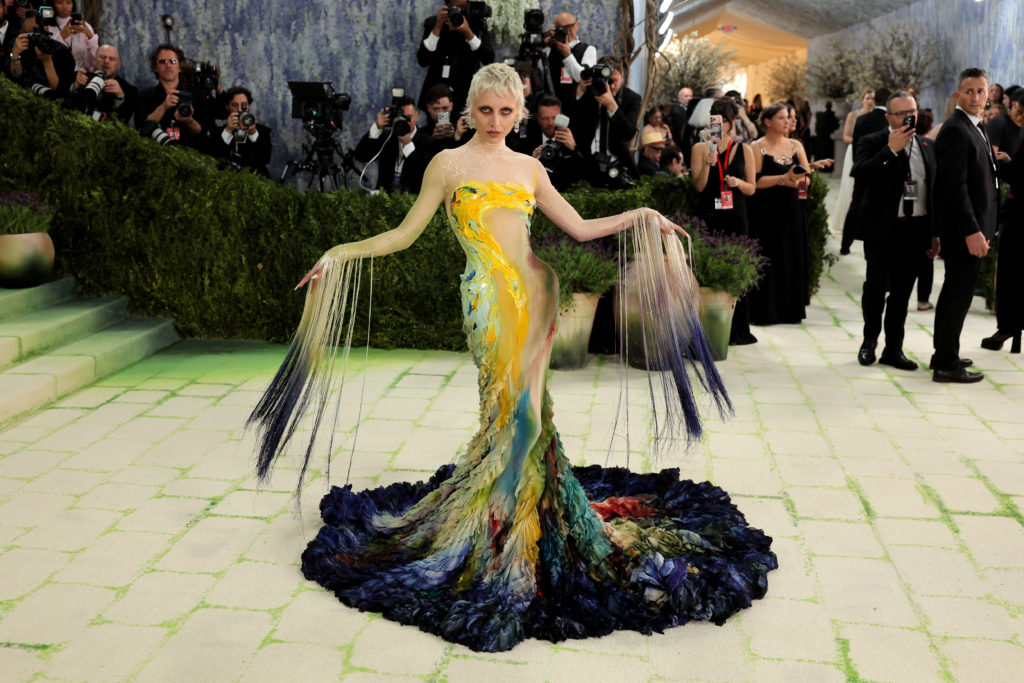
The 2026 Met Gala, themed 'Costume Art,' took place at the Metropolitan Museum of Art, honoring the Costume Institute's spring exhibition on the role of the dressed body in art history. Co-chaired by Nicole Kidman, Venus Williams, Anna Wintour, and Beyoncé, the event featured A-list celebrities, pop stars, and tech titans on the museum's grand staircase, with a dress code of 'Fashion Is Art' encouraging guests to treat the body as a canvas. Notable attendees included Sabrina Carpenter, Doechii, Rosé, Gigi Hadid, Katy Perry, and Charli XCX, with many wearing custom designs from houses like Marc Jacobs, Saint Laurent, Thom Browne, and Jean Paul Gaultier.

Hilma af Klint en 2 minutes

Hilma af Klint (1862–1944) is profiled as a pioneering Swedish abstract artist who created a vast body of visionary, large-scale abstract paintings decades before Kandinsky, yet kept them secret during her lifetime. The article traces her life from a childhood steeped in science and nature, through her studies at the Royal Academy of Fine Arts in Stockholm, to her dual artistic practice: conventional landscapes and portraits for income, and radically abstract works guided by spiritualist séances and theosophical beliefs. She founded the group "The Five" with fellow female artists, and from 1906 onward produced the monumental series "Paintings for the Temple" (193 works), convinced she was channeling a higher force. She stipulated in her will that her abstract works not be revealed until 20 years after her death, and they were only rediscovered in the late 1960s.

Beyond the Sagrada Família: These 6 Surprising Places in Barcelona Reveal a Lesser-Known Gaudí

Au-delà de la Sagrada Família, ces 6 lieux étonnants à Barcelone qui révèlent un Gaudí méconnu

Beaux Arts Magazine highlights six lesser-known architectural works by Antoni Gaudí in Barcelona, beyond his famous Sagrada Família. The article features Casa Vicens (1883–1885), his first private commission; Torre Bellesguard (1900–1909), a medieval-inspired tower with panoramic views; Casa Calvet (1897), a residential building with textile-themed details; and the Finca Güell and Palau Güell, experimental projects for his patron Eusebi Güell. These sites showcase Gaudí's organic style, fusion of nature and architecture, and influences from Japanese, Arabic, and Catalan Gothic traditions, with several recently opened to the public.

In new play, Norval Morrisseau forgery scandal prompts questions about authenticity and Indigenous identity

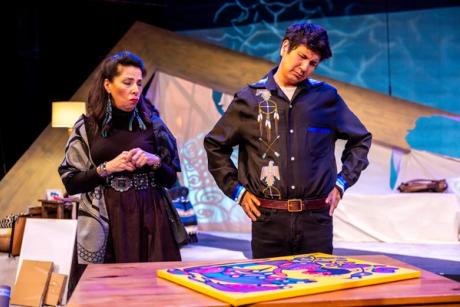
A new play by Ojibway playwright Drew Hayden Taylor, *The Undeniable Accusations of Red Cadmium Light*, dramatizes the massive Norval Morrisseau art forgery scandal in Canada. The story follows an Indigenous art expert named Nazhi, her adopted daughter Beverly, and a journalist whose investigation into Morrisseau forgeries unravels Nazhi’s own identity and status. The play uses Morrisseau’s iconic imagery and the forensic analysis of paint colors to explore the blurred lines between authentic and fake, both in art and in personal identity. It concluded its run at Vancouver’s Firehall Arts Centre on 3 May.

Are the Visitors' Lions at the Venice Biennale an Opportunity for Art Criticism? Let's Seize It?

I Leoni dei Visitatori alla Biennale di Venezia sono un’opportunità per la critica d’arte. Cerchiamo di coglierla?

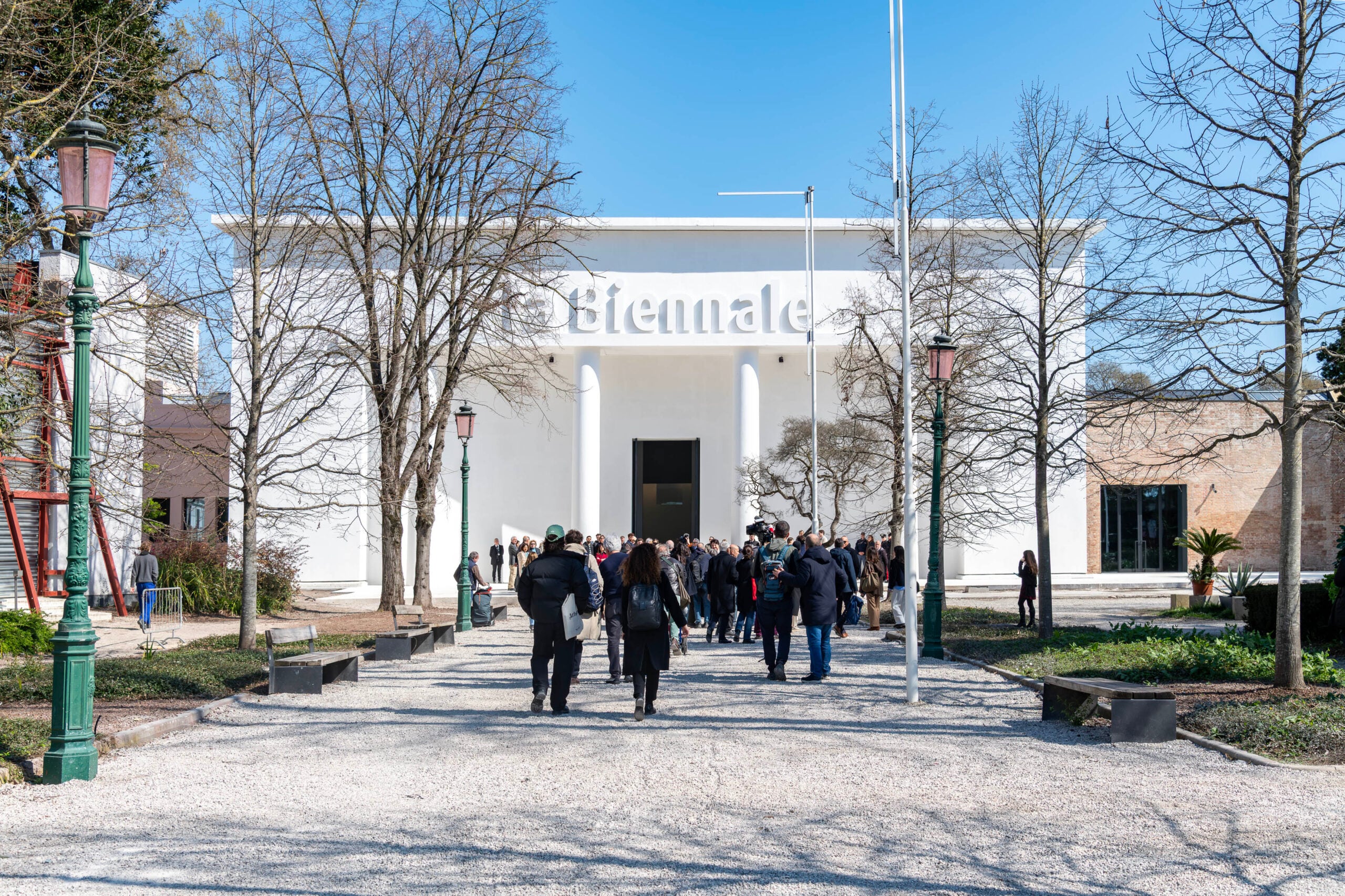
The article discusses the newly instituted "Leoni dei Visitatori" (Visitors' Lions) at the Venice Biennale, established after the resignation of the International Jury. The author, Alberto Villa, argues that this change shifts significant influence to art media and critics, as visitors will rely on reviews and recommendations from specialized magazines, websites, and social media to decide which pavilions to prioritize. Villa calls on critics to embrace this responsibility with heightened critical rigor, seeing it as an opportunity to revive the mediating role of art criticism.

Reaching for the stars: enduring symbols of Soviet science – in pictures

Photographer Eric Lusito documents Soviet-era scientific institutes across former USSR states in his book "Soviet Scientific Institutes," published by FUEL. The photo essay captures decaying facilities and enduring equipment at locations including the Institute of Radio Astronomy in Kharkiv, Ukraine; the Byurakan astrophysical observatory in Armenia; the Andronikashvili Institute of Physics in Tbilisi, Georgia; and the Fesenkov Astrophysical Institute in Kazakhstan, among others.

Maxwell Mustardo Sculpts Ancient Ornamentation in Brilliant Glazed Forms

Maxwell Mustardo creates ceramic vessels that blend ancient Greek forms like amphorae, kraters, and kylix with organic, fungal-like surface textures in fluorescent oranges, pinks, and greens. Based in New Jersey, he works as studio manager at the former residence of artist Toshiko Takaezu, and his practice focuses on pushing classical ornamentation—such as gadrooning—back into its natural origins, blurring the line between cultural artifact and living growth.

No One Understood the 2026 Met Gala Theme Quite Like Bad Bunny

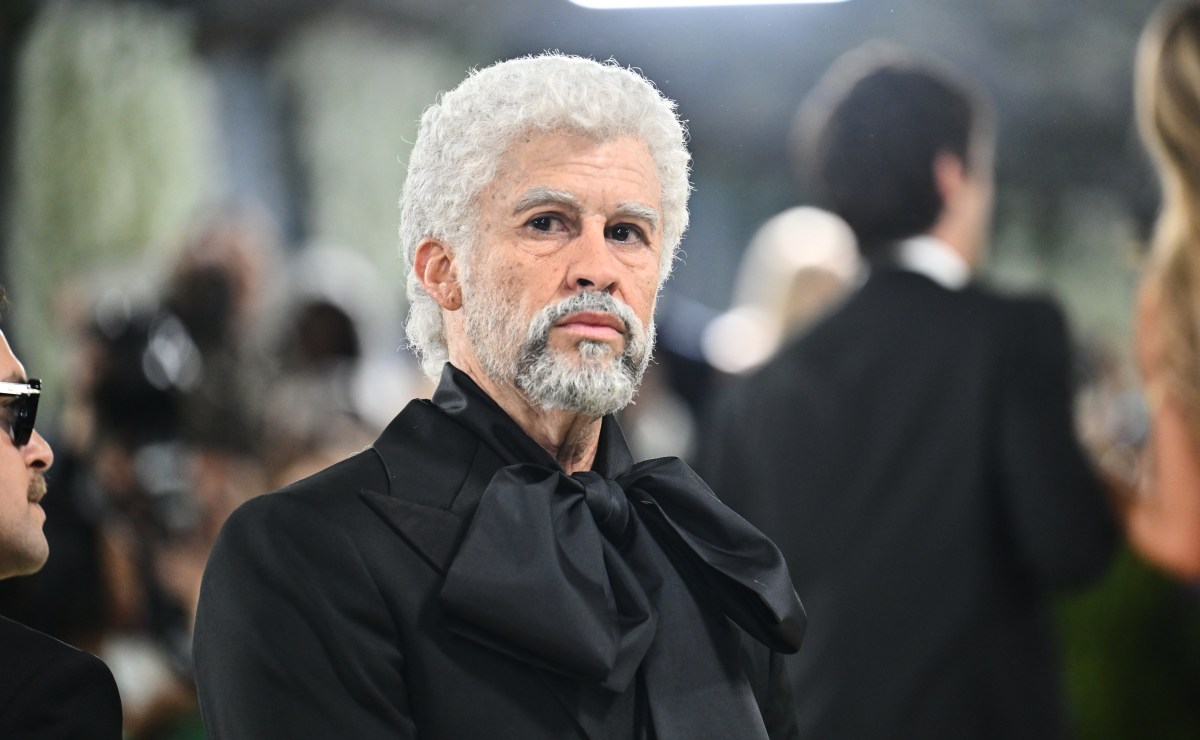
At the 2026 Met Gala, Puerto Rican superstar Bad Bunny arrived in a transformative look that made him nearly unrecognizable. He wore a black pussy-bow blouse, wrap blazer, and trousers, with prosthetics and makeup by Mike Marin turning him into an old man, accessorized with a cane. The gala's theme, inspired by the Metropolitan Museum of Art's 'Costume as Art' exhibition, had a dress code of 'Fashion is Art,' and Bad Bunny's choice specifically highlighted the aging body, aligning with the exhibition's focus on the body at all stages.

Births, deaths and a first kiss: life near the frontline in Ukraine – in pictures

British-Iranian artist Aria Shahrokhshahi's long-term photographic project "Wet Ground" captures daily life in Ukraine during Russia's full-scale invasion, focusing on moments of youth, subculture, and fragile continuity rather than traditional war imagery. The series, developed through repeated stays and volunteering since 2019, includes scenes from teenage discos, hospital wards, a birth during a missile attack, and a first kiss near the frontline, all shot in stark black and white.

'The Bean' Sculptor Kapoor Blasts America's 'Politics Of Hate' And 'Warmongering'

British-Indian sculptor Anish Kapoor, best known for Chicago's 'Cloud Gate' sculpture (commonly called 'The Bean'), publicly criticized American politics in a recent interview, denouncing what he described as a 'politics of hate' and 'warmongering.' Kapoor, whose monumental public artworks have become global icons, did not specify particular events but spoke broadly about the current political climate in the United States.

Michelangelo and Rodin: Finding the Living Spirit in Stone

The New York Times article examines the artistic kinship between Michelangelo and Auguste Rodin, focusing on how both sculptors sought to animate stone with a sense of living spirit and emotional intensity. It explores their shared techniques, such as leaving surfaces unfinished to suggest movement and inner life, and highlights key works including Michelangelo's "Slaves" and Rodin's "The Gates of Hell."

The new TAILOR newsletter is coming out: luxury crisis, new creative generations, and mental health (subscribe!)

Sta per uscire la nuova newsletter TAILOR tra crisi del lusso, nuove generazioni creative e salute mentale (abbonatevi!)

Artribune has launched a new edition of its newsletter TAILOR, which examines the transformation of the global fashion system amid a luxury crisis, the rise of new creative generations, and the growing structural importance of mental health in the industry. The newsletter features a focus on five emerging designers shifting fashion from product to narrative, an exclusive interview with influential stylist Tom Eerebout, and the debut in Italy of the project "One Person. One Voice" as part of the Mental Health in Fashion campaign, created by Florian Müller with artist Claudia Malecka.

In the Studio with Jevon Brown

Artist Jevon Brown, a Miamian of Bahamian, Jamaican, and Black Southern descent, discusses his multidisciplinary practice in an interview conducted in his Miami Beach apartment and studio. Brown works across textiles, silkscreen printing, fashion, and photography to explore cultural identity, belonging, queerness, and history. He describes how memories of Miami sunsets, family members like his uncle (a sneakerhead and hat collector), and ancestral references inform his creative process. Key works discussed include the "HAIREtage" series (2025), which uses materials like burlap and raffia to connect contemporary streetwear culture with African and Caribbean spirituality, and his inclusion in the exhibition "Material, Material World" at David Castillo Gallery.

Provincia Cosmica. A Foggia per scoprire la fotografia sociologica di Maria Palmieri

Maria Palmieri (Foggia, 1986) is a photographer who uses her camera as a tool for observation, understanding, and social improvement. After studying law, she turned to visual arts, blending reportage with vernacular photography to uncover truth amid the 'noisy horror' of contemporary life. In an interview with Artribune, she discusses her sociological approach to photography, her return to her hometown of Foggia, and her ongoing documentation of the region's fragilities, including the largest migrant ghetto in Europe.

At the 2026 Met Gala, Black stars and socialites turned the human form into art

The 2026 Met Gala, held at the Metropolitan Museum of Art under the theme 'Costume Art,' featured Black celebrities and socialites interpreting the human form as art on the red carpet. Notable attendees included Beyoncé in a skeletal silver gown by Olivier Rousteing, Colman Domingo inspired by Jean-Michel Basquiat, Rihanna in a custom Maison Margiela 'living sculpture' by Glenn Martens, and Venus Williams co-chairing the event while wearing a look referencing her own portrait by Robert Pruitt. Others like SZA, Tschabalala Self, and Cardi B offered surreal or literal nods to art history and body imagery.