filter_list Showing 18 results for "Stan" close Clear
dashboard All 204 museum exhibitions 120article news 26article culture 18article local 14trending_up market 8rate_review review 5candle obituary 5article policy 4gavel restitution 2person people 2
date_range Range Today This Week This Month All
Subscribe

The Defining Themes of Today’s Biennial Art

The article analyzes the defining themes and styles of the past four years in the international biennial circuit, based on a survey of 130 biennials. It identifies a core group of artists who appeared most frequently, including Ali Eyal, Apichatpong Weerasethakul, Carolina Caycedo, Kapwani Kiwanga, and Tuan Andrew Nguyen, among others. Many of these artists are also featured in the upcoming 61st Venice Biennale curated by the late Koyo Kouoh. The piece categorizes their work under two broad themes: "Post-Colonial Post-Conceptualism," which involves poetic engagement with colonial history and artifacts, and "Families and Networks," where artists explore personal and political family histories.
Harnessing the winds of societal change: how art dealers have been able to shape taste for centuries

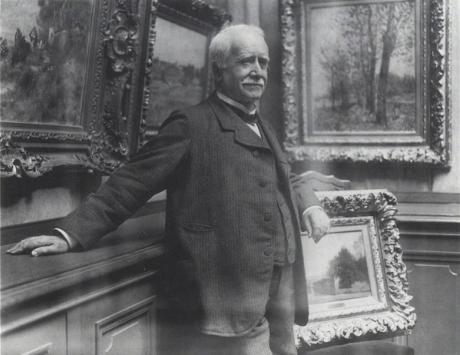
Valentina Castellani, a former Gagosian director, has authored a new book titled *Trading Beauty: Art Market Histories from the Altar to the Gallery* (out 1 May). The book traces how art dealers have historically leveraged societal changes—political, economic, and social—to reshape taste and market structures. Castellani begins in the Middle Ages, when art was made only on commission for patrons like the Catholic church and monarchies, and moves through key shifts such as the Dutch Republic's first open art market in the 17th century, which gave rise to the professional art dealer. She highlights dealers like Paul Durand-Ruel, Joseph Duveen, and Leo Castelli who capitalized on anti-establishment energy, new wealth, and post-war consumer culture to bring avant-garde art to the forefront.

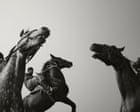
Buzkashi horsemen battling for a headless goat: Todd Antony’s best photograph

Photographer Todd Antony discusses his black-and-white series capturing the Central Asian sport of buzkashi, in which horsemen compete to grab and control a headless goat carcass. He traveled to Tajikistan to document matches involving up to 300 riders, shooting from a pickup truck and later taking portraits of riders on farms. One striking image shows three horses and their riders against a snowy mountain backdrop, with fog rolling in—a moment that inspired him to channel Richard Avedon's style using artificial lighting.

Expanded Vocabulary: Revisiting Deborah Kass’ Studio

The article recounts the author's visit to Deborah Kass's Brooklyn studio, which she shares with her wife, artist Patricia Cronin. The visit was prompted by logistical issues related to the author's exhibition "Social Minimalism" (2025). During the visit, the author and Kass revisited themes central to Kass's work over three decades: the exclusion of women from art history, Jewish identity, queer voice, lesbian subjectivity, and postwar American art. The conversation also touched on Kass's series including the Warhol Project, Feel Good Paintings, No Kidding, and the large painting/sculpture installation "Everybody" (2019), which was recently featured in a conversation between Kass and Titus Kaphar in Interview magazine.

Early 2026 Art Books From Yale University Press

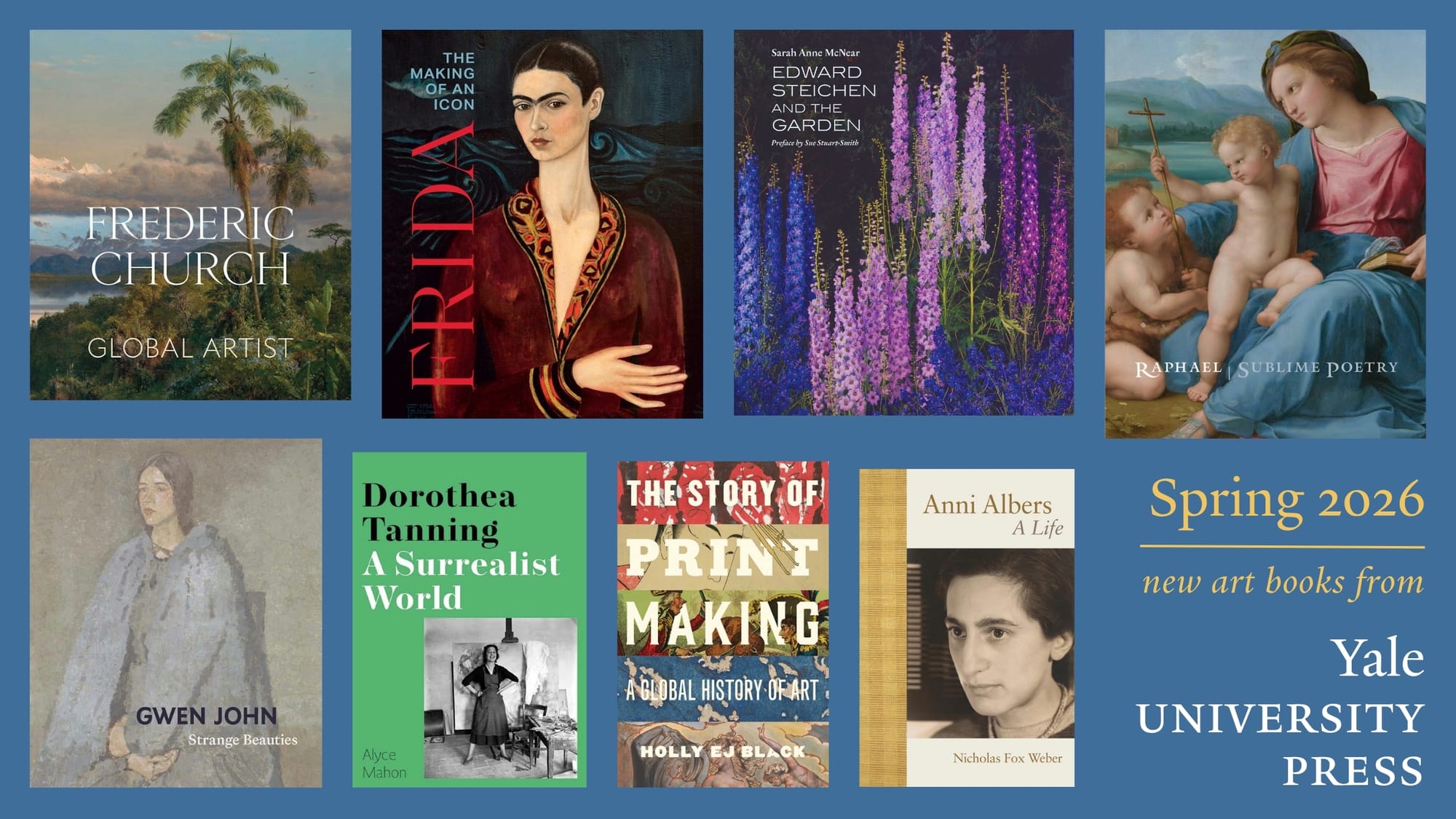
Yale University Press has announced its early 2026 art book lineup, featuring exhibition catalogues such as "Raphael: Sublime Poetry" from The Metropolitan Museum of Art, "Gwen John: Strange Beauties" from the Yale Center for British Art, "Edward Steichen and the Garden" from the George Eastman Museum, and "Frederic Church: Global Artist" from Olana NY State Historic Site. New releases also include a biography of Anni Albers by Nicholas Fox Weber, a catalogue titled "Anni Albers: Constructing Textiles" accompanying a European traveling exhibition, and Alyce Mahon's "Dorothea Tanning: A Surrealist Life," named a Best New Art Book of 2026 by Christie's. The press will hold a 50% off annual sale in May.

"There are no minor or feminine arts." Domitilla Dardi explains this in her new book

“Non esistono arti minori o femminili”. Ce lo spiega Domitilla Dardi nel suo nuovo libro

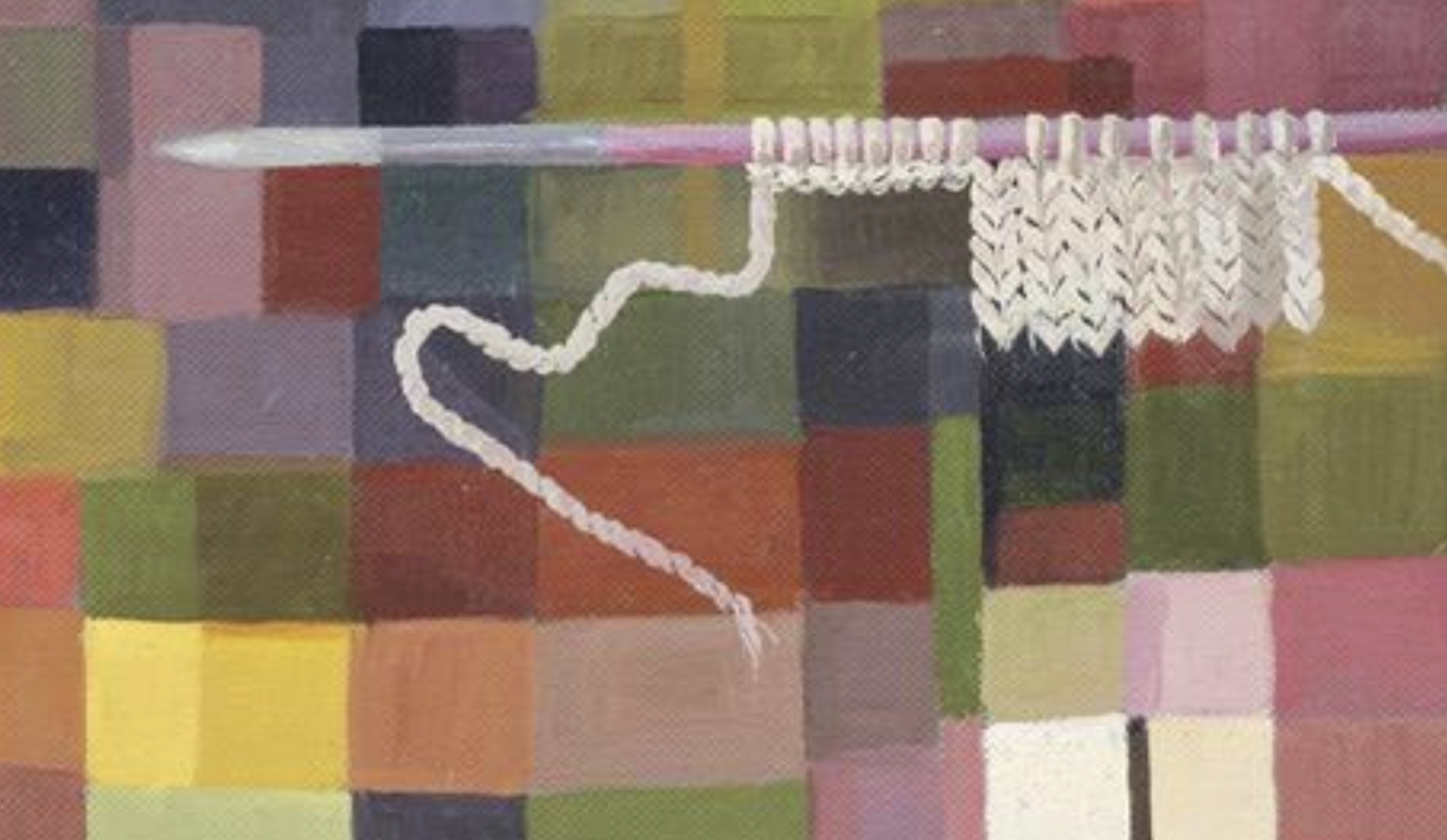
Domitilla Dardi's new book "Cucire Universi" (published by Einaudi) presents a counter-history of design, focusing on techniques traditionally dismissed as "feminine" and "minor"—such as sewing, ceramics, cooking, and knitting. The book argues that these practices have been systematically undervalued by official art histories, yet have contributed significantly to technologically advanced research fields. Dardi uses real historical figures like Emily Dickinson to illustrate how women's creative and scientific talents were channeled into these marginalized domains, and she calls for overcoming the dualistic view that separates art from craft.

GEORGE FEBRES: TRANSLATION, IRONY, AND LIBERATION. AN ECUADORIAN ARTIST IN THE DIASPORA

The article examines the life and work of George Febres (1943–1996), an Ecuadorian artist who spent most of his career in the United States, primarily in New Orleans. Febres’s practice blends Pop Art, Neo-Surrealism, and Southern US culture with his experiences as a migrant and queer subject, using bilingualism and ironic tropical imagery to create a hybrid, irreverent body of work. Despite his significance, no works by Febres exist in Ecuadorian public collections, and no major retrospective has been held in his home country, reflecting a broader erasure of queer narratives from national art history.

Comment | The slopification of political art

The article critiques the rise of AI-generated political imagery, such as Donald Trump depicted as Jesus and viral Lego videos of the Iranian Revolutionary Guard Corps, arguing that these shallow, generic visuals fail to provide meaningful or lasting cultural commentary on current conflicts. The author contrasts this with the inventive, humorous resistance seen during the 2013 Gezi Park protests in Istanbul, which later influenced a generation of Turkish artists.

In plane sight: how the gilded elite live – in pictures

Photographer Will Vogt's second monograph, *Behind the Hedges*, offers an intimate glimpse into the lives of America's gilded elite, featuring images of his own social circle at hunting estates, weddings, exclusive club lunches, and golf weekends. The book, published by Schilt Publishing, includes quotes by Vogt and text by editor Jennifer Garza-Cuen from her essay 'Posture of Privilege,' capturing a world of inherited wealth and tradition.

When archaeology was dominated by men | Letters

A reader named Elke Bachler writes a letter to The Guardian challenging a sentence in a review of Thomas Laqueur's book *The Dog's Gaze*. The review described a prehistoric scene as showing "a boy and a dog" standing together in wonder before cave art. Bachler argues there is no evidence the child was a boy, noting that archaeology has historically been dominated by men who interpreted evidence through contemporary gender roles.

Bodies in Motion, Bodies at Rest: Ali Cherri in Conversation with Kaelen Wilson-Goldie

This article presents a conversation between artist Ali Cherri and writer Kaelen Wilson-Goldie, marking the second installment of a collaborative series between TextWork by Fondation Pernod Ricard and Mousse Magazine. The series features in-depth dialogues between artists from the TextWork program and magazine contributors, expanding on the traditional interview format, and is set to continue until 2027.

‘A constant quiet terror’: Getting lost in Irish folklore – in pictures

Maria Lax's photobook *Stray Sod* draws on Irish folklore and archival accounts from the Irish National Archives to explore the phenomenon of the 'stray sod'—enchanted patches of earth said to disorient and lead travelers astray, especially at night. Her images reimagine rural Irish landscapes as sites of sudden confusion, where familiar landmarks vanish and fog or mist descends, evoking a sense of 'constant quiet terror'.

Reaching for the stars: enduring symbols of Soviet science – in pictures

Photographer Eric Lusito documents Soviet-era scientific institutes across former USSR states in his book "Soviet Scientific Institutes," published by FUEL. The photo essay captures decaying facilities and enduring equipment at locations including the Institute of Radio Astronomy in Kharkiv, Ukraine; the Byurakan astrophysical observatory in Armenia; the Andronikashvili Institute of Physics in Tbilisi, Georgia; and the Fesenkov Astrophysical Institute in Kazakhstan, among others.

Michelangelo and Rodin: Finding the Living Spirit in Stone

The New York Times article examines the artistic kinship between Michelangelo and Auguste Rodin, focusing on how both sculptors sought to animate stone with a sense of living spirit and emotional intensity. It explores their shared techniques, such as leaving surfaces unfinished to suggest movement and inner life, and highlights key works including Michelangelo's "Slaves" and Rodin's "The Gates of Hell."

The Death of the Art School

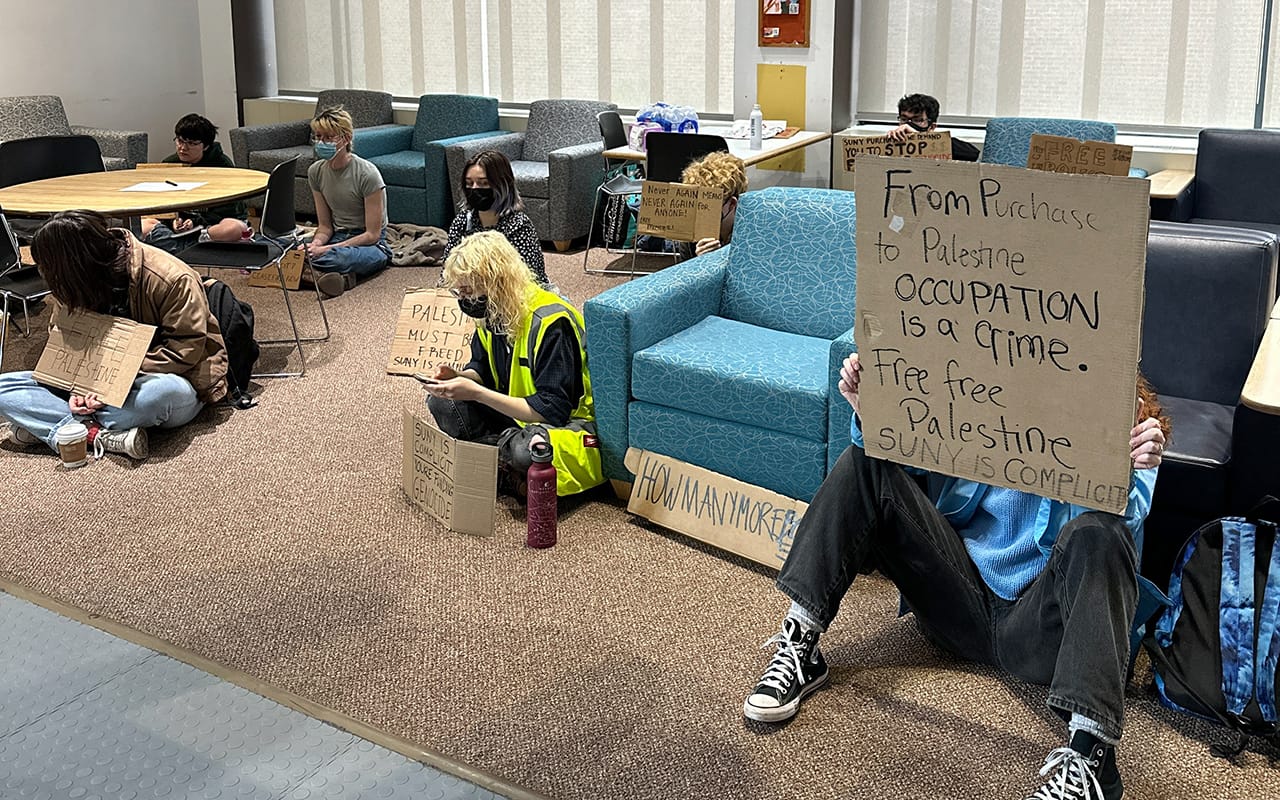
In a faculty meeting at Purchase College in New York, an administrator referred to students as "consumers," prompting the author to reflect on the pervasive corporatization and "administrification" of American higher education. The article argues that this language reflects a broader restructuring of universities as businesses, where students are customers, knowledge is a product, and faculty are service providers. It cites data showing that between 1976 and 2011, non-faculty professional positions grew by 369% while tenure-track faculty grew by only 23%, and at Purchase College, administrator salaries rose over 45% from 2016 to 2024 while assistant professor salaries rose just 14%, with inflation at 31%.

What Artists Sign Away

Artist and writer Sarah Hotchkiss recounts two personal experiences where galleries and residency programs used standard contracts to limit artists' rights. In the first, a new gallery refused to shorten a six-month consignment period after an exhibition, leaving her work in "contractual limbo" where she would owe the gallery half of any sale even if she found the buyer herself. In the second, a residency required her to waive moral rights under the Visual Artists Rights Act, protections that allow artists to prevent distortion and control attribution of their work.

Creating Variety in Contemporary Rome: The Story of the Conventicola degli Ultramoderni on Sky Arte

Fare varietà nella Roma contemporanea: la storia della Conventicola degli Ultramoderni su Sky Arte

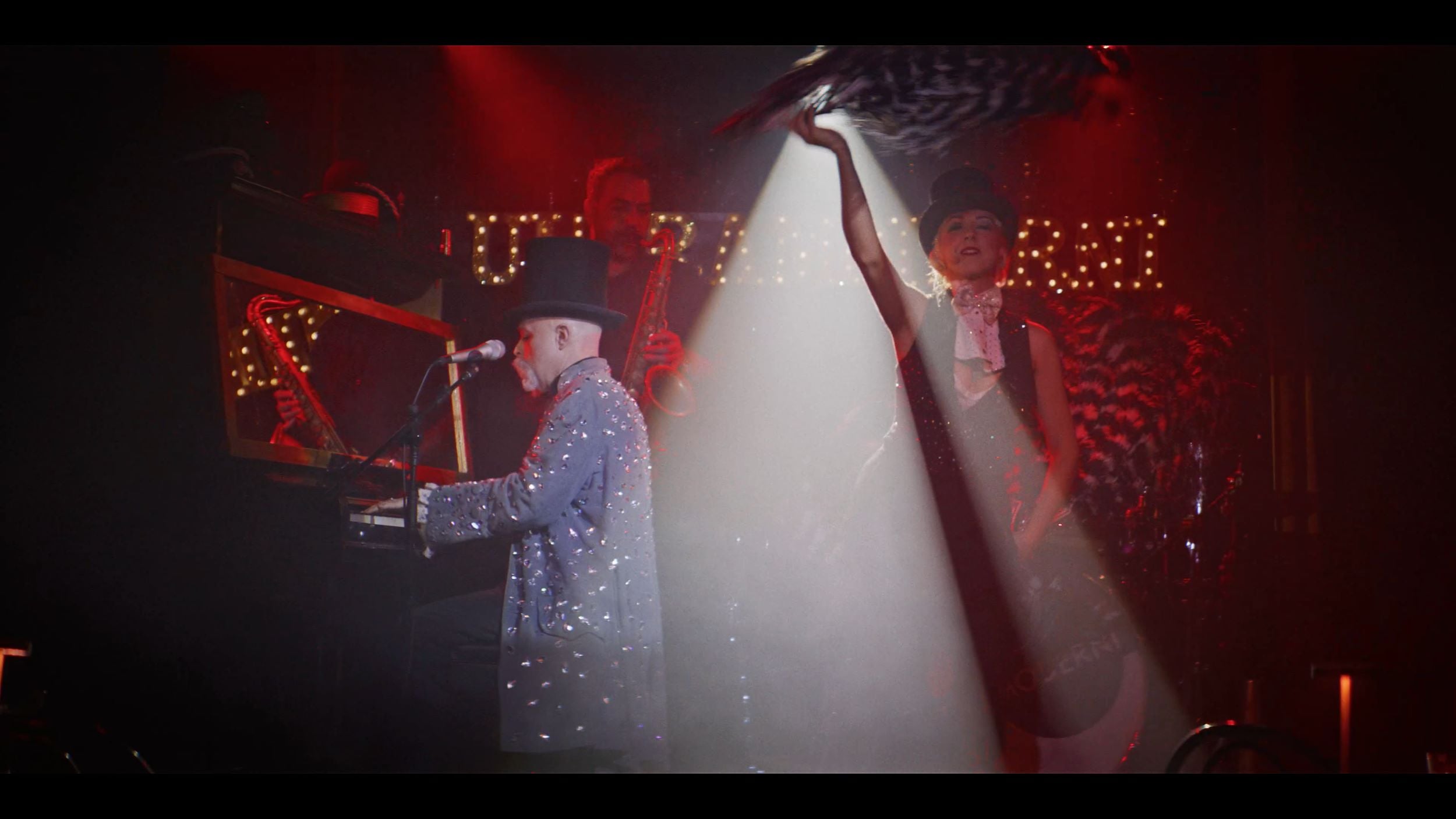
On Sunday, May 3, Sky Arte will premiere the documentary "Ultramoderni," which chronicles the rise of the Conventicola degli Ultramoderni, a unique artistic collective in Rome. Founded by Sior Mirkaccio and Madame de Freitas, who met in 2011, the group operates from a small hidden venue in the San Lorenzo district, blending music, cabaret, burlesque, and contemporary variety shows with a retro-futuristic aesthetic. The documentary, filmed in their Roman space, features interviews with the duo and excerpts from their performances, tracing how they built a diverse community of enthusiasts around their reinvention of past traditions.

Black Designers as Fine Artists: Fashion Meets Sculpture

The article from Ebony.com explores the intersection of fashion and fine art, highlighting how Black designers are increasingly being recognized as fine artists whose work bridges clothing design and sculpture. It profiles several contemporary Black designers who create garments that function as sculptural objects, exhibited in galleries and museums rather than solely on runways. The piece examines how these creators challenge traditional boundaries between fashion and art, using materials and techniques that elevate their work into the realm of fine art.