
filter_list Showing 5 results for "VOICES" close Clear
dashboard All 63 museum exhibitions 44article local 10article culture 5person people 2trending_up market 1article policy 1
date_range Range Today This Week This Month All
Subscribe

A View From the Easel

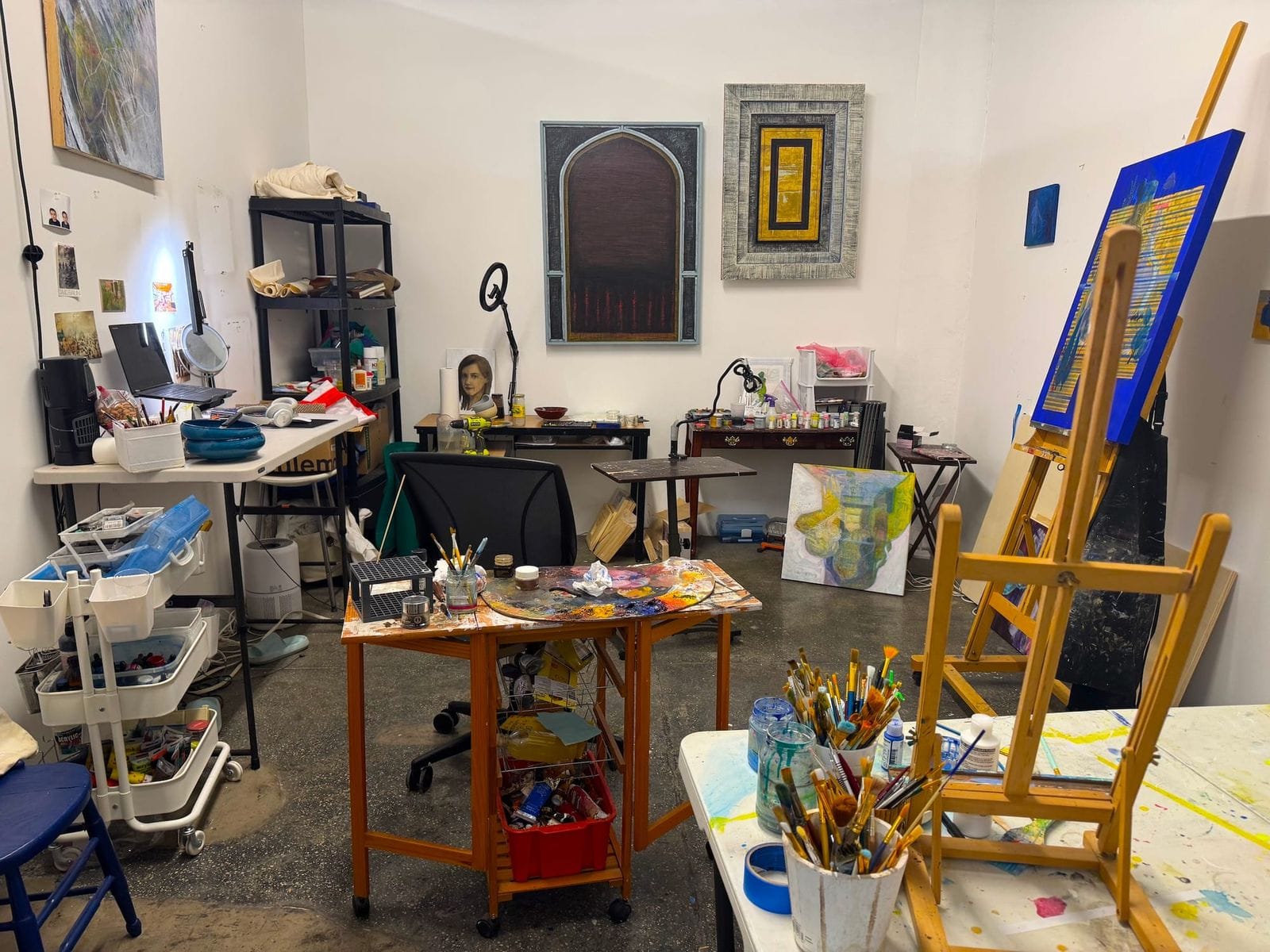
New Jersey-based artist Hadieh Afshani is featured in the 334th installment of Hyperallergic's 'A View From the Easel' series, which profiles artists in their workspaces. Afshani describes her studio practice at Mana Contemporary in Jersey City, where she balances her art with caring for her baby, working around his feeding and sleeping rhythms. She emphasizes the importance of natural light, a sink for fluid processes, and the supportive community of fellow artists and mothers.

Primitivism to Reinvent Art

Le primitivisme pour réinventer l’art

Philippe Dagen has published the third and final volume of his series on primitivism, covering the period from World War II to the late 1970s. The book traces how Western artists, from Barnett Newman and Jackson Pollock to members of the CoBrA movement and figures like Jean Dubuffet, Lucio Fontana, and Yayoi Kusama, engaged with so-called "primitive" art from Africa, Oceania, and the Americas, often as a means of rejecting or redefining modern civilization. Dagen also examines the intellectual debates surrounding primitivism, including the critiques of colonized peoples who refused the label "primitive," and the shifting attitudes of thinkers like Claude Lévi-Strauss, Michel Leiris, and Aimé Césaire.

Nine Artists on the Gardens They’ll Never Forget

Nine artists, including Hiroshi Sugimoto, Irene Neuwirth, and Umberto Pasti, share personal reflections on unforgettable gardens from around the world. Each contributor describes a specific garden that left a lasting impression, ranging from historic estates to wild natural landscapes, highlighting the sensory and emotional impact of these spaces.

GEORGE FEBRES: TRADUCCIÓN, IRONÍA Y LIBERACIÓN. UN ARTISTA ECUATORIANO EN LA DIÁSPORA

George Febres (Guayaquil, 1943 – New Orleans, 1996) was an Ecuadorian artist whose work blended pop art, neo-surrealism, and Southern U.S. culture, shaped by his experience as a migrant and queer individual. The article traces his life from a privileged but unstable childhood in Ecuador to his migration to the United States, where he was drafted during the Vietnam War and eventually settled in New Orleans. Febres used bilingualism and ironic appropriation of tropical imagery to create a hybrid, irreverent body of work that challenges the official historiography of Ecuadorian art.

Final book in trilogy asks: What is the future of the art world?

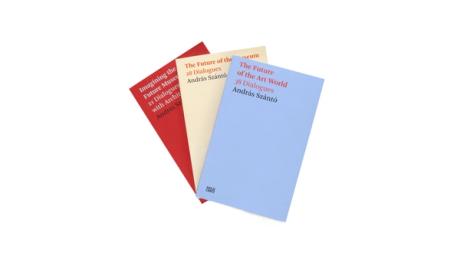
Cultural strategist András Szántó has published the third and final volume of his trilogy on the future of museums, titled *What Is the Future of the Art World?*. The book features dialogues with a wide range of art-world figures—including gallerists José Kuri and Atsuko Ninagawa, collectors Alain Servais and Sylvain Levy, artists William Kentridge and Holly Herndon & Mathew Dryhurst, curator Fatoş Üstek, network scientist Albert-László Barabási, former Art Basel director Marc Spiegler, and Sheikha Al-Mayassa Al Thani—who discuss topics such as the definition of the art world, its rules, and its future trajectory. Szántó notes that there is no consensus on whether the art world is still expanding or entering a phase of slowdown, with different regions moving on divergent paths.