filter_list Showing 12 results for "Making Visible" close Clear
dashboard All 15 museum exhibitions 12rate_review review 2article culture 1
date_range Range Today This Week This Month All
Subscribe

art best new york show reviews

The article presents a speed round of one-sentence reviews for current art exhibitions in New York's Chelsea and West Village neighborhoods, curated by the Critics' Table. Featured shows include Édouard Vuillard's "Early Interiors" at Skarstedt, Ralph Lemon's "From Out of Space" at Paula Cooper, "Art (by) Dealers" at White Columns, Nicola Tyson's "NEED" at Petzel, Anne Truitt's "Waterleaf" at Matthew Marks, Paul Chan's "Automa Mon Amour" at Greene Naftali, and a Robert Mapplethorpe exhibition at Gladstone, all running through April 2025.
At the Aspen Art Museum, Glenn Ligon inspects the record

Glenn Ligon's exhibition "Break It Down" opened at the Aspen Art Museum on November 21, showcasing 47 works spanning three decades. The show examines how the artist constructs a portrait of self by drawing on external institutional documents, including school reports, museum conservators' notes, and James Baldwin's essay "Stranger in The Village." Key works include 50 screenprinted self-portraits with printing glitches that question stable identity, and a final gallery centered on a painting built from Baldwin's text, surrounded by dark carbon and graphite rubbings that reinterpret the essay through physical mark-making.

sue williamson retrospective iziko south africa 1234747138

Sue Williamson's first-ever retrospective, "There's something I must tell you," is on view at the Iziko National Gallery in Cape Town through September 24, 2025. The exhibition spans five decades of her practice, which combines photography, drawing, and installation to explore themes of memory, remembrance, and the enduring impacts of apartheid and colonialism in South Africa. Key works include the video "There's something I must tell you" (2013), featuring conversations between anti-apartheid activists and their granddaughters; "A Few South Africans" (1982–87), a series of photo etchings celebrating influential women; and the installation "Messages from the Moat" (1997), which memorializes enslaved people brought to Cape Town. A new installation, "Don't Let the Sun Catch You Crying" (2024), is also featured.

Beware the technology rat trap: Cooper Jacoby’s standout contribution to New York’s Whitney Biennial

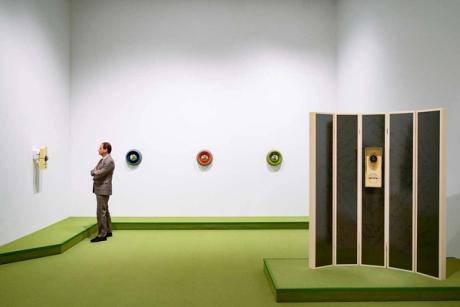
Cooper Jacoby's sculptures at the Whitney Biennial explore how AI corporations and other companies turn personal data into financial assets. His five works, displayed in a green-carpeted space he describes as "almost like a rat trap," include the 2026 piece *Estate (July 10, 2022)*—a folding screen with an intercom that uses AI trained on social media posts from deceased creatives to generate vocal outputs. Another series, *Mutual Life*, features eye-like sculptures with clock hands that spin based on the biological age of anonymous individuals in the artist's network. Jacoby's work highlights the lack of regulation around digital life and death, and the opaque nature of AI systems.

Almost Everything in the World Depends on This Substance

"Fast alles in der Welt hängt von dieser Substanz ab"

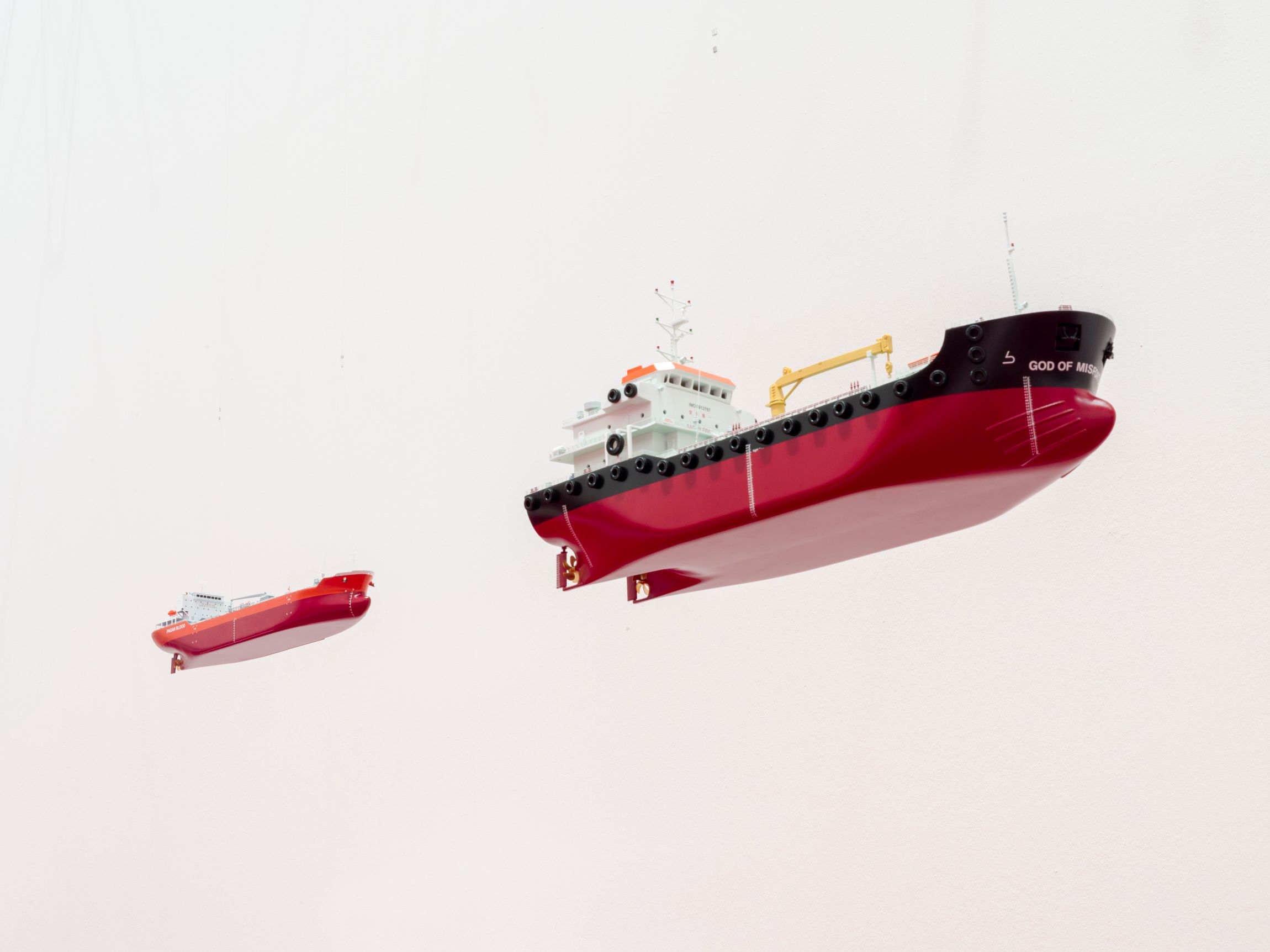
Artist Monira Al Qadiri presents her exhibition "Hero" at the Berlinische Galerie, focusing on oil tankers as central figures. The show explores the hidden violence and scale of the petroleum industry through a large wall painting of the supertanker Hero, miniature tankers with satirical names, and a video work depicting their destruction. Al Qadiri connects this to her long-term artistic investigation of oil's imagery and materiality.

Kim Dacres Revitalizes Sleek Tires, Chains, and Gears in Defiant Sculptures

Kim Dacres transforms discarded auto and bicycle rubber into sculptural portraits that celebrate Black hairstyles and community. Her new exhibition "Lost on a Two Way Street" at Charles Moffett in New York features busts with braided buns and gear-like crowns, alongside flat wall works evoking Victorian cameos. The show also includes reimagined U.S. flags with Black and brown figures, addressing the current political climate and the gap between national symbols and lived reality.

‘I see hidden codes within the everyday’: Sandra Poulson’s first museum exhibition explores material histories of global exchange

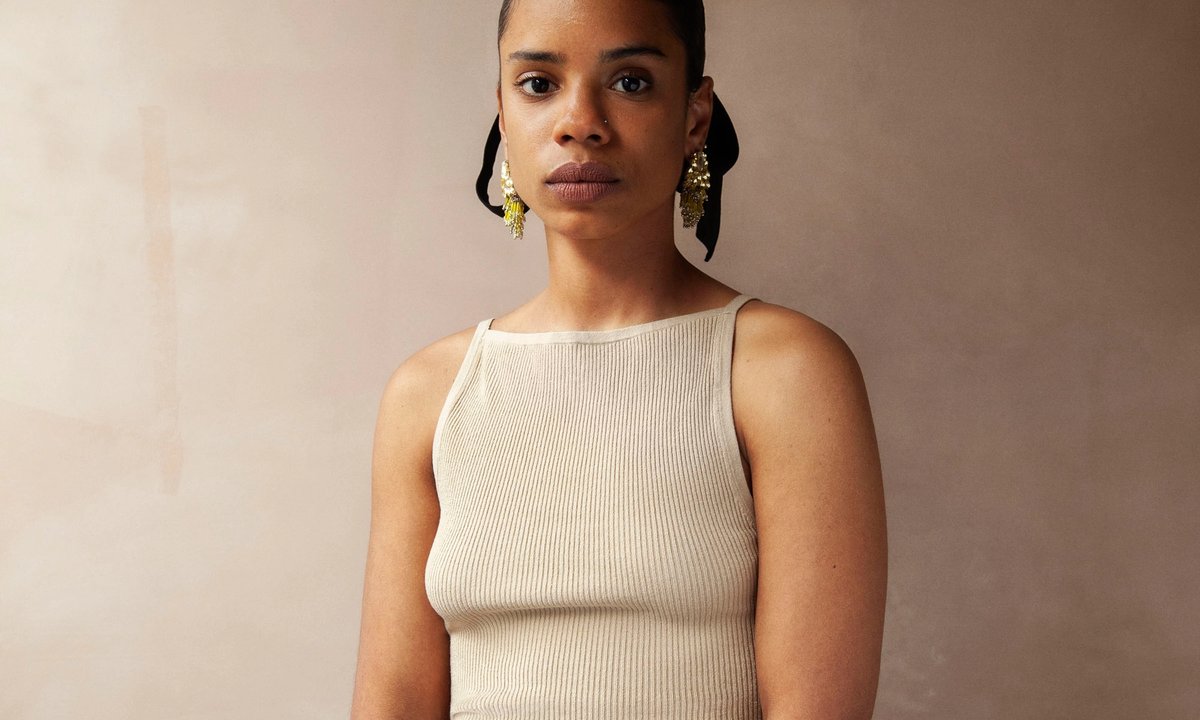
The article features an interview with Angolan artist Sandra Poulson about her first museum exhibition, 'Este quarto parece uma República! (This bedroom looks like a republic!)', on view at MoMA PS1 in Queens until October 6. The exhibition, originally commissioned by Jahmek Contemporary Art in Luanda and shown at Sadie Coles HQ during Condo London 2025, uses wood and found furniture to explore how symbols in everyday objects reflect postcolonial legacies, global trade, and power structures. Poulson discusses her father's Portuguese phrase that inspired the title, the material history of wood from Dutch colonies, and the use of institutional logos on T-shirts in Angola as a form of propaganda.

Currents of the 61st Biennale: Inside Venice’s Flow of Art and Power

The 61st Venice Biennale jury, composed of five curators—Solange Oliveira Farkas, Zoe Butt, Elvira Dyangani Ose, Marta Kuzma, and Giovanna Zapperi—resigned on April 30th amid internal tensions over decisions that conflicted with the late Koyo Kouoh's curatorial vision. The jury had previously stated it would refrain from considering countries whose leaders are charged with crimes against humanity by the International Criminal Court. Meanwhile, Filipino artist Jon Cuyson prepares to present his installation at the Philippine Pavilion, featuring works shipped 60 days before geopolitical conflict escalated, navigating unstable maritime routes. His project includes the film series "Sea of Love (Dagat ng Pag-ibig)" and a new fourth film, "Sea of Echoes," exploring themes of migration, queer experience, and ecological resilience through mussels as non-human protagonists.

Humid Traces

Humid Traces, curated by Federico Pérez Villoro, is an exhibition at an unnamed New York venue that examines how bodies of water are weaponized as borders amid climate change and extreme weather. The show features international artists—including Dele Adeyemo, Natalia Lassalle-Morillo, Zishaan A Latif, Caio Reisewitz, Susan Schuppli, Marisa Srijunpleang, Studio Folder, and Leonel Vásquez—whose works in installation, sound, photography, video, and data visualization reveal the violent effects of migration-control technologies and water's material memory.

Monopol Gives Away 5 x 2 Tickets for Photo Exhibition at Museum Rietberg

Monopol verlost 5 × 2 Tickets für Foto-Ausstellung im Museum Rietberg

The Museum Rietberg in Zurich is presenting the exhibition "Fast ein Paradies" (Almost a Paradise), which critically examines colonial-era photography as an instrument of power. The show juxtaposes historical photographs with contemporary artworks that recontextualize this material, featuring artists like Sasha Huber, Sammy Baloji, Raphaël Barontini, and Andrea Chung, who intervene in the archival images to challenge colonial narratives and restore agency to the subjects.

Street Artists Take On Monumental Infrastructure in ‘Impossible’ Photos

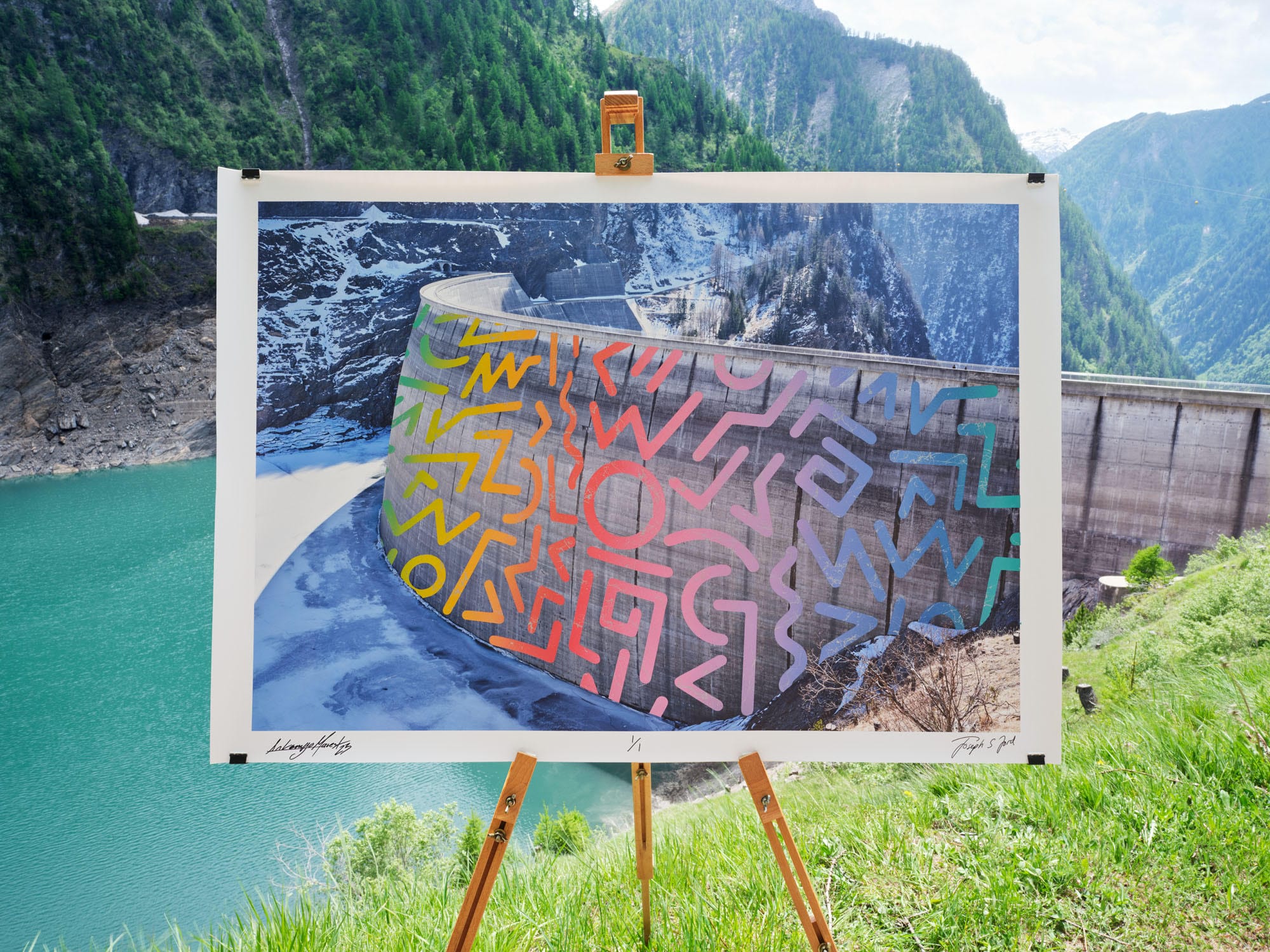
Photographer Joseph Ford collaborates with street artists like Antonyo Marest, Alex Senna, and MadC on his 'Impossible Street Art' series. The artists create trompe-l'œil interventions on Ford's photographs of massive infrastructure sites, which he then documents on an easel placed in front of the actual location, creating the illusion of monumental, site-specific street art.

Art exhibition shines light on Romani persecution during Holocaust

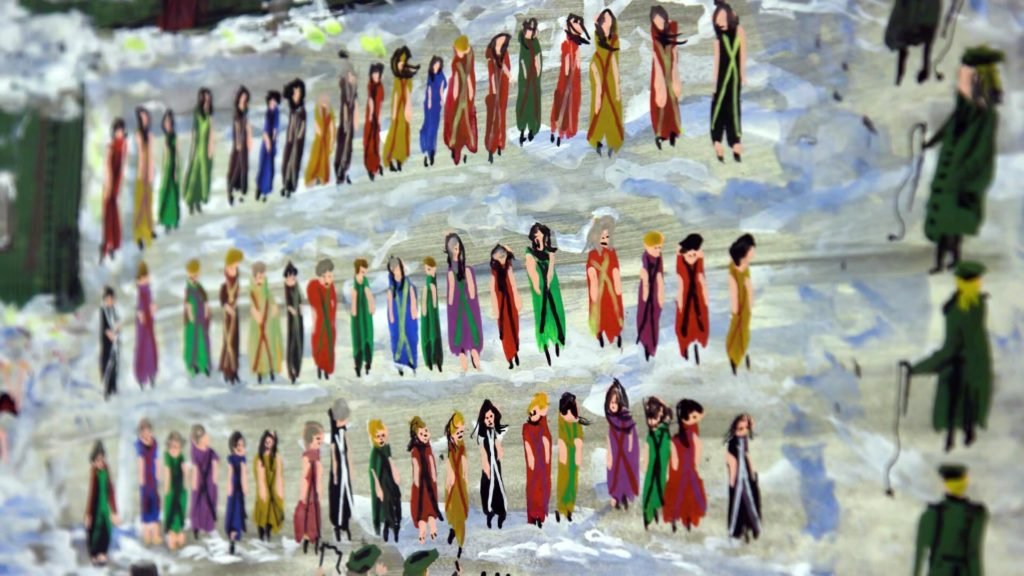
An exhibition titled "Ceija Stojka: Making Visible" at The Drawing Center in New York City highlights the persecution of Roma and Sinti people during the Holocaust, a lesser-known chapter of Nazi atrocities. The show features paintings and drawings by Ceija Stojka, a Romani artist, writer, and activist who survived the genocide and died in 2013 at age 79. Her works, described as acts of memory and imagination rather than documentary, depict her experiences and stories passed down to her, with the exhibition also including documentary films by Karin Berger and Stojka's writings, such as her 1988 memoir "We Live in Secrecy."