filter_list Showing 10 results for "authorship" close Clear
dashboard All 15 museum exhibitions 10article culture 3article news 1rate_review review 1
date_range Range Today This Week This Month All
Subscribe

Refik Anadol’s Dataland Museum Sets an Opening Date

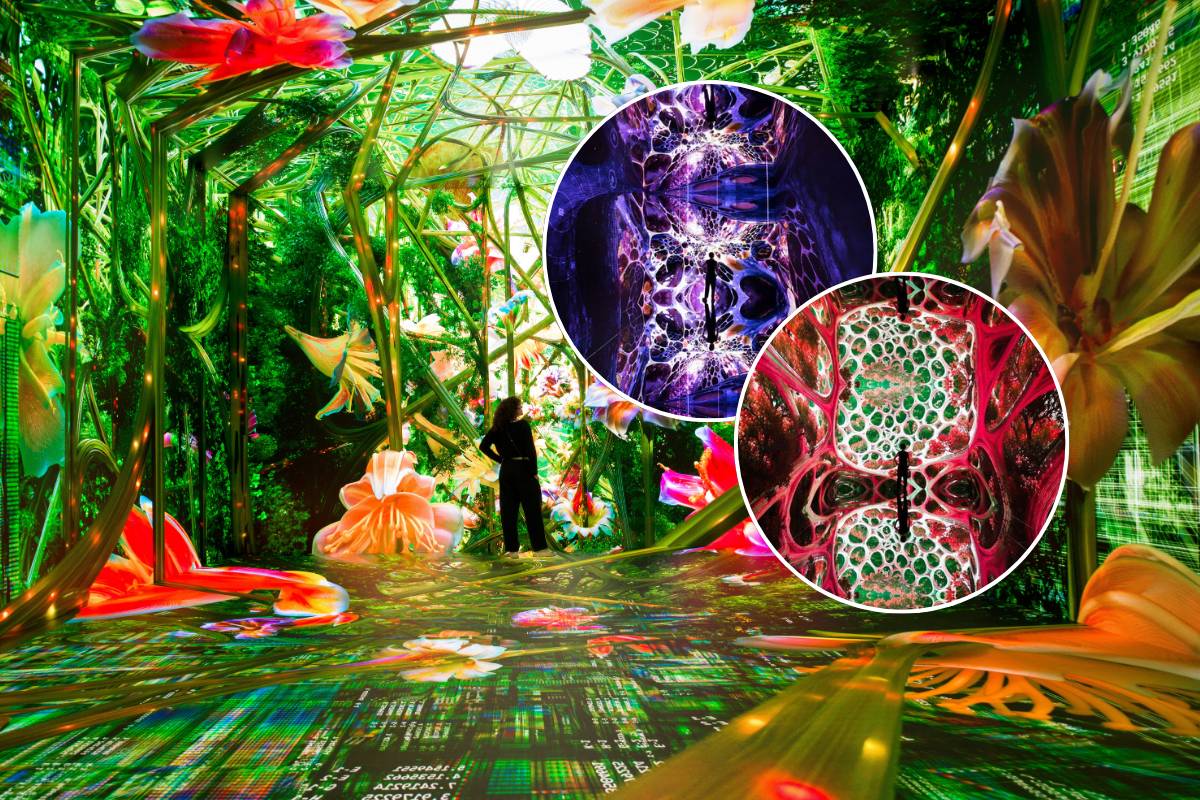
Refik Anadol's Dataland, billed as the world's first A.I. art museum, will open on June 20 in Los Angeles after more than two and a half years of planning. Founded by Anadol and his partner Efsun Erkiliç, the museum is housed inside the Frank Gehry-designed Grand L.A. complex and features five galleries. Its debut exhibition, "Machine Dreams: Rainforest," uses ecological data processed through Anadol's Large Nature Model to create digital sculptures simulating possible rainforests. The museum, designed by Gensler, dedicates nearly a third of its 35,000 square feet to operational hardware and runs on 87 percent carbon-free energy.

Urban Reflections, Daniel Melim on the City as Studio, Archive and Collective Space

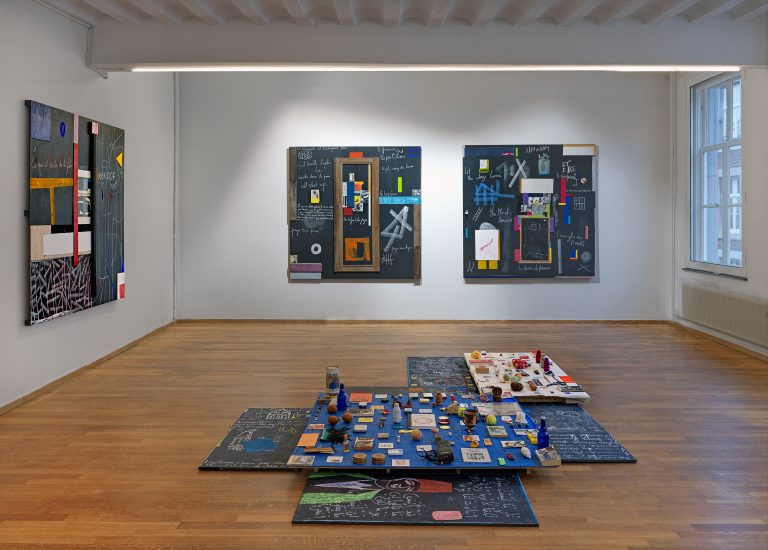
Brazilian artist Daniel Melim discusses his exhibition "Urban Reflections" at São Bernardo do Campo in an interview with Brendon Bell-Roberts. Melim, who emerged from the graffiti and stencil cultures of ABC Paulista, describes how the city functions as an active collaborator in his practice, transforming the gallery into an expanded studio where boundaries between street, studio, and institution dissolve. The exhibition juxtaposes pivotal and previously unseen works, tracing his artistic evolution and layered urban memory.

The World’s First Museum Of AI Arts Is Finally Opening In L.A. This Summer — Here's How To Get Insider Access Before It Opens

Los Angeles will open DATALAND, the world's first Museum of AI Arts, on June 20, 2026. Co-founded by Refik Anadol and Efsun Erkılıç, the 35,000-square-foot museum is located in Frank Gehry's Grand LA complex within the Grand Avenue Cultural District. Its inaugural exhibition, "Machine Dreams: Rainforest," runs through January 31, 2027, and features the Large Nature Model—the first open-source generative AI model dedicated to nature. The exhibition uses real-time audience biofeedback and ecological datasets to create a shifting digital rainforest, including an Infinity Room that plays the extinct Kauaʻi ʻŌʻō bird's call. Pioneer Memberships are now on sale, offering exclusive pre-opening access and a generative print.

Gala Porras-Kim: Future spaces replicate earlier spaces

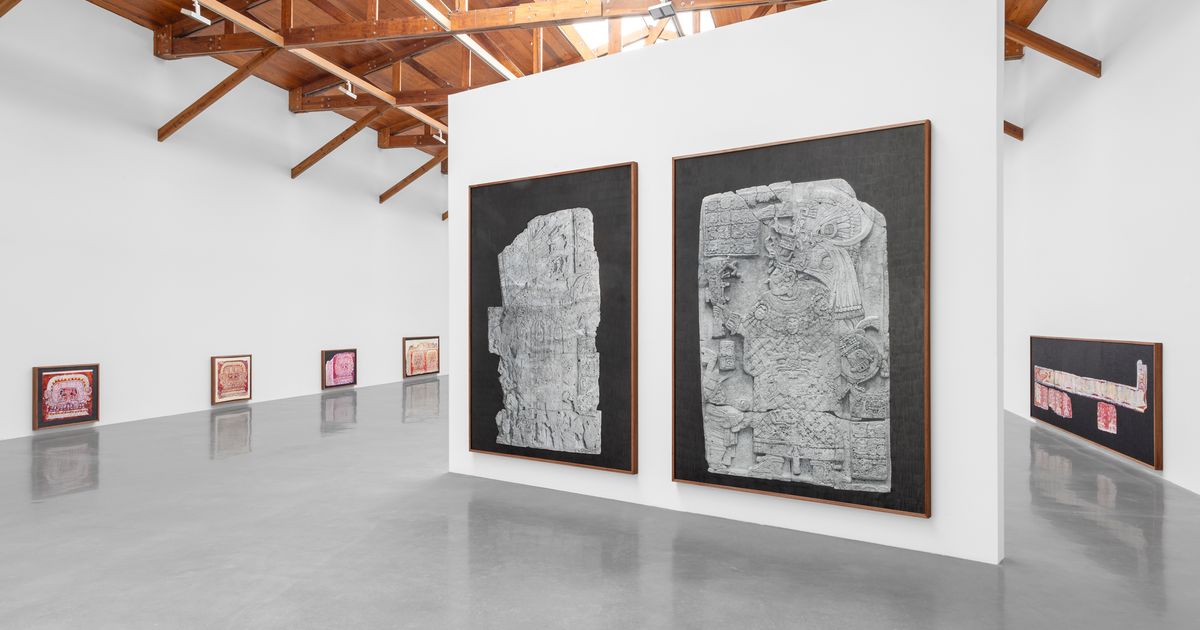
Gala Porras-Kim presents her first exhibition at kurimanzutto in Mexico City, titled "Future spaces replicate earlier spaces," running from April 11 to June 13, 2026. The show brings together works that examine how museums and conservation institutions reclassify objects removed from their original contexts, using reconstruction and resituating to explore their spatial, material, and temporal conditions. Central to the exhibition is the installation "The motion of an alluvial record" (2024), which recreates the humid marshland atmosphere of the Yucatán Peninsula inside the gallery, contrasting with the controlled climates of museums. Other works include drawings replicating wall decorations from the Techinantitla complex in Teotihuacan, which were fragmented and sold on the black market, and graphite drawings of objects by artist Brígido Lara, whose "original interpretations" of Totonac ritual clay objects were mistakenly catalogued as Pre-Hispanic artifacts in major museums.

Reclaiming the Self-Taught Artist’s Creative Identity

The American Folk Art Museum (AFAM) in New York will present "Self-Made: A Century of Inventing Artists" this spring, a major exhibition examining the historical definition of the "self-taught artist" through authorship, agency, and self-representation. Featuring over 90 works spanning the early 20th century to today, the show is organized around three strategies—self-portraiture, alter egos, and autobiography—and includes pieces by Henry Darger, Clémentine Hunter, Martín Ramírez, Aloïse Corbaz, Adolf Wölfli, Nicole Appel, Susan Janow, and Joe Coleman, many on view for the first time.

In Minor Keys: The 61st Biennale di Arte Venezia Opens Under Koyo Kouoh (1967–2025).

The 61st Biennale di Arte Venezia opens under the posthumous curatorial vision of Koyo Kouoh (1967–2025), the late Cameroonian-born curator who reshaped contemporary African and diasporic art discourse. The central exhibition, spanning the Giardini and Arsenale, features 111 participants including artists, collectives, and artist-led organizations from across the Global South, with works in textiles, film, sculpture, and performance that interrogate colonialism, migration, and ecological repair. The Biennale is also marked by a pronounced presence of African and diasporic narratives across national pavilions, including several first-time pavilions from the African continent.

Speaking in Signs: Kwame Akoto’s Worlds Across Contexts.

Ghanaian painter Kwame Akoto, known for his vibrant signboard works blending bold imagery with urgent text, is the subject of his first major French exhibition, 'Almighty God Art Works', at the Musée du quai Branly – Jacques Chirac in Paris. In an interview with ART AFRICA, Akoto discusses how his paintings transform when moving from the streets of Kumasi—where they function as everyday spiritual and commercial communication—into a European museum context, addressing themes of translation, shared authorship, and the shifting meanings of images across cultural and institutional boundaries.

“Porous Grounds, Sacred Codes” at Marres, Maastricht

Seven artists with roots in West Africa—Yacine Tilala Fall, Selly Raby Kane, Maguette Dieng, Ican Ramageli, Hamedine Kane, Eva Diallo, and Babacar Traoré Doli—have jointly created a multi-sensory total installation at Marres in Maastricht. Titled “Porous Grounds, Sacred Codes,” the exhibition incorporates sculpture, sound, textiles, and video, connecting Zikr chanting of mantras, daily life in the Medina, and the trees of the dry landscape.

M’barek Bouhchichi: Hands That Remember

Moroccan artist M’barek Bouhchichi presents 'Les mains des poètes' at Foundation H in Antananarivo, Madagascar, running until 17 October 2026. The exhibition stems from a residency in Madagascar where Bouhchichi collaborated with local artisans—blacksmiths, weavers, ceramists, and musicians—to create works that resist singular authorship. Central to the show is the revival of sorabe, the Arabico-Malagasy script, treated as an embodied, gestural practice rather than fixed writing.

Lina Lapelytė Fills Hamburger Bahnhof with 400,000 Wood Blocks for Communal Building

Lithuanian artist Lina Lapelytė has filled Berlin's Hamburger Bahnhof with 400,000 wooden blocks made of pine and spruce, creating a participatory installation titled “We Make Years Out of Hours.” Commissioned by Chanel, the work invites the public to build and rebuild structures from the 10-centimeter cubes. A series of weekly performances featuring a libretto by writers including Ocean Vuong, Etel Adnan, Forugh Farrokhzad, and Mahmoud Darwish will accompany the installation, which opens on May 1 and runs through January 10, 2027.