filter_list Showing 13 results for "FRAGILE" close Clear
search
dashboard All 192 museum exhibitions 88article news 39article culture 14trending_up market 13gavel restitution 12article policy 11article local 9rate_review review 3person people 2candle obituary 1
date_range Range Today This Week This Month All
Subscribe

kenny schachter column larry g michael werner gallery

Kenny Schachter's column reports on the fallout at Michael Werner Gallery following the departure of star artist Peter Doig. Co-owner Gordon VeneKlasen is accused of expensing luxury items—including private jets, Hamptons helicopter rides, and even a solo helicopter trip for his Labrador Retriever—while the gallery faced financial strain. The partnership is dissolving, with VeneKlasen moving to Los Angeles to open his own gallery and listing his West Village home for $20 million. Meanwhile, Schachter also notes Pace Gallery's financial troubles, with founder Arne Glimcher stepping in to stabilize operations.

A $15M De Kooning Leads Lévy Gorvy Dayan’s New Auction-Style Sales Experiment

Lévy Gorvy Dayan is launching LGD Hammer, a new live-bidding platform that blends private sales with auction dynamics. The inaugural sale on May 16 will feature a 1984 Willem de Kooning painting estimated at $10–15 million, led by co-founder Brett Gorvy, a former auction veteran. The article also reports on gallery closures (Stephen Friedman Gallery, Galerie Philipp Zollinger, Astor Gallery), artist moves (Zoe Leonard to Maxwell Graham, Kehinde Wiley among creditors), and Sotheby’s upcoming single-owner sale of Joe Lewis’s collection expected to exceed $200 million.

sothebys debt delays

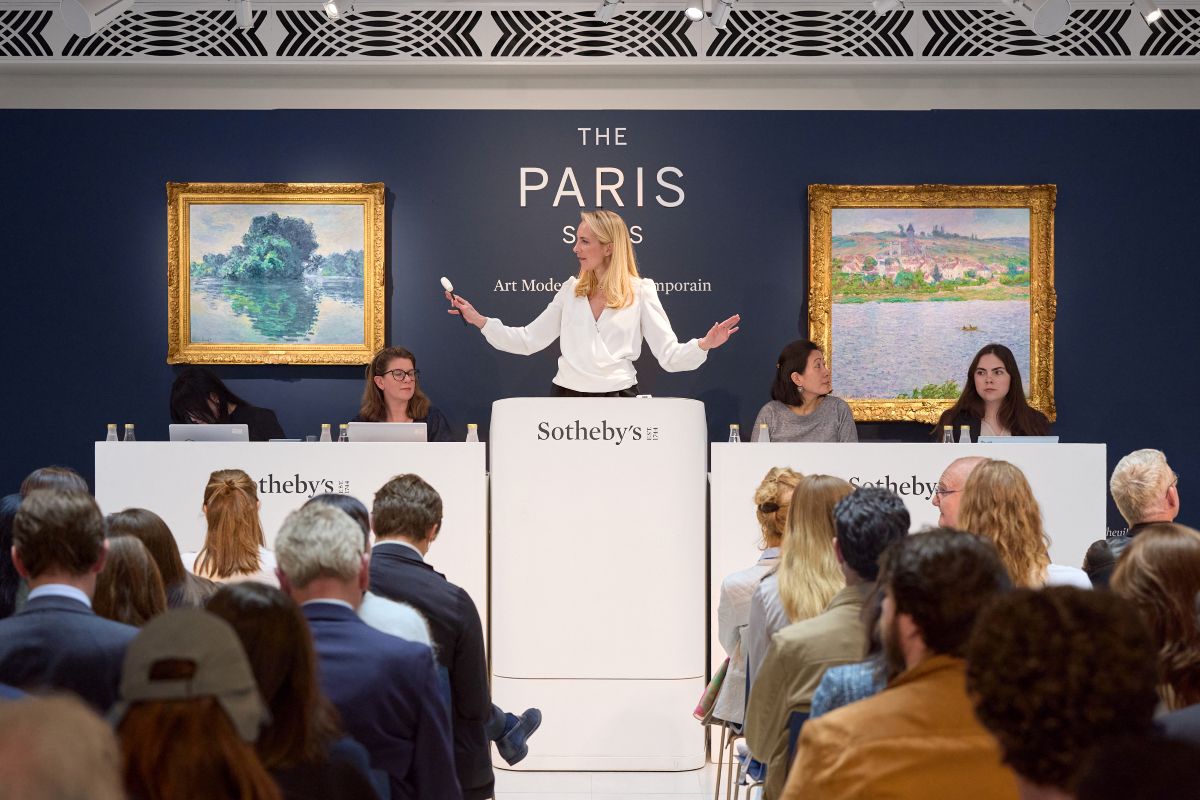
Sotheby’s is navigating a complex financial landscape marked by a major debt refinancing effort and the introduction of a controversial delayed-payment program. The auction house is seeking to raise $825 million through five-year bonds to address existing debt due in 2027, while simultaneously facing a $10.2 million lawsuit over real estate commissions. To manage liquidity, the firm has codified a scheme offering sellers a 7 percent interest rate if they agree to wait six months for their payout, a significant departure from the industry standard of 35 to 45 days.

Sale of Robert Rauschenberg’s Captiva Compound to Developers Ignites Backlash

The Robert Rauschenberg Foundation has sold the artist’s 22-acre Captiva Island estate to South Seas, a neighboring resort developer, for $45 million. The sale includes Rauschenberg’s former home, studio, and several cottages where he lived and worked for decades. The Foundation defended the move by citing the prohibitive costs of protecting the site against rising sea levels and hurricane damage, confirming that the prestigious Rauschenberg Residency program will now come to an end.

will the recent art market momentum continue into 2026

Artnet News columnist reflects on the fragile state of the art market as 2025 ends, noting that global instability and troubling news have dampened buyer psychology. Despite this, major auction houses reported strong annual sales—Sotheby's at $7 billion (up 17%) and Christie's at $6.2 billion (up 6%)—and a series of high-profile sales, including the Pauline Karpidas collection auction and Leonard Lauder's Gustav Klimt portrait fetching $236.4 million, have sparked renewed momentum. The article quotes advisors and dealers who sense a market bottom has passed, with buyers returning to auctions and fairs like Art Basel Miami Beach.

art market reporting doom coverage

Artnet News released its mid-year intelligence report on the art market, led by Katya Kazakina's analysis titled “The Storm Hits the Art Market: Who’s Getting Swept Away?” The article cites major gallery closures including Blum, Venus Over Manhattan, and Kasmin, and quotes a collector warning that “blood will flow in the streets” before the market recalibrates. Kenny Schachter, an artist, dealer, and Artnet columnist, publicly criticized the coverage on Instagram, calling it alarmist and arguing that the market is “fucking fine.” The exchange has sparked a debate about the fairness and responsibility of art-market reporting.

The Hole Gallery Sued Over Unpaid Back Rent

The Hole, a prominent contemporary art gallery founded by Kathy Grayson, has shuttered its West Hollywood location amid a wave of legal and financial troubles. Court filings reveal that the gallery faces multiple lawsuits for unpaid rent and real estate taxes across its Los Angeles and Manhattan outposts, with debts totaling over $180,000. Beyond real estate disputes, the gallery has been dogged by allegations of financial instability and delinquent payments to artists, including a 2019 lawsuit from artist Dan Lam regarding unpaid sales and damaged works.

Leading French Gallery Air de Paris Is Declaring Bankruptcy and Closing After 36 Years

Air de Paris, a leading French gallery, is declaring bankruptcy and closing after 36 years, as announced by cofounders Florence Bonnefous and Edouard Merino to Cultured. The gallery owes money only to its landlord and bank, not to its artists. The closure is attributed to fragile finances and health issues, including Bonnefous's Chronic Obstructive Pulmonary Disease. The gallery's farewell exhibition, “Oh What a Time,” featured artists such as Trisha Donnelly, Joseph Grigely, Pati Hill, Pierre Joseph, Allen Ruppersberg, Lily van der Stokker, Mona Varichon, and Amy Vogel. Bonnefous will continue to manage the estates of Guy de Cointet, Pati Hill, Dorothy Iannone, Bruno Pelassy, and Sarah Pucci, and work as a curator.

lvmh shares tank by 8 as luxury sector struggles to recover

Shares in French luxury conglomerate LVMH fell roughly 7 percent following the release of its fourth-quarter results. The decline was driven by weaker-than-expected margins and a cautious outlook from leadership, and it triggered a sector-wide sell-off, pulling down shares of other major luxury firms like Kering, Moncler, and Hermès.

Comment | Fine balance: fairs up the exclusivity while appealing to younger clients

Art Basel Paris in October introduced a new ultra-exclusive preview called Avant Première, catering to top-tier galleries with seven- and eight-figure works, while some emerging exhibitors felt sidelined. Meanwhile, the fair's organizers dropped the term "VIP," renaming its dedicated department to "collector and institutional relations," as CEO Noah Horowitz explained that the term could be off-putting to a new generation of buyers. Parallel events like Trauma, a curatorial platform founded by artist Adrian Ghenie, and the Basel Social Club offered more inclusive, youth-driven alternatives, though they still maintained guest lists.

Artnet et Artsy amorcent leur intégration

Artnet and Artsy, both acquired in 2025 by British fund Beowolff Capital, are beginning their integration under a shared management structure while maintaining separate brands and websites. The reorganization has already involved job cuts and aims to more closely align market data, online visibility, and transactions amid a fragile online art sales environment.

The auction market breathes a sigh of relief – but not everywhere

Der Auktionsmarkt atmet auf – aber nicht überall

The article reports that the auction market is showing signs of fragile recovery in 2025, with Christie’s, Sotheby’s, and Phillips all posting mid-double-digit percentage increases at their London sales in March compared to the previous year. However, the article notes that the prior year was exceptionally weak, and underlying issues such as high debt levels, aggressive commission models, and unresolved succession questions continue to threaten the stability of the major auction houses.

Museum Art Handing Market Analysis By Application, Type,

A market research report projects the Museum Art Handing Market will grow from $11.83 billion in 2026 to $30.44 billion by 2035, at a compound annual growth rate of 12.54%. The sector covers professional services for transferring, installing, and deinstalling artworks in museums, including condition assessments, conservation, transportation, and security. Growth is driven by rising demand across industrial, commercial, and technology-oriented applications, increased investments in cultural infrastructure, and the expansion of international traveling exhibitions.