filter_list Showing 10 results for "RECESS" close Clear
search
dashboard All 26 trending_up market 10museum exhibitions 10article culture 2article local 1article news 1candle obituary 1article policy 1
date_range Range Today This Week This Month All
Subscribe

kenny schachter new york fair auction recap

Kenny Schachter's article for Artnet News draws a parallel between President Jimmy Carter's 1977 energy-crisis plea to lower thermostats and the current art-market response to Trump-era tariff turmoil. He reports that the spring 2025 auction cycle generated $1.25 billion, continuing a decade-long decline from the 2014 peak, with bidders spending less and big-ticket sellers stuck. Schachter also promotes his own no-reserve auction, "Hoarder #6," scheduled for July 8–17 at Phillips, and critiques Trump's economic policies and crypto ventures, name-dropping Justin Sun as a major holder of $Trump tokens.

gladstone gallery calder mobile fineberg collection art basel paris

Alexander Calder's market remains strong despite a broader art market downturn. Thirteen Calder works have sold for over $1 million at auction this year, all within or above estimates, led by Christie's sale of *Gypsophila* (1949) for $8.5 million. Next month, Gladstone Gallery will bring Calder's standing mobile *Caged Stone on Yellow Stalk* (ca. 1955) to Art Basel Paris, priced at $5.5 million, after it sold for $3.2 million at the Gerald Fineberg collection sale in 2023. This market resilience coincides with major institutional shows: the opening of Calder Gardens in Philadelphia and a Whitney Museum exhibition celebrating the centennial of Calder's *Circus* (1926–31).

ken griffin global recession iran strait of hormuz

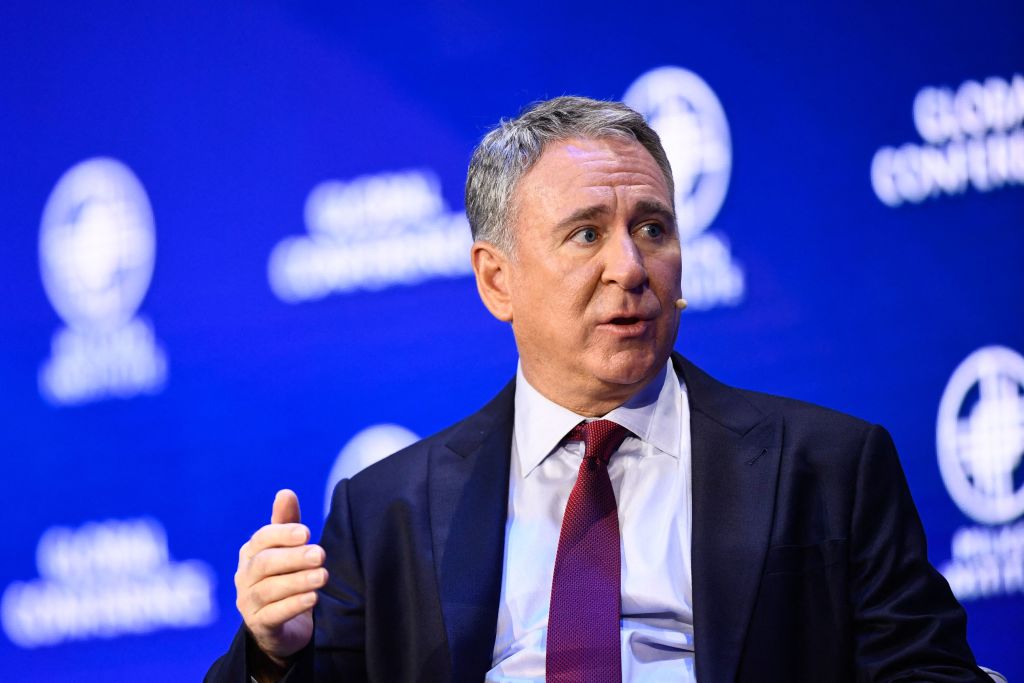
Billionaire hedge fund manager and prominent art collector Kenneth C. Griffin has issued a stark warning regarding the global economy, stating that a recession is inevitable if the Strait of Hormuz remains closed through the end of the year. Speaking at the Semafor World Economy summit, Griffin highlighted that the closure of this vital oil passageway has created energy shocks and treacherous conditions for central bankers, potentially forcing further interest rate hikes to combat inflation.

Marquee May auctions in New York come at a volatile moment

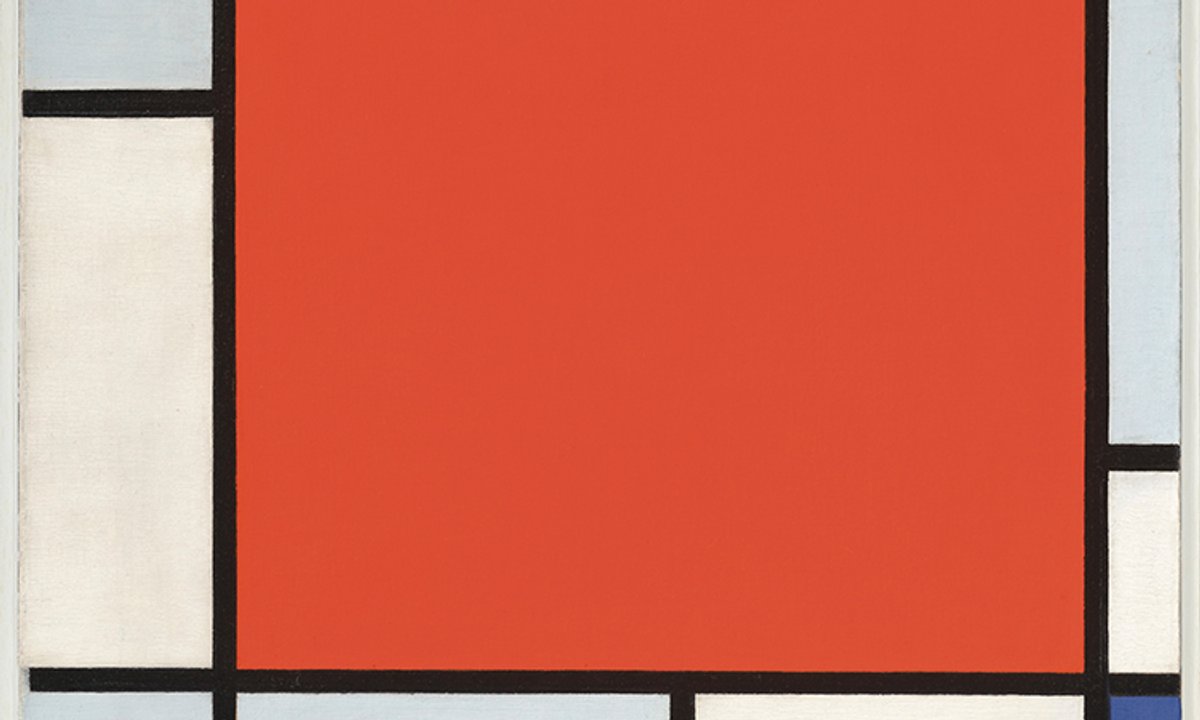
New York's marquee spring auctions, beginning May 12, are facing significant headwinds from President Donald Trump's second-term policies, particularly the 'Liberation Day' tariffs and resulting stock-market volatility. Phillips deputy chairman Robert Manley confirms at least one eight-figure work was pulled from sale due to tariffs. The combined Modern and contemporary auctions at Christie's, Sotheby's, and Phillips carry an estimated $1.1bn to $1.5bn in art—the lowest total estimate for spring sales since 2010, roughly $250m lower than May 2024. No nine-figure-estimate lots have been consigned, and the number of catalogued lots is the lowest since 2007 (excluding pandemic and recession years). Single-owner collections dominate, with Christie's securing the $200m Leonard and Louise Riggio collection, including a Piet Mondrian estimated at $50m, and works from Anne and Sid Bass. Sotheby's offers collections from dealers Daniella Luxembourg and others.

adam lindemann too much art column

Adam Lindemann draws a parallel between the oversupply of wine and the current state of the art market, noting that too many galleries and artists are producing work while demand from collectors is slowing. He cites the glut of art fairs, particularly the 840 galleries exhibiting during Miami Basel week in December 2025, and quotes advisor Allan Schwartzman describing the market as "tired." Lindemann observes that even mega-trophies like Leonardo's *Salvator Mundi* are rare exceptions, and that museums are becoming more selective in accepting donations.

art market mugrabi nahmad kenny schachter

Kenny Schachter critiques the art market's doomsaying media narrative, coining the acronym Salsa (Scribes Always Love Sensational Apocalypse) to describe clickbait-driven hype. He contrasts current market anxieties with past downturns, notably the 1991-1996 recession when the market evaporated, citing a 1991 Roberta Smith article. Schachter observes that the Nahmads and Mugrabis, once feuding families, now invest together, and he recounts his experience at Phillips during his "Hoarder 6" exhibition, where young collectors showed genuine interest. He argues that the market, though wounded, remains healthy and calls for a less transactional, more patient approach to selling art.

Lawren Harris leads the way in Heffel’s all-Canadian marquee spring auctions in Toronto

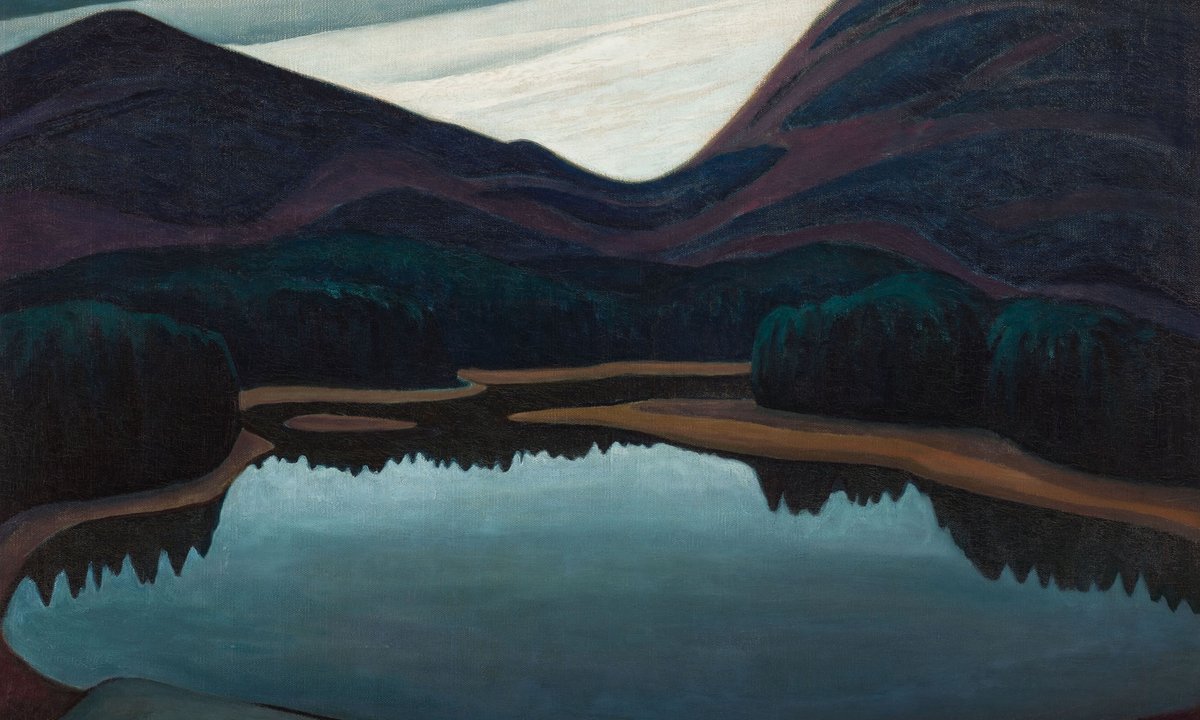
Heffel Fine Art Auction House held its spring sales in Toronto on May 22, featuring an all-Canadian lineup of 85 lots with an estimated value of C$18m to C$22m. Despite rain and economic concerns, the two-session sale achieved C$22m total, led by Lawren Harris's *Northern Lake* (1926) at C$3.1m. Other highlights included record-breaking prices for Franklin Carmichael, Arthur Lismer, and A.Y. Jackson, plus strong results for Emily Carr and Tom Thomson works.

‘Halo effect’ of powerful art dealers’ collections boosts Sotheby’s sale

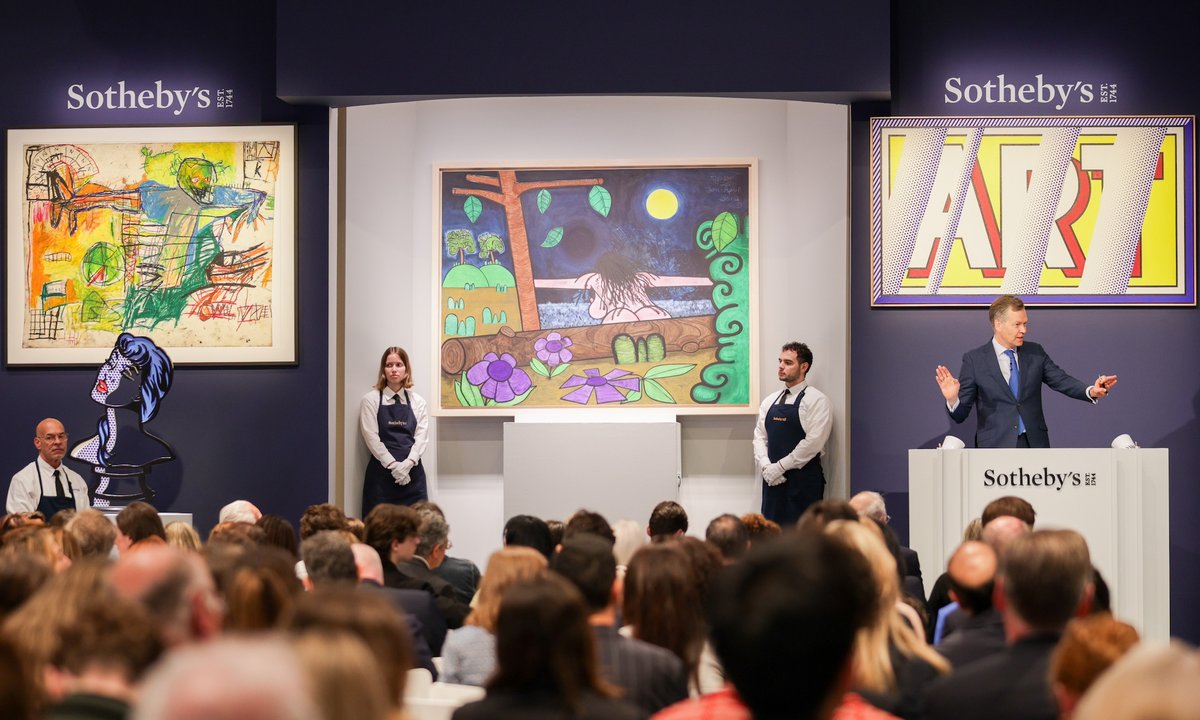
Sotheby's held a successful three-part evening auction in New York on May 15, 2025, achieving a total of $154.2 million in hammer sales ($186.1 million with fees), within its pre-sale estimate. The sale included 12 lots from the estate of late dealer Barbara Gladstone, which sold 100% for $15.1 million, and 15 works from the collection of Daniella Luxembourg, which brought $33.6 million. The main event, Sotheby's The Now and Contemporary evening auction, featured 41 lots—including works from the Dorothy and Roy Lichtenstein collection and three deaccessioned by US museums—and achieved a 93% sell-through rate, hammering $105.4 million. A standout was Andy Warhol's 'Flowers' (1964) from the Gladstone estate, which sold for $3.1 million hammer, more than double its high estimate.

How Does the Economy Impact the Art Market?

Olivia Gavoyannis's article examines how broader economic factors—such as interest rates, trade policies, inflation, and currency fluctuations—affect the art market. It notes that recent economic volatility, including COVID-19 recessions and tariffs, has led to high-profile auction flops and slower demand for top-tier works, but argues that such coverage only tells part of the story. The piece explores the unique economics of art, where artworks are non-fungible and pricing is driven by perception, scarcity, and insider networks rather than utility, and highlights the lack of transparent pricing data.

art ralph deluca art market downturn recession

Art advisor Ralph DeLuca, in his 'Street Smarts' column for Cultured, observes that amid political turmoil, tariffs, and art market jitters, wealthy collectors are shifting away from blue-chip contemporary art. Instead, they are investing in pop culture icons, historic artifacts, and natural history items like fossils, viewing them as safer bets. DeLuca notes that the May auction season saw high pass rates, failed guarantees, and lower prices, while galleries continue to close this summer.