filter_list Showing 10 results for "Combines" close Clear
search
dashboard All 135 museum exhibitions 78article local 29article news 10trending_up market 9article culture 8person people 1
date_range Range Today This Week This Month All
Subscribe

Frieze New York, the Cranach in Hitler’s Munich apartment, Ajamu X—podcast

This episode of The Art Newspaper's podcast covers several art-world stories. Ben Sutton and Kabir Jhala discuss the current edition of Frieze New York, alongside other concurrent fairs like Esther and Tefaf, and preview the upcoming New York auctions. Ben Luke interviews Martin Bailey about a Lucas Cranach the Elder painting, 'Cupid Complaining to Venus' (1526-27), which once hung in Adolf Hitler's Munich apartment, with a newly published photograph from the 1940s. The episode also features a segment on Ajamu X's 'Glamour Posse' series from the early 1990s, part of the touring exhibition 'Gender Stories' opening at the Walker Art Gallery in Liverpool, with comments from gallery head Charlotte Keenan.
When—and why—did Van Gogh paint a pair of crabs?

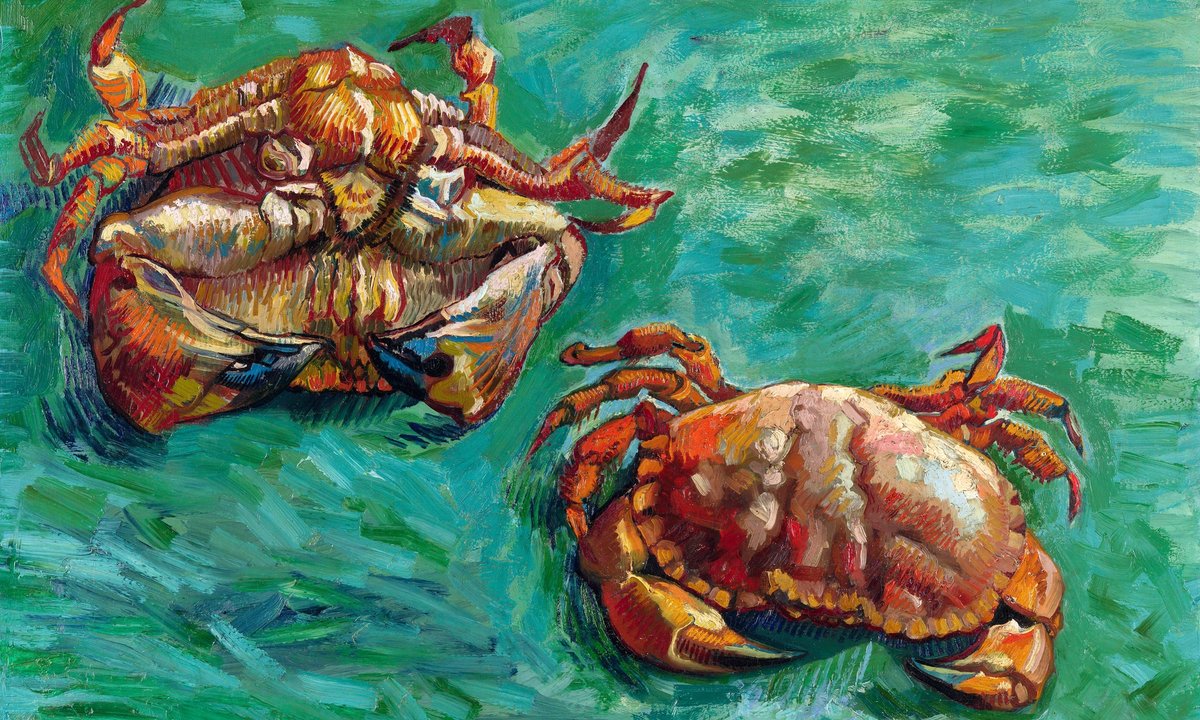
An article explores the story behind Vincent van Gogh's still life "Two Crabs," revealing that the two crabs are likely the same individual—a female Cancer pagurus missing its first pair of walking legs. Paul Clark, a crustacean specialist at London's Natural History Museum, confirmed the sex based on the broad abdomen visible in the painting. The work is on long-term loan to London's National Gallery, where it was recently redisplayed as part of the gallery's major rehang ahead of the Sainsbury Wing reopening on May 10. The article also traces the painting's provenance: it was the first Van Gogh bought by a British collector, William Cherry Robinson, in 1893 for 200 guilders, later sold at auction in 1906 for half that amount, and eventually resold at Sotheby's in 2004 for £5.2 million to an anonymous collector who lent it to the National Gallery.

UC Irvine finalizes acquisition of Orange County Museum of Art

The University of California, Irvine has finalized its acquisition of the Orange County Museum of Art, creating a new unified institution named the UC Irvine Langson Orange County Museum of Art. The merger combines OCMA's 53,000-square-foot, $98 million facility in Costa Mesa with UC Irvine's academic resources, bringing together over 9,000 works of art. The museum will also showcase UC Irvine's Gerald Buck Collection and Irvine Museum Collection, while the Jack and Shanaz Langson Institute and Museum of California Art continues operating on campus. OCMA staff have joined UC Irvine, and a national search for an executive director is underway.

A new foundation for contemporary art has been born in Spain. Collector Gabriel Calparsoro told us about it

In Spagna è nata una nuova fondazione per l’arte contemporanea. Il collezionista Gabriel Calparsoro ce l’ha raccontata

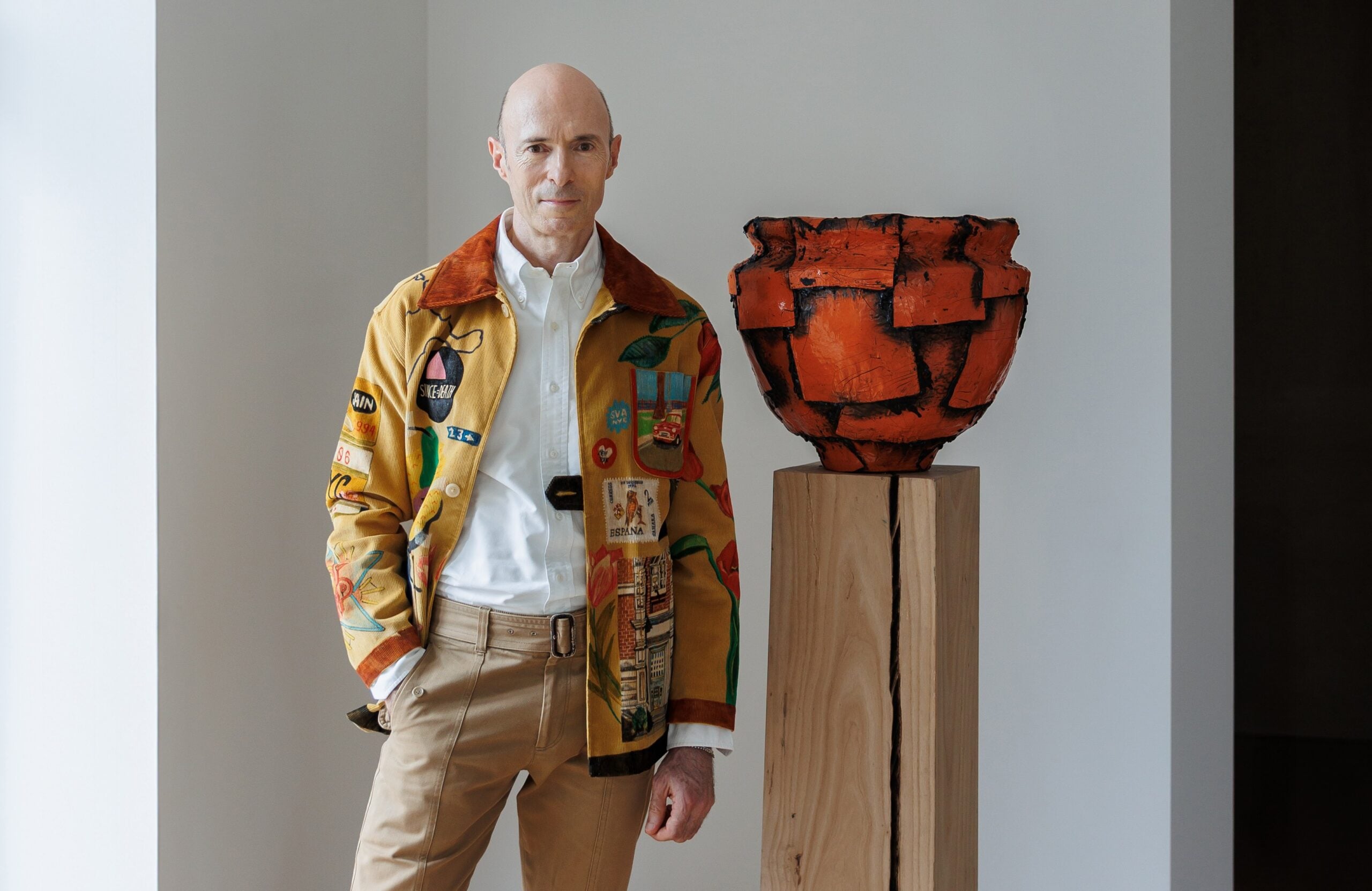
The Calparsoro Foundation, a new contemporary art foundation, has been launched in Spain by collector Gabriel Calparsoro. Its inaugural event was the presentation of Isaac Julien's video installation "Once Again … (Statues never die)" at the Museo Lazaro Galdiano in Madrid. The foundation aims to share Calparsoro's private collection of around 180 works, which focuses on North American and international artists addressing political and social issues related to ethnic and gender minorities.

Why global gallery studies matters now

University College Cork (UCC) has launched an MA in Global Gallery Studies (Online), a two-year part-time programme designed to prepare students for careers in the international gallery sector. Directed by Dr Mary Kelly, the programme combines core modules in global gallery studies, global art histories, and digital arts with practice-based learning, including online fieldwork connecting students with galleries across multiple countries, guest lectures by international gallery practitioners, and a project-led onsite internship in the second year.

inca building acoustics huaytara peru

A 15th-century Inca building in Huaytará, Peru, known as a carpa uasi or tent house, may have been designed to amplify low-frequency sounds like drumming. Art historian Stella Nair of UCLA, along with acoustic experts led by Stanford professor Jonathan Berger, is studying the structure's unique three-walled design to understand its acoustic properties. The building survived because a Christian church was built on top of it, stabilizing the stone structure.

Wandering Star – a photo essay

Photographer Vanessa Vettorello explores the physical and psychological impact of strabismus, or eye misalignment, through her visual project "Wandering Star." Drawing from her personal childhood experience with diplopia (double vision), Vettorello combines intimate portraits of others living with the condition, medical reportage, and reconstructed memories to illustrate the struggle of navigating a world where depth and distance are distorted.

digitally rebuilding lighthouse of alexandria as 3d model

A team of historians, architects, and programmers is digitally reconstructing the Lighthouse of Alexandria, one of the Seven Wonders of the Ancient World. The Pharos Project, led by archaeologist Isabelle Hairy, is scanning thousands of submerged granite blocks and artifacts from the seabed to create a comprehensive 3D model of the structure, which was destroyed by an earthquake in 1303.

massive moai statues walked to platforms easter island new study

A new study in the Journal of Archaeological Science by archaeologists Carl Lipo of Binghamton University and Terry Hunt of the University of Arizona proposes that the 92-ton moai statues on Easter Island, Chile, were transported in a vertical position using ropes to “walk” them onto their stone platforms. The research combines three-dimensional modeling, field experiments with a scaled replica, and analysis of 62 abandoned statues along ancient roads, finding that wider bases and a forward lean of 6–15 degrees enabled a rocking motion that allowed a team of 18 people to move a statue 328 feet in about 40 minutes.

22 stone blocks alexandria ancient lighthouse seafloor

A team from the French National Center for Scientific Research has lifted 22 massive stone blocks from the Lighthouse of Alexandria from the seafloor, 30 years after the remains were first discovered in Egypt. The blocks include monumental door lintels, jambs weighing 70 to 80 tons, a threshold, large base slabs, and parts of a previously unknown pylon with an Egyptian-style door from the Hellenistic period. Each block will be scanned and studied to add to a digital collection of over 100 blocks already digitized, aiming to construct a virtual model of the lighthouse. The excavation was supervised by archaeologist Isabelle Hairy and conducted under the Egyptian Ministry of Tourism and Antiquities, with support from La Fondation Dassault Systèmes and French documentary company GEDEON Programmes, which filmed the work for a 90-minute documentary.