filter_list Showing 5 results for "Dutch" close Clear
search
dashboard All 62 museum exhibitions 44article culture 5article news 5gavel restitution 4article policy 2trending_up market 1article local 1
date_range Range Today This Week This Month All
Subscribe

Why did Van Gogh sign his paintings as ‘Vincent’?

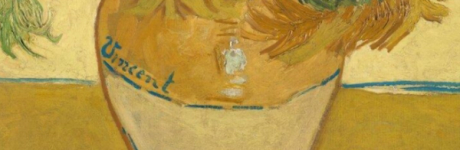
Art historian Julia Engelmayer has published a study titled 'Simply ‘Vincent’: An Overview of Van Gogh’s Signed Paintings' on the Van Gogh Museum's website, analyzing why and how Vincent van Gogh signed his works. The research reveals that only 133 of his 840 surviving paintings bear a signature (16%), an unusually low proportion for a 19th-century artist. Van Gogh signed with only his first name due to strained family relations and the difficulty non-Dutch speakers had pronouncing his surname. The study also highlights his predominant use of red signatures (on 75 works), angled signatures on over half of his signed pieces, and a distinctive horseshoe-shaped 'V' used during his Arles period.
Several Venice Biennale pavilions shut in protest over inclusion of Israel

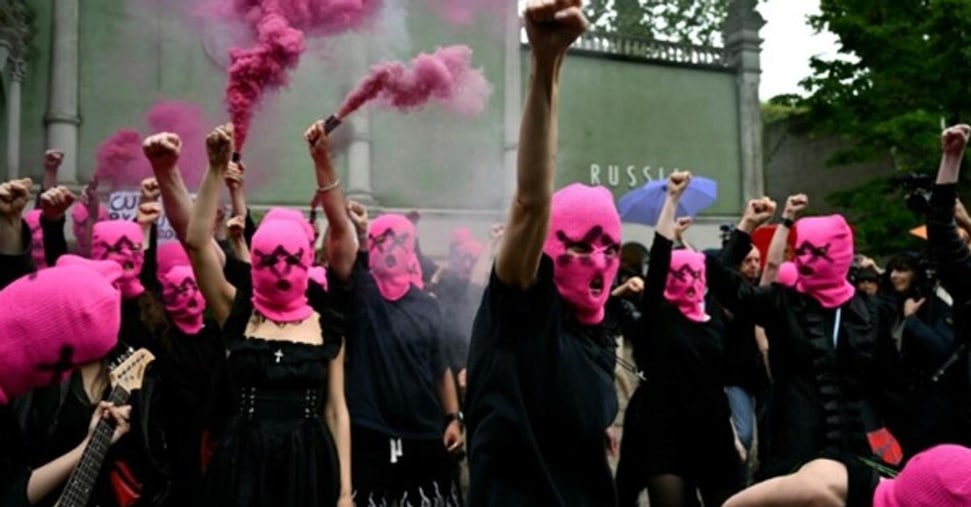
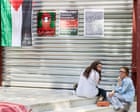
Several national pavilions at the 2026 Venice Biennale shut down during the final preview day in a strike organized by the Art Not Genocide Alliance (Anga) protesting Israel's inclusion due to its war in Gaza. Pavilions from Belgium, the Netherlands, Austria, Japan, Macedonia, and Korea closed entirely, while others like Britain, Spain, France, Egypt, Finland, and Luxembourg partially closed or reopened later. Artists in the main exhibition added Palestinian flags and posters reading "Palestine is the future of the world." The Israeli pavilion was closed for a private event, and earlier in the week Pussy Riot staged a protest at the Russian pavilion.

Maine Institutions Dissect the American Semiquincentennial

Boston Art Review (BAR) has published an article examining how Maine-based cultural institutions are approaching the American Semiquincentennial, the 250th anniversary of the United States in 2026. The piece explores the programming, exhibitions, and institutional strategies being developed by museums and art centers across Maine to mark this milestone, focusing on how they interpret American history and identity through contemporary art.

Art Biennale: artists reject the popular jury

Fifty-two artists and curators, along with sixteen National Participants of the 61st Venice Art Biennale, have withdrawn from the newly introduced 'Lions of the Visitors' (People's Prizes) competition. The boycott follows the resignation of the jury appointed by artistic director Koyo Kouoh, who died in 2025, and is a protest against the inclusion of Russia and Israel in the prize—countries initially excluded by the international jury. The controversy escalated after Italian Minister of Culture Alessandro Giuli publicly opposed the Biennale president Pietrangelo Buttafuoco's decision to allow Russia's participation, drawing in the European Commission and even Ursula von der Leyen, who warned of potential sanctions violations. The signatories include artists and curators from France, Belgium, Luxembourg, Turkey, Switzerland, Spain, the Netherlands, and several other nations.

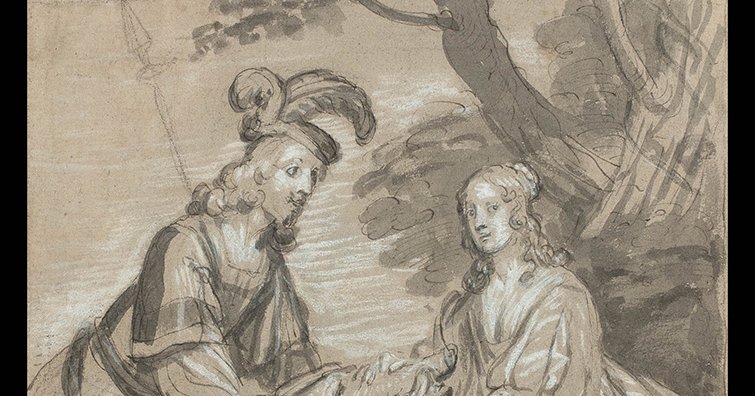
A Dismembered Album by Gerard van Honthorst (1592-1656): Unpublished Drawings and Reconstruction of a Corpus

Un album démembré de Gerard van Honthorst (1592-1656) : dessins inédits et reconstitution d'un corpus

An article in La Tribune de l'Art presents a significant expansion of the known corpus of drawings by Dutch Golden Age painter Gerard van Honthorst (1592-1656). Following the 2014 exhibition of twenty-seven drawings identified by the author, this study adds thirty-two more sheets—twenty-two of which are previously unpublished—as a preliminary step toward reconstructing a dismembered album. The research, conducted with direct observation and advanced imaging techniques (digital microscopy, ultraviolet, raking light), aims to restore the album's original order and shed light on the role of drawing in Honthorst's workshop and creative process.