filter_list Showing 59 results for "Eva" close Clear
search
dashboard All 899 museum exhibitions 565article culture 86article local 71article news 59trending_up market 45rate_review review 25person people 23candle obituary 14article policy 8gavel restitution 3
date_range Range Today This Week This Month All
Subscribe

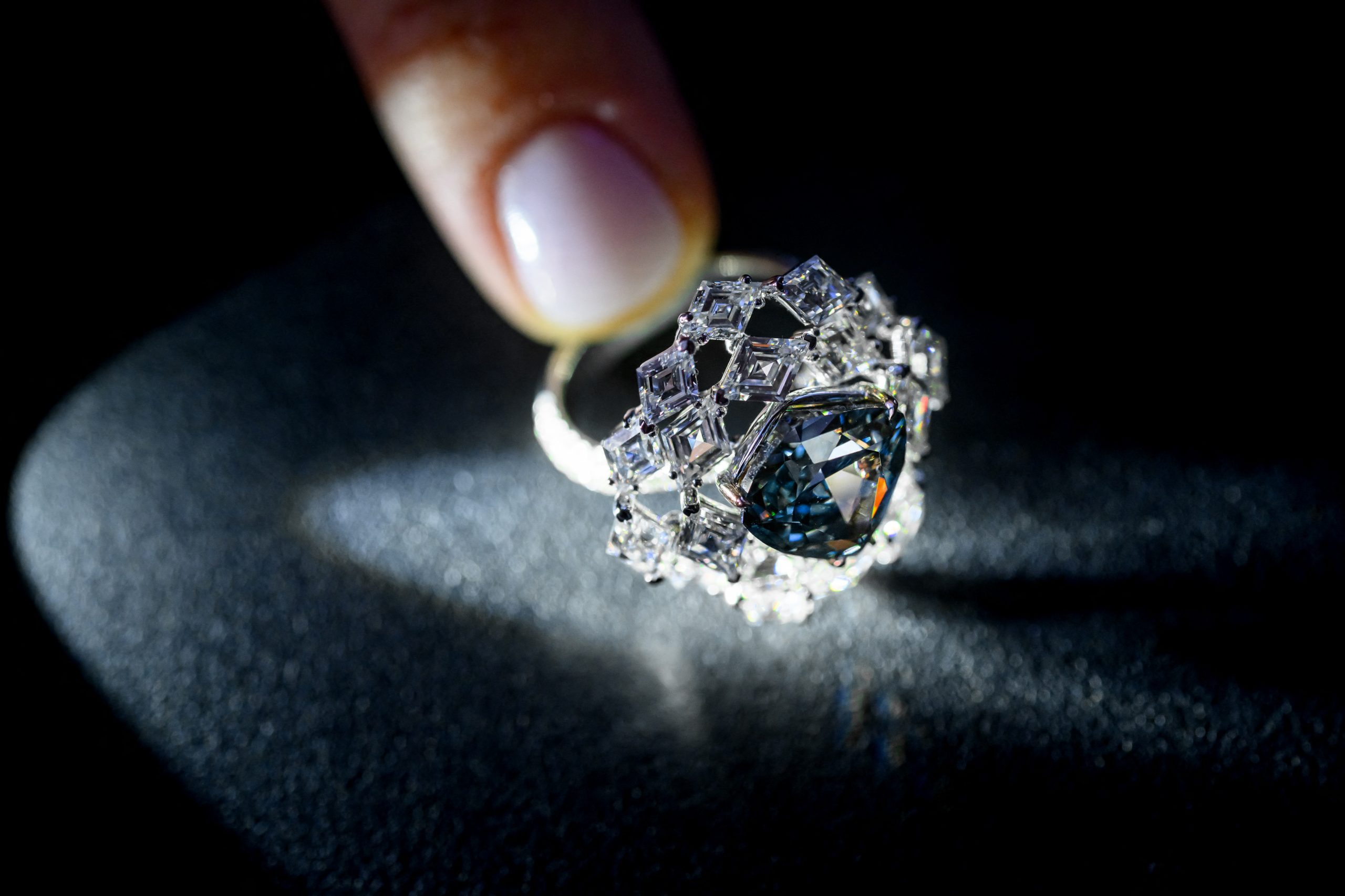
Rare ‘Ocean Dream’ Diamond Sells for Record $17.3 Million at Christie’s

A rare 5.5-carat blue-green diamond known as the 'Ocean Dream' sold for $17.3 million at Christie’s Geneva jewelry sale, setting a record for a fancy vivid blue-green diamond at auction. The sale far exceeded its presale estimate of $9 million to $13 million after a 20-minute bidding battle. In other auction news, Sotheby’s New York sold over $433 million worth of art in its contemporary art sales, including 11 pieces from the Robert Mnuchin collection. Meanwhile, London’s Wellcome Collection agreed to return around 2,000 sacred Jain manuscripts to the Jain religious community under a new restitution framework, acknowledging they were acquired unethically. Several art fairs were announced, including Zero 10 curated by Trevor Paglen at Art Basel in Switzerland, CAN Art Fair Ibiza’s fifth edition, and Art-o-rama’s 20th edition in Marseille. Notable gallery news includes the bankruptcy and closure of French gallery Air de Paris after 36 years, and Carine Karam becoming director of Opera Gallery’s New York outpost. Hong Kong’s M+ and Paris’s Centre Pompidou announced a multi-year strategic alliance, and New York’s Frick Collection entered a three-year partnership with Louis Vuitton.
Why did Van Gogh sign his paintings as ‘Vincent’?

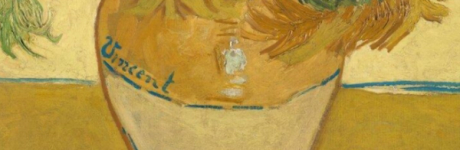
Art historian Julia Engelmayer has published a study titled 'Simply ‘Vincent’: An Overview of Van Gogh’s Signed Paintings' on the Van Gogh Museum's website, analyzing why and how Vincent van Gogh signed his works. The research reveals that only 133 of his 840 surviving paintings bear a signature (16%), an unusually low proportion for a 19th-century artist. Van Gogh signed with only his first name due to strained family relations and the difficulty non-Dutch speakers had pronouncing his surname. The study also highlights his predominant use of red signatures (on 75 works), angled signatures on over half of his signed pieces, and a distinctive horseshoe-shaped 'V' used during his Arles period.

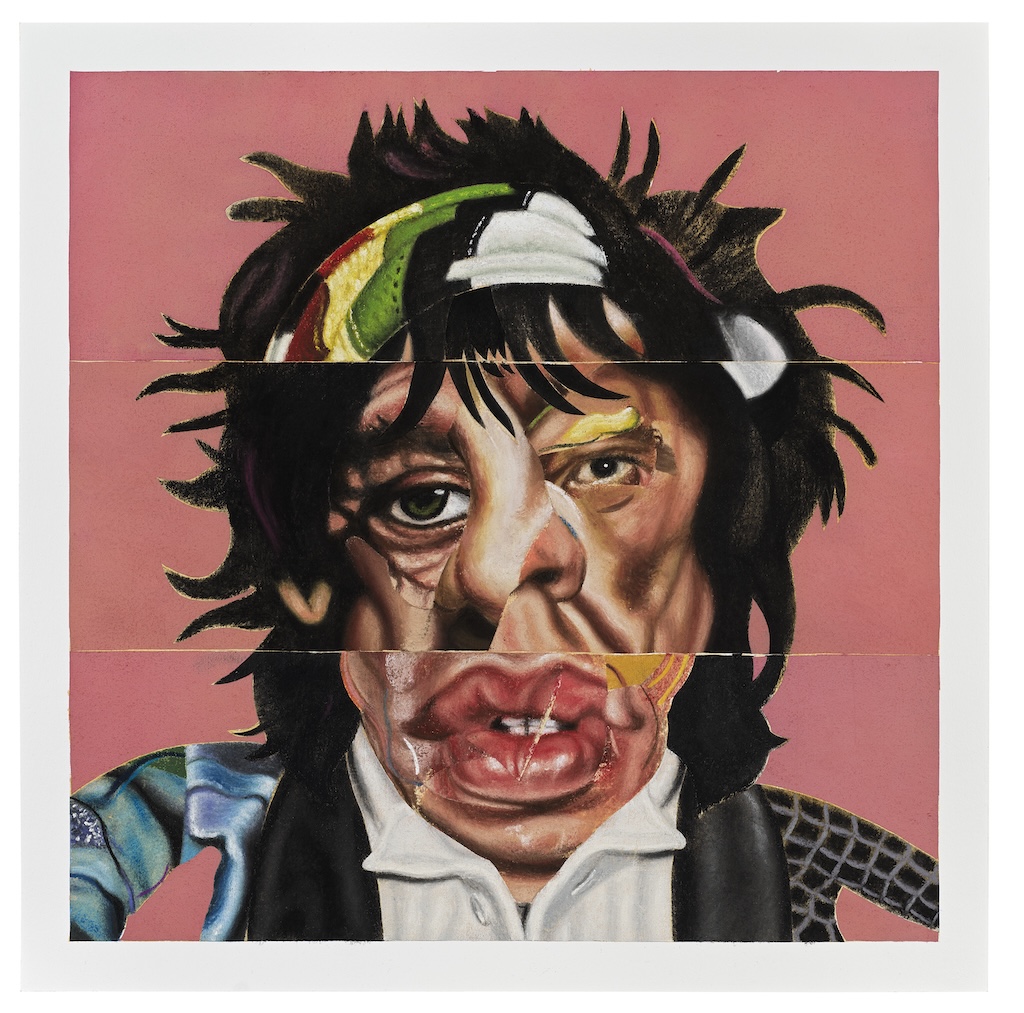
The Wild Nine-Month Journey that Led to Nathaniel Mary Quinn Designing the Rolling Stones’ New Album Cover

Nathaniel Mary Quinn was commissioned to create the cover art for the Rolling Stones' new album *Foreign Tongues*, due July 10, after a three-way call with Mick Jagger and producer Andrew Watt. Over nine months, Quinn developed a composite portrait merging the faces of Jagger, Keith Richards, and Ronnie Wood, and also redesigned the band's iconic tongue-and-lips logo. The process involved regular conversations with Jagger and Richards, a private rehearsal session, and a lunch at the Baccarat Hotel, culminating in the band choosing Quinn's original composite over a second option featuring a vintage sports car.

The Artists Who Ruled the Biennial Circuit Over the Last Four Years

Artnet News critic Ben Davis analyzed 130 recurring global art events—including biennials and triennials—that opened between the 2022 and 2026 Venice Biennales, tallying over 15,000 participating artists. He identified the most frequently featured artists, with Nolan Oswald Dennis topping the list at 14 biennial appearances. Dennis, a South Africa-based artist born in Lusaka, is known for works like "Black Liberation Zodiac" (2017-ongoing) and was included in the 2026 Venice Biennale curated by the late Koyo Kouoh.

U.S. Crowdfunds Its Venice Biennale Pavilion

The United States is crowdfunding its pavilion at the 61st Venice Biennale, which opens in ten days, due to the absence of major sponsors like the Ford Foundation and the Mellon Foundation. The pavilion, featuring sculptures by Alma Allen, is being organized by the American Arts Conservancy (AAC), which is soliciting donations through a campaign that has been live since at least November. The U.S. government contributes $375,000, but the installation costs significantly exceed that amount. Donors include Nevada-based Republican donors Jim and Aimee Battista, talent manager Tom Ierna, and actor Alex Pita. The AAC has not disclosed the campaign's fundraising goal, amount raised, or end date.

Gabrielle Goliath, Richard Avedon, “Chicken Linda”

Hyperallergic editor-in-chief Hakim Bishara reflects on skipping the New York art fairs and a record-breaking $181 million Jackson Pollock sale at Christie's, instead focusing on a profile of pioneering performance artist Linda Montano (now 84) who welcomed a contributor in a chicken costume, and Gabrielle Goliath's exhibition "Elegy" which was banned from South Africa's Venice pavilion by the culture minister but is now on view in a church. The newsletter also announces Hyperallergic's New York Press Club journalism award for Noah Fischer's comic "A Prospect Heights Ghost Story," supported by the Economic Hardship Reporting Project, and rounds up other art news including a $1 billion Christie's sale, a Billie Holiday monument commission, and public sculptures by Sarah Lucas, Roberto Lugo, and Kyle Goen.

Watching You, Watching Me: On Panteha Abareshi and the Spectacle of Illness

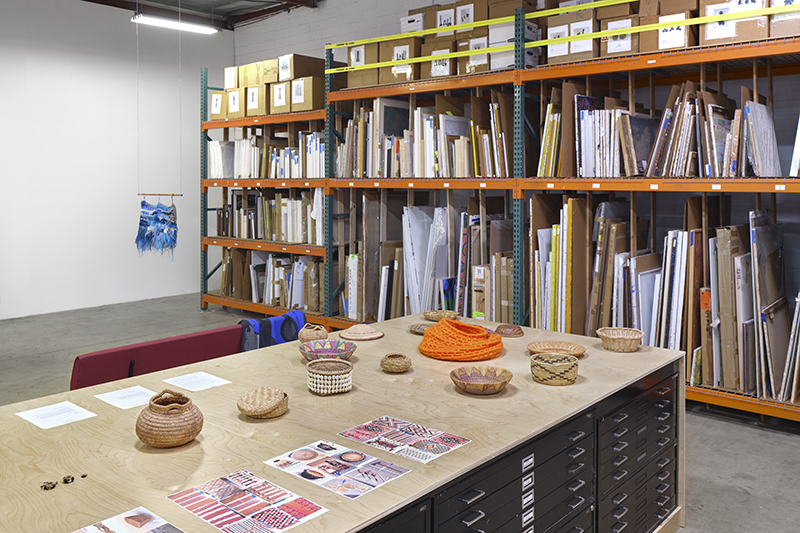
The Same Dead Thing Alive: Contemporary Archives in L.A. and Beyond

2026 Carla Art Auction is Live!

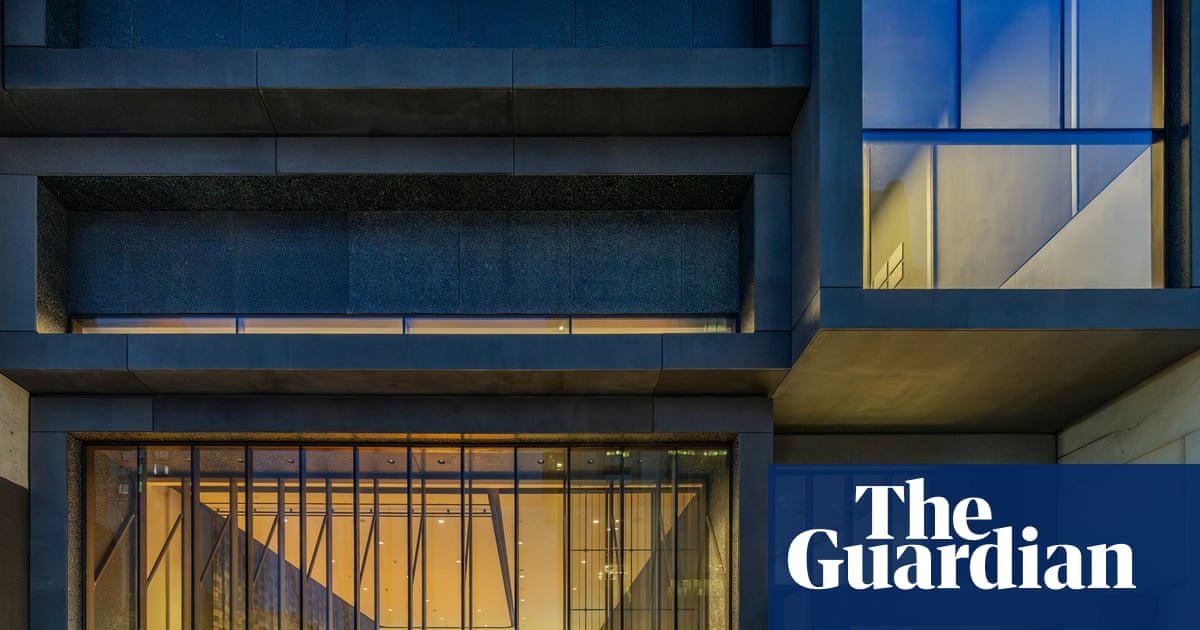
‘Harlem has always been evolving’: inside the Studio Museum’s $160m new home

The Studio Museum in Harlem is set to inaugurate its new $160 million, purpose-built home on Manhattan’s 125th Street. Designed by Adjaye Associates in collaboration with Cooper Robertson, the 82,000-square-foot facility nearly doubles the museum's previous exhibition space and replaces a repurposed 1914 bank building that lacked essential infrastructure like loading docks and large elevators. This milestone marks the first time in the institution's history that it will operate out of a structure specifically designed to support its mission of championing artists of African descent.

The week around the world in 20 pictures

This photo essay from The Guardian presents 20 images capturing global events from the past week, including a protest by Femen and Pussy Riot activists against Russia's participation at the Venice Biennale art show, Israeli strikes in Gaza, the hantavirus outbreak, and Emma Chamberlain at the Met Gala. Other images document the war in Ukraine, with scenes of Russian military rehearsals in Moscow, damaged monuments, and drone strike aftermath, as well as a political protest in Nashville where Democratic state representative Justin J Pearson was removed from the house gallery during a redistricting protest.

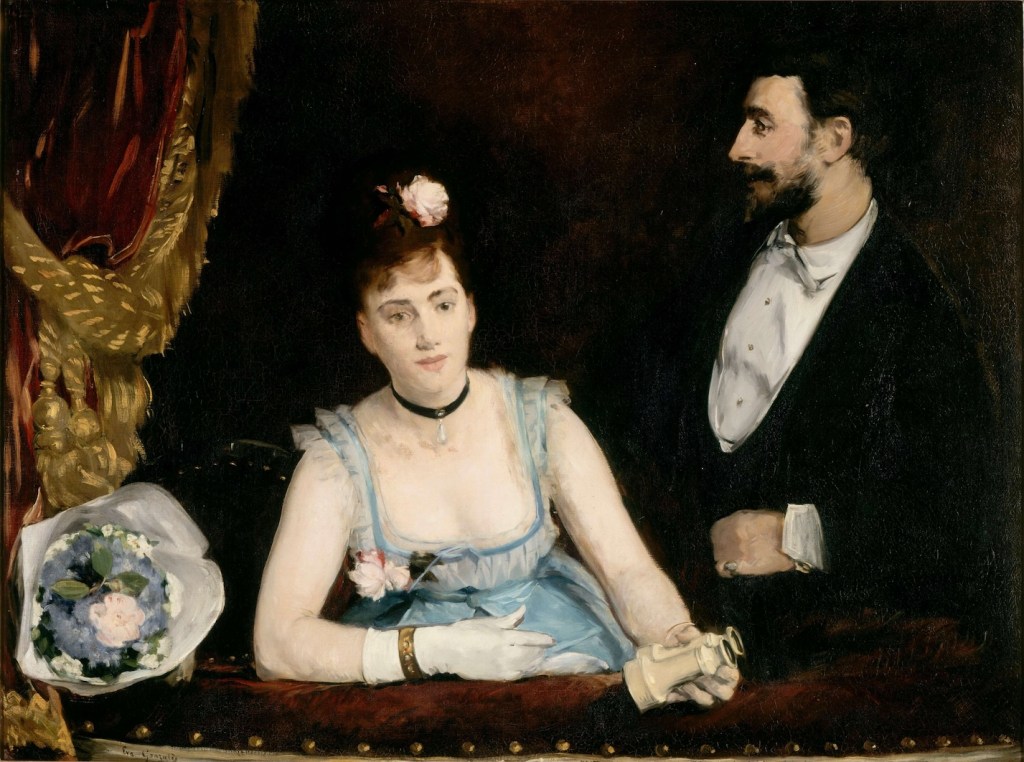
‘Woman Impressionist’ No More: A New Catalogue Raisonné Restores Eva Gonzalès’s Legacy

The Wildenstein Plattner Institute (WPI) has released a new digital catalogue raisonné for French painter Eva Gonzalès, correcting long-standing misattributions and omissions from the 1990 printed edition. The project reattributes works like *Apples in Basket* (previously assigned to Belgian painter Isidore Verheyden) and adds newly discovered pieces, including a portrait of Madame Georges Haquette and Gonzalès’s sketchbooks now held by the National Gallery of Art in Washington, D.C. WPI executive director Elizabeth Gorayeb emphasizes that the digital format allows for iterative updates and brings overlooked figures in Gonzalès’s orbit to light.

As Her Venice Biennale Opens, Koyo Kouoh Foundation Launches in Memory of Late Curator

The Koyo Kouoh Foundation has launched in Basel, Switzerland, coinciding with the opening of the 2026 Venice Biennale, which features the late curator Koyo Kouoh's main exhibition "In Minor Keys." The foundation aims to continue Kouoh's work supporting contemporary African cultural production globally, including plans for the Koyo Kouoh Prize and a permanent home for the Koyo Kouoh Collection. It is led by her partner, saxophonist Philippe Mall, and includes board members such as artist Alfredo Jaar, curator Adrienne Edwards, and former Kunstmuseum Basel director Josef Helfenstein.

Museum acquisitions round-up: a rediscovered work by Rosso Fiorentino, a circular painting by Salman Toor and 16th-century gold goblet

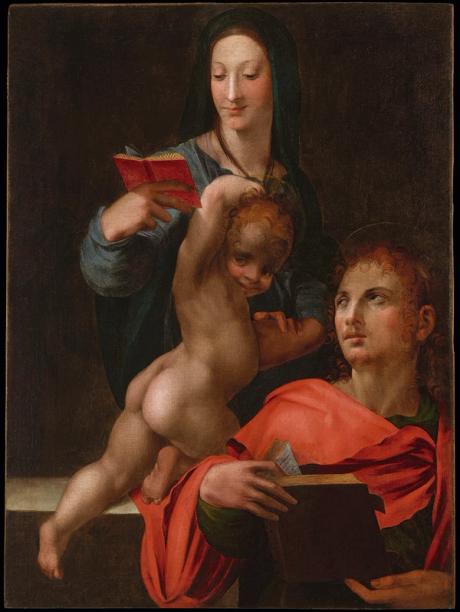
The Art Newspaper reports on three notable museum acquisitions: a rediscovered Renaissance painting by Rosso Fiorentino acquired by the Metropolitan Museum of Art, a 16th-century silver gilt goblet by Hans Rappolt I acquired by the Siegerland Museum, and a circular painting by Salman Toor donated to the National Gallery of Art. The Rosso Fiorentino work, 'Madonna and Child with Saint John the Evangelist' (1512/13), was thought lost for centuries and was identified after cleaning revealed a hidden figure. The goblet, made around 1581, is a rare example of Nuremberg goldsmithing and was supported by a €75,000 donation from the German Federal Cultural Foundation. The Toor painting, 'Wandering Beggars' (2022), is the first by the artist to enter the NGA's collection, donated by the Bronzini-Vender family.

"Kultursenator ist kein Nebenjob"

Berlin's finance senator Stefan Evers is set to additionally take on the role of culture senator following the resignation of Sarah Wedl-Wilson, a move criticized as a stopgap solution that creates a conflict of interest between austerity and cultural advocacy. Meanwhile, the Venice Biennale faces multiple controversies: critics question how to evaluate curator Koyo Kouoh's posthumous main exhibition "In Minor Keys," completed after her death in May 2025; Israeli artist Belu-Simion Fainaru speaks out against his exclusion from the Biennale competition, calling it politically biased and reminiscent of historical persecution; and German press decries the politicization of the Biennale, particularly the exclusion of Israel and Russia from the competition.

Venice Biennale 2026: How Do You Critique a Posthumous Exhibition?

The article, published by ArtReview, examines the upcoming 61st Venice Biennale (2026), titled *In Minor Keys*, which was conceived by artistic director Koyo Kouoh before her death from cancer in May 2025 at age 57. The exhibition, based on Kouoh's drafted concept and completed by a curatorial team including Rory Tsapayi, Siddhartha Mitter, Marie Hélène Pereira, Gabe Beckhurst Feijoo, and Rasha Salti, adopts a musical metaphor of "minor-ness" and aims to avoid the pitfalls of previous Biennales by focusing on soul frequencies and dissonant harmony rather than direct commentary on world crises. The author, Martin Herbert, questions how critics will respond to a posthumous exhibition of this unprecedented scale, noting that previous artistic directors like Robert Storr, Cecilia Alemani, Christine Macel, and Adriano Pedrosa have faced varied critical receptions.

New York Galleries: Openings and Closings (04/27-05/03)

A Time of Transition

During the preview week of the 61st Venice Biennale, escalating protests targeted the national pavilions of Israel and Russia, with demonstrations by Pussy Riot, ANGA (Art Not Genocide Alliance), and Baltic pavilions. A major protest on May 8 drew over 3,000 people in solidarity with Palestine, and 27 national pavilions—including Austria, the Netherlands, France, and Japan—staged a strike, the first at the Biennale since 1968. The Golden Lion jury resigned after declaring they would not consider countries under ICC investigation (Israel and Russia), and the Biennale administration replaced the prize with a visitors' award, from which half the artists in the main exhibition have withdrawn.

Pussy Riot Storms Russia Pavilion at Venice Biennale

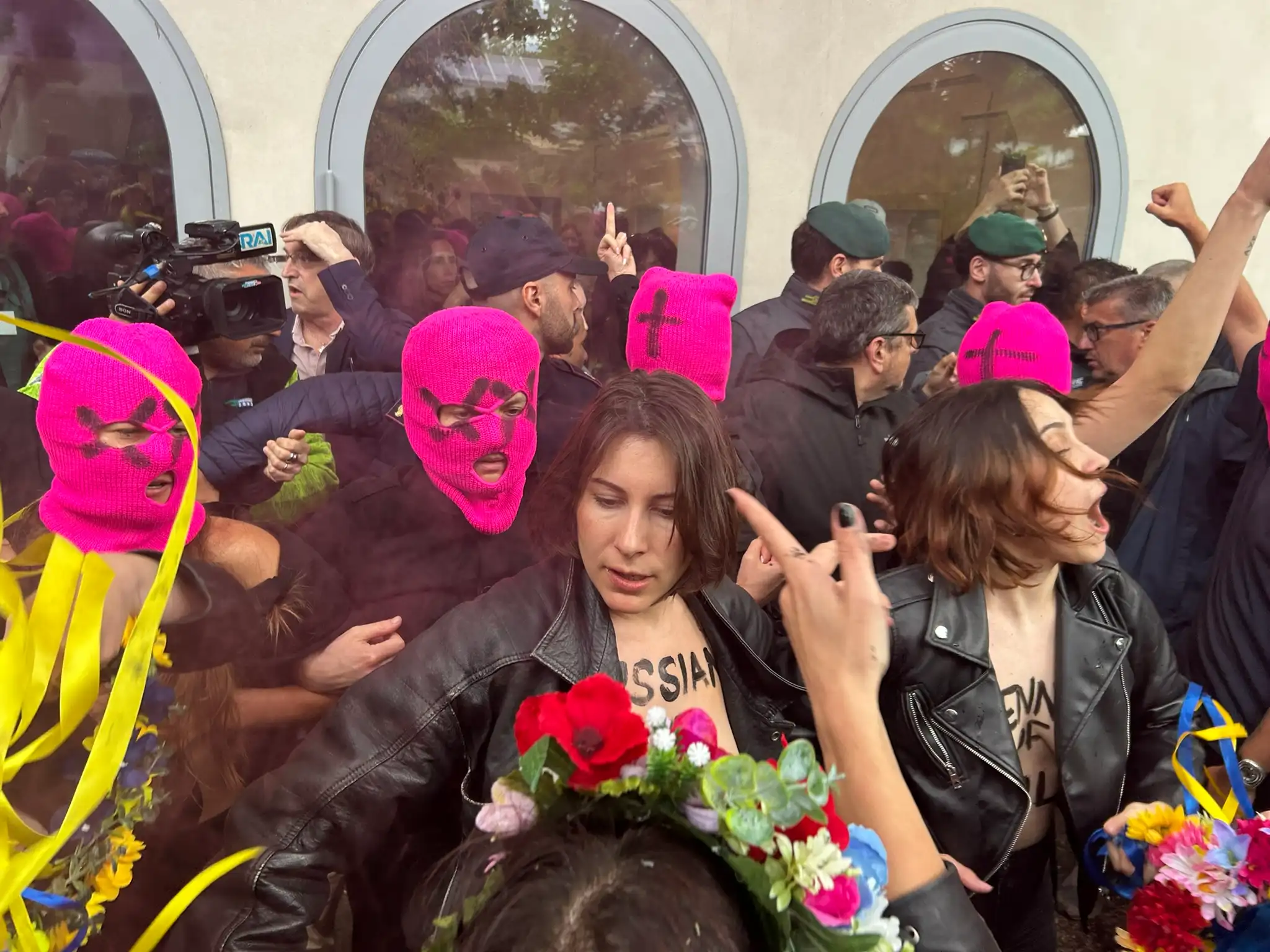
Pussy Riot staged a dramatic protest at the Russia Pavilion during the Venice Biennale, releasing pink smoke and waving Ukrainian flags while chanting slogans like 'Blood is Russia’s art.' Around 50 protesters, including members of Femen, occupied the area. Pussy Riot founder Nadya Tolokonnikova called for the pavilion to be closed and given to oppressed peoples, challenging Biennale president Pietrangelo Buttafuoco to meet her. The protest lasted about 20 minutes, with performers climbing the pavilion and exposing political slogans on their chests.

"Man besitzt Kunst nicht, man ist nur ihr Verwalter"

The 61st Venice Biennale opened on Saturday without ceremony or an opening celebration, amid political turmoil over the participation of Russia and Israel. Italy's Culture Minister Alessandro Giuli criticized Biennale director Pietrangelo Buttafuoco for not informing the government about Russia's participation request, suggesting it could have been used as leverage for a ceasefire in Ukraine. The entire jury resigned after attempting to exclude both Russia and Israel from prize awards, leading to the cancellation of the traditional jury decision in favor of a public vote, which over 70 participating artists have protested by withdrawing from this year's prizes. Separately, a rare photograph from the early 1940s has surfaced showing Lucas Cranach the Elder's painting "Venus with Cupid as Honey Thief" in Adolf Hitler's Munich apartment, raising unresolved questions about whether the work was looted from Jewish owners before 1935.

The art of politics: how global conflicts are playing out in this year's Venice Biennale

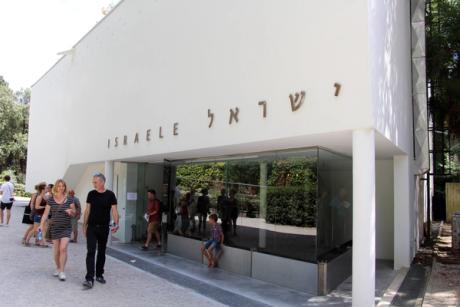
Israel is making a controversial return to the 2025 Venice Art Biennale after its pavilion was locked in 2024 with a note demanding a ceasefire in Gaza. The artist representing Israel, Belu-Simion Fainaru, will present his project "Rose of Nothingness" in the Arsenale, while Russia also returns to the Biennale after its Giardini pavilion was reassigned to Bolivia in 2024. The Art Not Genocide Alliance (ANGA) has renewed calls for a boycott and is organizing strike action to disrupt the event, accusing Israel of genocide.

At the Venice Biennale I saw anger at Russia and Israel – and its leadership pretending everything was fine | Charlotte Higgins

At the 2024 Venice Biennale, the Russian pavilion returned with festive performances and prosecco deliveries, drawing sharp criticism from observers who saw it as a propaganda effort to distract from Russia's war in Ukraine. Meanwhile, Ukraine's Kramatorsk was bombed, and protests erupted, including a Pussy Riot intervention. Biennale president Pietrangelo Buttafuoco defended Russia's and Israel's participation, rejecting preemptive bans despite open letters and appeals. European Commission investigated potential sanctions breaches, and culture ministers from Ukraine, Poland, Estonia, and Baltic states boycotted or condemned the biennale's stance, accusing it of yielding to the aggressor.

Numerous Venice Biennale Pavilions and Artists Go on Strike in Protest over Israel’s Participation

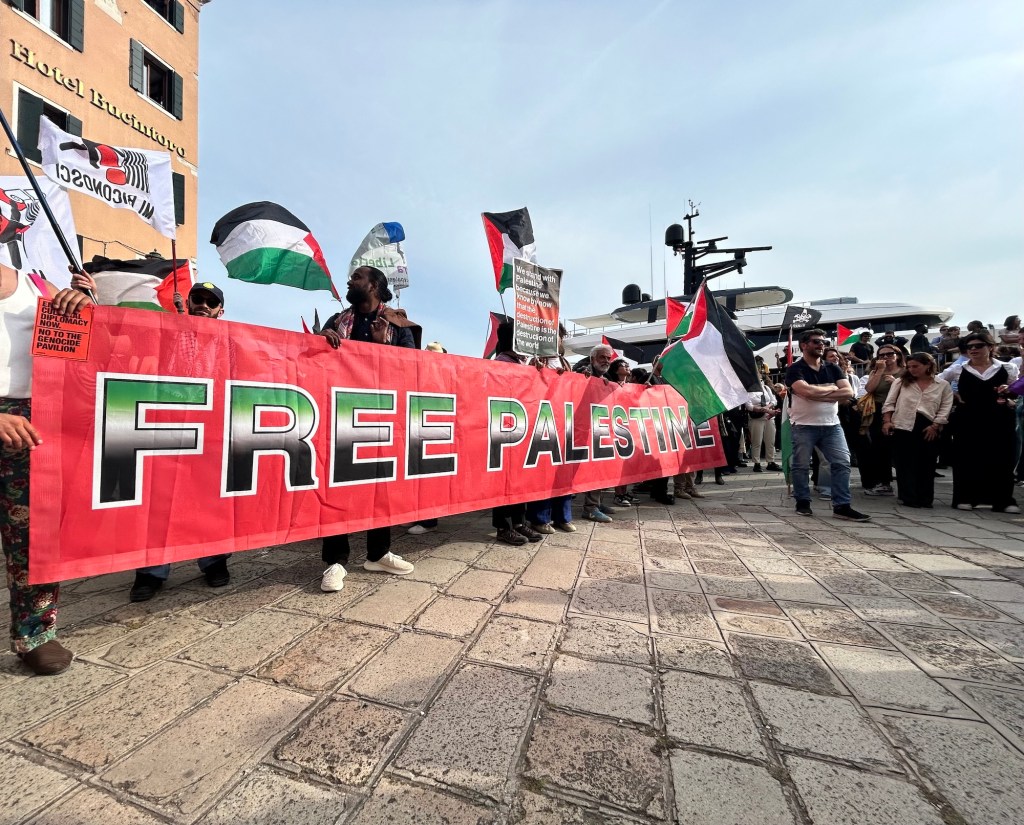
Thousands of protesters marched through Venice on the eve of the Venice Biennale's public opening, organized by Art Not Genocide Alliance (ANGA), to demand Israel's exclusion from the event. At least 18 national pavilions—including Austria, Belgium, France, Great Britain, and Ukraine—participated in a 24-hour strike, shutting down completely or partially. Protesters chanted slogans, waved Palestinian flags, and carried banners reading "no genocide pavilions," while ANGA released a statement with 236 signatories calling for Israel's removal, citing the humanitarian crisis in Gaza.

Frieze New York will Open With 68 Galleries from 26 Countries, and Other News.

Frieze New York will open on May 13, 2026, at The Shed with 68 galleries from 26 countries, marking its 15th edition. The fair emphasizes Central and South American galleries, supported by new committee members Fátima González and Omayra Alvarado, alongside blue-chip exhibitors like Gagosian, Hauser & Wirth, and Pace. In other news, Phillips set a watch auction record with its $96.3 million Geneva sale, the Met Gala generated $1.56 billion in media value, and ICFF announced a November 2027 edition. Tiffany & Co. and the CFDA launched a new jewelry design scholarship.

Russian art today is blood. A tough interview with Pussy Riot

“L’arte russa oggi è il sangue”. Una dura intervista alle Pussy Riot

During the preview of the 2026 Venice Biennale, the Russian Pavilion became the site of a protest by Pussy Riot and FEMEN, who staged an action called "STORM OF VENICE." Wearing pink balaclavas and carrying radical slogans, they denounced Russia's presence at the Biennale, accusing the Kremlin and the European cultural system of complicity. The protest centered on the phrase "Blood is Russia's art." In an interview, Pussy Riot member Nadya Tolokonnikova argues that artists who represent the official Russian Pavilion become instruments of the aggressive imperial state, and that the Biennale confuses cultural dialogue with political normalization.

Finnish museum creates a new and radical support model for artists

Finland's largest art museum, the Espoo Museum of Modern Art (Emma), has launched a radical new artist support model under director Krist Gruijthuijsen. The program commits to four artists—P. Staff, Tarik Kiswanson, Jenna Sutela, and Eglė Budvytytė—over several years, providing financial backing through acquisitions, production support, a part-time stipend, and health insurance. It will culminate in mid-career survey exhibitions in 2029 and 2030, which the museum plans to tour with partner institutions. Three of the artists are currently showing at the Venice Biennale with Emma's support.

Israel’s foreign ministry accuses Venice Biennale's jury of ‘politicising’ exhibition

Israel’s foreign ministry has accused the Venice Biennale's jury of politicizing the exhibition after jurors announced they would not consider for prizes countries whose leaders face International Criminal Court charges for crimes against humanity. The jury’s statement, which did not name specific nations, is broadly understood to apply to Israel and Russia, both returning to the Biennale for the first time since the Gaza war and the Ukraine invasion, respectively. The Israeli ministry posted on X that the jury had decided to 'boycott' Israeli sculptor Belu-Simion Fainaru, calling it 'a contamination of the art world.' The Biennale distanced itself from the jury’s announcement, stating the jury acts autonomously, while the Russian pavilion is reportedly set to open only for a limited pre-opening period due to budget constraints amid sanctions.

Russian Pavilion Will Be Closed to the Public During Venice Biennale: Report

The Russian Pavilion will be closed to the public for most of the 2025 Venice Biennale, opening only during the pre-opening vernissage (May 5–8) for live performances tied to the exhibition “The Tree Is Rooted in the Sky.” After May 9, the pavilion will remain closed, with digital documentation displayed in the windows. The compromise follows weeks of pressure from European cultural and political figures—including Italy’s culture minister—to shutter the pavilion due to Russia’s ongoing war in Ukraine. Plans were confirmed via email correspondence between Biennale Foundation president Pietrangelo Buttafuoco, general director Andrea Del Mercato, and Russian Pavilion commissioner Anastasia Karneeva, as reported by Italian outlets Open and La Repubblica.

DHM main building likely closed until 2031

DHM-Hauptbau wohl bis 2031 dicht

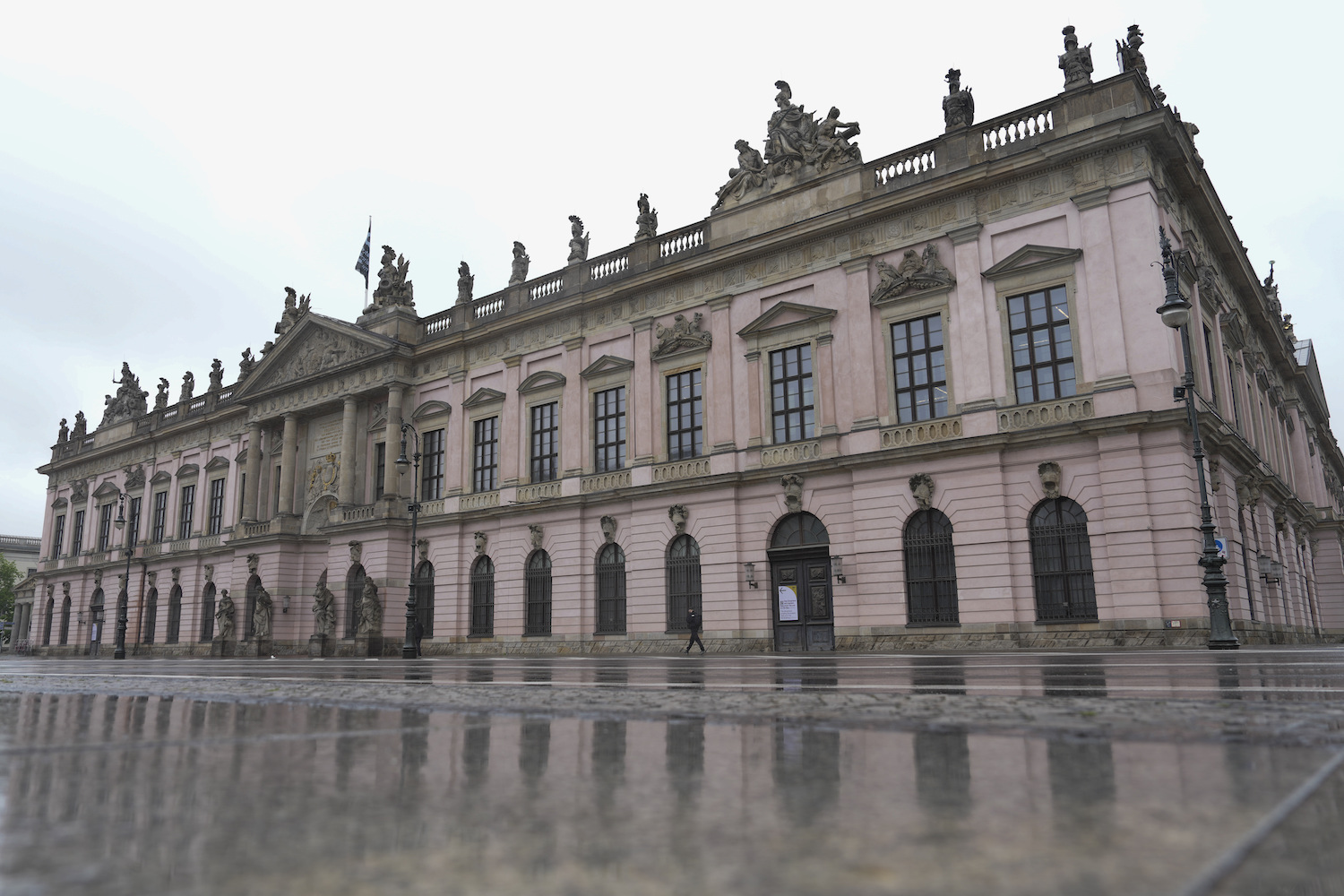
The German Historical Museum (DHM) in Berlin will remain without its main building, the Zeughaus on Unter den Linden, until at least 2031 due to further delays in its renovation. Museum director Raphael Gross announced that a binding timeline from the property owner and the federal construction authority is not expected until 2027, and a reopening before 2031 is unrealistic. In the meantime, the museum is using its modern Pei-Bau wing to host a new exhibition titled "Objekte. Geschichte. Geschichten," featuring around 200 highlights from its collection of one million objects, including a samurai armor once gifted to Adolf Hitler and objects from a refugee shelter.

Venice Bound? Here’s All the News You Need to Know About This Year’s Biennale

The 61st Venice Biennale is embroiled in geopolitical controversy over Russia's return to the event in 2026, which has sparked widespread backlash. Nearly 10,000 artists and cultural leaders signed an open letter opposing Russia's participation, and the European Union withdrew €2 million in funding for the 2028 edition. Leaked emails reveal Biennale officials worked with Russian pavilion commissioner Anastasia Karneeva to circumvent EU sanctions, while Italy's culture minister Alessandro Giuli plans to boycott the opening week. Meanwhile, activists continue to push for Israel's removal from the Biennale, though Israel will be accommodated in the Arsenale this year.