filter_list Showing 35 results for "LIA" close Clear
dashboard All 231 museum exhibitions 119article news 35article local 22article culture 13article policy 11trending_up market 9person people 8gavel restitution 6rate_review review 5candle obituary 3
date_range Range Today This Week This Month All
Subscribe

Advocates Try to Save Brutalist Fountain in San Francisco, José Aparicio Painting Returns to Prado Museum: Morning Links for April 30, 2026

This ARTnews Morning Links roundup covers multiple art-world stories from April 30, 2026. A new Banksy sculpture appeared in London's Waterloo Place, depicting a suited man marching off a plinth with a flag covering his face, though Banksy had not confirmed the work. Italian Culture Minister Alessandro Giuli ordered inspectors to the Venice Biennale headquarters amid intensifying scrutiny over Russia's participation, following internal emails suggesting sanctions were circumvented. Obituaries note the deaths of German 'total artist' Timm Ulrichs at 86 and Japanese sculptor Shigeo Toya at 78. A José Aparicio painting, 'The Year of the Famine in Madrid' (1818), returned to the Prado Museum after 150 years. In San Francisco, a group called Friends of the Plaza filed an appeal to block dismantling of the Vaillancourt Fountain. A feature in Cultured Magazine explores Bucharest's ambitions as a global arts hub through the Romanian Art Dealers fair.

Emails Suggest Venice Biennale Organizers Planned for Limited Russian Participation, SF Appoints First Arts and Culture Director, and More: Morning Links for April 28, 2026

Emails between Venice Biennale organizers and the Russian Pavilion commissioner reveal plans for limited Russian participation: the pavilion would open during the vernissage (May 5–8) with live performances, then close to the public after May 9, with multimedia documentation viewable from outside. The messages, dating to June 2025, also show Biennale staff helping Russian artists obtain visas. Organizers insist they complied with European sanctions, which prohibit financial support or direct collaboration with state-backed Russian entities. Separately, San Francisco has appointed Matthew Goudeau as its first executive director of arts and culture, a new role overseeing three public art agencies amid local arts closures.

Whistleblower Complaint Alleges Misconduct at Palm Springs Art Museum, Where an Ex-Trustee Describes a ‘Shattered Moral Compass’

An anonymous whistleblower has filed a complaint alleging misconduct by leadership at the Palm Springs Art Museum, including improper movement of funds between accounts to address cash shortages, the forced resignation of a former director based on fabricated staff complaints, and a failure to properly interview external candidates for the director position. The complaint, forwarded to ARTnews, also references a $3 million discrepancy in the reported endowment value and the departure of several trustees, leaving the board below its required size. The museum has formed a special committee to investigate the allegations, which were first reported by the Los Angeles Times in November 2025.

The US Pavilion Is Taking Online Donations

The American Arts Conservancy (AAC), the nonprofit tasked with executing Alma Allen's 2026 US Pavilion at the Venice Biennale, is soliciting online donations from the public after receiving no corporate or foundation funding. Unlike previous pavilions backed by major foundations like Ford and Mellon, AAC's fundraising relies on private citizens, with a minimum $100 donation requested via its website. The State Department provided $375,000 but requires additional funding, and AAC's Executive Director Jenni Parido, a former pet food store owner, declined to name specific donors, though Instagram posts suggest wealthy Trump allies attended benefit events. Perrotin Gallery, which represents Allen, is providing operational support but not funding.

Venice Biennale 2026: How Do You Critique a Posthumous Exhibition?

The article, published by ArtReview, examines the upcoming 61st Venice Biennale (2026), titled *In Minor Keys*, which was conceived by artistic director Koyo Kouoh before her death from cancer in May 2025 at age 57. The exhibition, based on Kouoh's drafted concept and completed by a curatorial team including Rory Tsapayi, Siddhartha Mitter, Marie Hélène Pereira, Gabe Beckhurst Feijoo, and Rasha Salti, adopts a musical metaphor of "minor-ness" and aims to avoid the pitfalls of previous Biennales by focusing on soul frequencies and dissonant harmony rather than direct commentary on world crises. The author, Martin Herbert, questions how critics will respond to a posthumous exhibition of this unprecedented scale, noting that previous artistic directors like Robert Storr, Cecilia Alemani, Christine Macel, and Adriano Pedrosa have faced varied critical receptions.

​​​​Art Movements: Curators Named for El Museo's Latine Art Survey

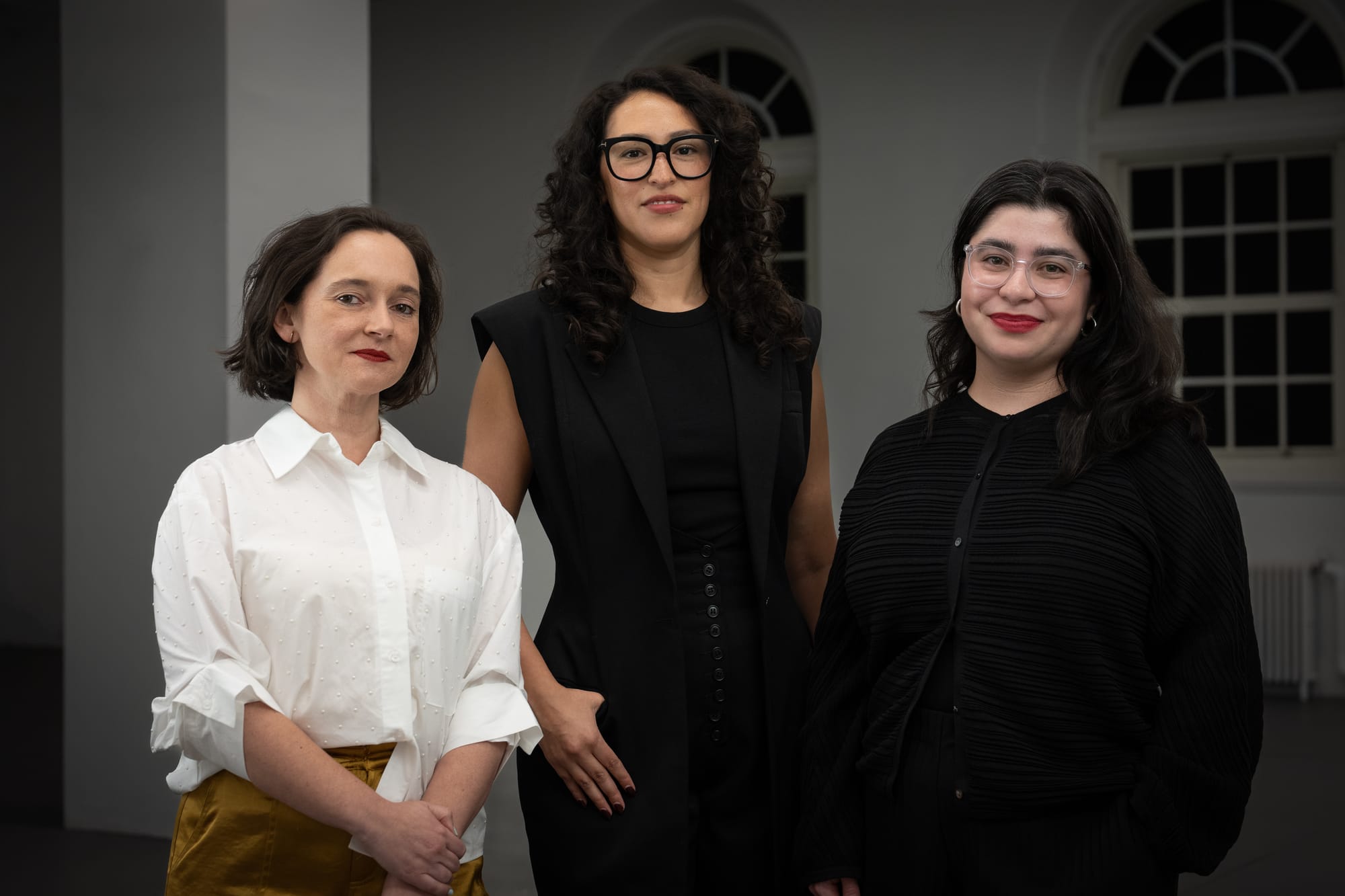
El Museo del Barrio has announced the curatorial team for the 2027 edition of La Trienal, its landmark survey of Latine contemporary art. The show will be organized by Susanna V. Temkin, interim chief curator at the museum; Zuna Maza, assistant curator; and guest curator Kaitlin Garcia-Maestas, formerly of Socrates Sculpture Park. In other biennial news, Amanda Carneiro and Raphael Fonseca were named chief curators of the 37th Bienal de São Paulo, the jury of the 61st Venice Biennale resigned after omitting Russia and Israel from awards consideration, and Marcello Dantas was appointed senior curator of the Vancouver Biennale. Hedwig Fijen will step down as director of Manifesta, with Emilia van Lynden and Catherine Nichols taking over in a new co-leadership model. Janne Sirén will resign as director of the Buffalo AKG Art Museum, Kate Kraczon was named chief curator at the Montclair Art Museum, and Charlie White was appointed dean of WashU’s Sam Fox School of Design & Visual Arts. Marina Abramović has designed wine labels for the Ornellaia estate, with limited-edition bottles to be auctioned by Bonhams to benefit the Guggenheim Pop exhibition.

The art of politics: how global conflicts are playing out in this year's Venice Biennale

Israel is making a controversial return to the 2025 Venice Art Biennale after its pavilion was locked in 2024 with a note demanding a ceasefire in Gaza. The artist representing Israel, Belu-Simion Fainaru, will present his project "Rose of Nothingness" in the Arsenale, while Russia also returns to the Biennale after its Giardini pavilion was reassigned to Bolivia in 2024. The Art Not Genocide Alliance (ANGA) has renewed calls for a boycott and is organizing strike action to disrupt the event, accusing Israel of genocide.

Mystery sitter in Holbein portrait could be Anne Boleyn, AI analysis finds

Researchers using AI have analyzed two Renaissance sketches by Hans Holbein from the Royal Collection, known as the Windsor sketch and the Unidentified Woman. The AI model, developed by Professor Hassan Ugail at the University of Bradford, compared the entire Holbein corpus and found that the Unidentified Woman may actually be Anne Boleyn, while the Windsor sketch—long thought to depict Boleyn—may instead show her mother, Elizabeth Howard. The study suggests the works were incorrectly inscribed in the 1700s, leading to centuries of misidentification.

May 2026 Opportunities: Open Calls, Residencies, and Grants for Artists

Colossal's May 2026 opportunities roundup lists multiple open calls, residencies, and grants for artists worldwide. Featured opportunities include the Scenerium 2026 Art Award (deadline May 7), the Hopper Prize offering $4,500 and $1,000 artist grants (deadline May 12), and the SaveArtSpace Billboard Art Open Call curated by Gigi Chen (deadline May 7). Other listings include the YICCA Art Prize, CIFRA Award, Cass Art Prize for the U.K. and Ireland, Sunshine Coast National Art Prize in Australia, an opportunity to get published in Artistonish magazine, and the Abbey Mural Prize.

Russian Pavilion Will Be Closed to the Public During Venice Biennale: Report

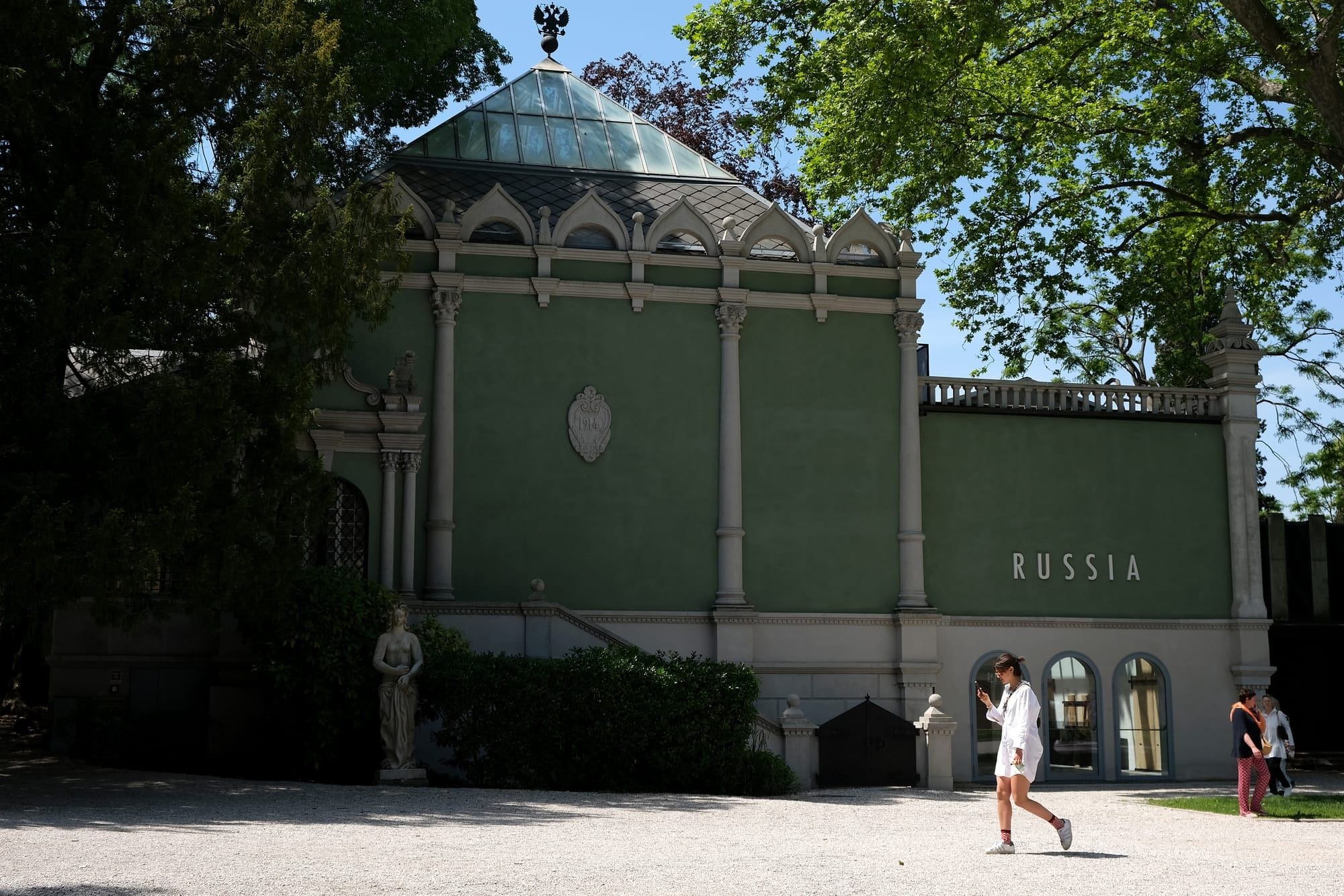
The Russian Pavilion will be closed to the public for most of the 2025 Venice Biennale, opening only during the pre-opening vernissage (May 5–8) for live performances tied to the exhibition “The Tree Is Rooted in the Sky.” After May 9, the pavilion will remain closed, with digital documentation displayed in the windows. The compromise follows weeks of pressure from European cultural and political figures—including Italy’s culture minister—to shutter the pavilion due to Russia’s ongoing war in Ukraine. Plans were confirmed via email correspondence between Biennale Foundation president Pietrangelo Buttafuoco, general director Andrea Del Mercato, and Russian Pavilion commissioner Anastasia Karneeva, as reported by Italian outlets Open and La Repubblica.

The Newest Docent at This Historic Italian Palace Is a Robot

Palazzo Madama in Turin, Italy, has introduced a four-foot-tall robot named R1 as a docent for its Baroque collection. The robot, developed by the Italian Institute of Technology (IIT) under Project Convince with €4 million in EU funding, guides visitors through the former royal apartments, narrating the history of the House of Savoy and detailing paintings, tapestries, and furniture. R1 can interact with visitors via LED eyes, answer questions, and autonomously navigate the museum's first floor, though it cannot climb stairs. It has been learning on the job since 2025, completing 30 tours in December 2025, and uses corrective software to relocalize itself if lost.

Embattled US Venice Biennale Pavilion is Seeking Donations

The American Arts Conservancy (AAC), an organization founded last year by the Trump administration, has launched a crowdfunding campaign to support the United States Pavilion at the Venice Biennale. This comes amid widespread controversy and calls to exclude the US, Russia, and Israel from the event. The AAC website solicits donations starting at $100, claiming a "once-in-a-generation opportunity" to restore America's artistic presence abroad. The US government has already contributed $375,000, but the State Department says the total exhibition cost far exceeds that amount. This year's pavilion will feature sculptor Alma Allen, after Barbara Chase-Riboud and William Eggleston declined to participate.

Venice Biennale jury resigns in latest politically charged controversy at art exhibition

The entire jury of the Venice Biennale has resigned, including president Solange Farkas and members Zoe Butt, Elvira Dyangani Ose, Marta Kuzma, and Giovanna Zapperi. The jury had announced it would not consider for prizes countries charged with crimes against humanity by the International Criminal Court, a stance that would affect Israel and Russia, both of which have national pavilions at the exhibition. As a result, the Biennale will not award several jury prizes, including the Golden Lion for best national pavilion and best artist in the group show, replacing them with visitor-voted awards.

Venice Biennale’s jury resigns

The entire jury of the 61st Venice Biennale, presided by Brazilian curator Solange Farkas and comprising four other curators, resigned just nine days before the exhibition's scheduled opening on 9 May 2026. The jury had announced it would not award prizes to countries whose leaders are charged with crimes against humanity by the International Criminal Court, a move widely understood to target Israel and Russia. In response, the Biennale's organisers cancelled the prize-giving ceremony and will instead award Golden Lions via a popular vote among ticketholders. The row escalated further when the Israeli representative, sculptor Belu-Simion Fainaru, accused the jury of discrimination and threatened legal action, prompting intervention from Italy's culture ministry.

Museum diplomacy in action at ICOM UK 2026: museums in a changing world

ICOM UK hosted its 2026 annual conference in Oxford, bringing together delegates from over 20 countries to explore the theme of 'Museum Diplomacy.' Keynote speaker Dr. Sascha Priewe of the Aga Khan Museum and ICOM Canada framed the current geopolitical moment as a 'GZERO World,' where no country is willing or able to lead globally, and discussed how sanctions, export controls, and shifting alliances are straining international museum collaborations. Sessions featured case studies from the Science Museum Group and International Arts & Artists, emphasizing that trust and networks, not grand gestures, are essential for enduring partnerships.

Working in the arts: opportunities from Arte Laguna Prize, Reggio Parma Festival, Italian Cultural Institute of London, Museo Mitoraj

Lavorare nell’arte: opportunità da Arte Laguna Prize, Reggio Parma Festival, Istituto Italiano di Cultura di Londra, Museo Mitoraj

Artribune has compiled a list of five open calls and job opportunities in Italy for visual artists, theater professionals, curators, and digital media specialists. The opportunities include the Arte Laguna Prize 2026 offering exhibitions at Venice's Arsenale Nord and international residencies at venues like The Swatch Art Peace Hotel in Shanghai and BigCi in Australia; the Gradus theater residency program by Reggio Parma Festival; an artist residency for Italians under 40 at Camberwell College of Arts in London organized by the Istituto Italiano di Cultura di Londra; the Terre Alte residency for visual artists and curators under 36 by CasermArcheologica; and a digital media specialist position at the Fondazione Museo Igor Mitoraj.

Italian culture minister will not attend opening of Venice Biennale

Italian culture minister Alessandro Giuli has announced he will not attend the opening of the Venice Biennale next week, protesting Russia's involvement in the exhibition. Russia, which has a permanent pavilion in the Giardini, has been absent from the Biennale since 2022 but is returning this year, sparking widespread criticism. The European Union recently cut its €2 million grant to the Biennale following Russia's return, and Golden and Silver Lion jurors have stated they will not consider pavilions from countries whose leaders are charged with crimes against humanity by the International Criminal Court, effectively excluding Russia.

From Minor Keys to Uproar: The Crisis of the Venice Biennale

DE LAS MINOR KEYS AL ESTRUENDO: LA CRISIS DE LA BIENAL DE VENECIA

The 61st Venice Biennale is engulfed in a structural crisis, marked by geopolitical tensions over the inclusion of Russia (amid its invasion of Ukraine) and Israel (amid the Gaza genocide). The Biennale Foundation, led by Pietrangelo Buttafuoco, defended their participation on legalistic grounds, sparking outrage from over 200 artists, curators, and cultural workers who demanded Israel's exclusion, aligning with Art Not Genocide Alliance (ANGA). The international jury, chaired by Solange Farkas and including Zoe Butt, Elvira Dyangani Ose, Marta Kuzma, and Giovanna Zapperi, resigned collectively on April 30 after deciding not to award prizes to countries whose leaders face International Criminal Court arrest warrants. This led to the cancellation of the traditional Golden and Silver Lions, replaced by audience-voted "Visitor Lions," with awards deferred until November. The European Commission suspended a €2 million subsidy over Russia's participation, and Italian Culture Minister Alessandro Giuli notably skipped the May 9 opening.

What Biennials Reveal About the Art World

Ben Davis and Jo Lawson-Tancred of Artnet News have published complementary projects analyzing global art biennials. Davis compiled data from major biennials including Istanbul, Gwangju, São Paulo, Sharjah, and Venice over the past four years, tracking which artists have been shown most frequently worldwide since the 2022 Venice Biennale. Lawson-Tancred examined the upcoming Venice Biennale, titled "In Minor Keys" and curated by the late Koyo Kouoh, comparing the demographics of its artists to previous editions to trace shifts in the global art conversation.

Row Over Russia’s Return to the Venice Biennale Deepens

Newly leaked emails reveal that the Venice Biennale has been secretly coordinating with Russia since last summer to facilitate its return to the 2025 edition, despite ongoing international sanctions. The correspondence, published by Italian outlets Open and La Repubblica, shows Biennale president Pietrangelo Buttafuoco, director Andrea Del Mercato, and Russian commissioner Anastasia Karneeva working together on visa issues, pavilion logistics, and a legal strategy to bypass E.U. sanctions prohibiting collaboration with state-backed Russian entities. Russia's pavilion will be open during preview days with performers activating the space, while footage will play for the public from a closed pavilion thereafter.

Russia's Venice Pavilion to Close to the Public in Compliance With Sanctions

Russia will return to the 61st Venice Biennale with its national pavilion, but the exhibition will only be physically open to the press and select guests during the vernissage dates of May 5–8. From May 9 onward, the pavilion will remain closed to the public, with multimedia documentation of performances displayed on screens at the windows. The arrangement follows leaked emails among Biennale Foundation President Pietrangelo Buttafuoco, General Director Andrea Del Mercato, and Russian Pavilion Commissioner Anastasia Karneeva, revealing efforts to comply with EU sanctions while still allowing Russia's participation after two consecutive absences since its invasion of Ukraine.

Venice Biennale denies it helped ‘circumnavigate’ sanctions against Russia with pavilion

The Venice Biennale is facing allegations that it helped Russia circumvent EU sanctions by allowing the Russian pavilion to operate during preview days, when only arts professionals and press are present. Investigative website Open published emails between Biennale officials and Russian pavilion organizers, including requests for visa assistance for artists and staff. The commissioner, Anastasia Karneeva, is the daughter of a Rostec deputy CEO and runs a consultancy with the daughter of Russia's foreign minister. The Biennale denies any wrongdoing, stating it acted in compliance with international law. Russia has been absent from the Biennale since 2022 but retains a permanent pavilion in the Giardini.

Russia’s Venice Pavilion Will Be Closed to Public for Duration of Biennale

Russia's pavilion at the 2026 Venice Biennale will be closed to the public for the duration of the exhibition, from May 9 to November 22, following escalating controversy over the country's participation. The group show, titled “The tree is rooted in the sky,” will only be open to press and industry insiders during the preview days (May 5–8). The move comes after the International Criminal Court accused Russia of crimes against humanity, leading the Biennale to bar Russia and Israel from competing for awards. Italian culture minister Alessandro Giuli has also boycotted the preview and opening ceremony in protest.

Under pressure, the jury of the 61st Venice Biennale will exclude Russian and Israeli pavilions from the awards

Sous pression, le jury de la 61e Biennale de Venise exclura les pavillons russe et israélien du palmarès

The 61st Venice Biennale, titled "In Minor Keys" and running from May 9 to November 22, 2026, has been embroiled in political controversy after organizers decided to reinstate the Russian pavilion, which had been excluded since Russia's 2022 invasion of Ukraine. Under pressure from the European Commission, which threatened to suspend a €2 million grant, the jury announced it will exclude artists from the Russian and Israeli pavilions from winning prizes, citing that leaders Vladimir Putin and Benjamin Netanyahu face International Criminal Court charges for crimes against humanity. The Russian pavilion will remain closed to the public but open for VIP press previews, while the Israeli pavilion stays open to the public. Italian Culture Minister Alessandro Giuli has refused to attend the opening ceremony in protest.

What Did the Golden Lion Die Of? On Judgment and Disavowal at the Venice Biennale

The international jury of the 61st Venice Biennale announced it would exclude from prize consideration countries whose leaders are charged with crimes against humanity by the International Criminal Court, specifically targeting Russia and Israel. This prompted the Italian culture minister to send inspectors to the Biennale's offices, leading the jury to resign. The Biennale then replaced the Golden Lion with "Visitors' Lions" prizes voted by ticket-holders, immediately making Russia and Israel eligible again. The article traces this crisis to the Biennale's historical structure under Mussolini's 1930 Royal Decree, which established the national pavilion system as a diplomatic concession system designed to serve state power, and notes the recent acceptance of a €50 million donation from Qatar for a new permanent pavilion in the Giardini.

Brussels, Russia and the Venice Biennale

The jury of the 61st Venice Biennale Art Exhibition has resigned en masse to protest the decision to allow Russian participation for the first time since the 2022 invasion of Ukraine. The jury stated it would refuse to consider artists from countries whose leaders face International Criminal Court warrants, specifically Israel and Russia, citing a commitment to human rights. The Biennale organizers defended the re-admission as consistent with openness and dialogue, while Ukrainian Foreign Minister Andriy Sybiha and EU foreign policy chief Kaja Kallas condemned the move, with the EU threatening to cut funding. The Italian government distanced itself, calling the Biennale autonomous.

Artist ‘lost everything’ after cleared of rape

Anthony Lister, once called "Australia's Banksy," is staging a comeback with a new exhibition titled "Circus of Life" after being acquitted of sexual assault charges. The six-year legal battle, which began with a police raid on his Sydney home in 2020, led to the cancellation of his shows, financial ruin, and public vilification. Despite being found not guilty on all counts by a jury in under a minute, Lister says his reputation and career were destroyed, and he now challenges the art world and Australian public to accept him back.

There are 21 artists supporting the new voyage of the Global Sumud Flotilla that set sail from Sicily with painted sails

Ci sono 21 artisti a sostegno del nuovo viaggio della Global Sumud Flotilla salpata dalla Sicilia con vele dipinte

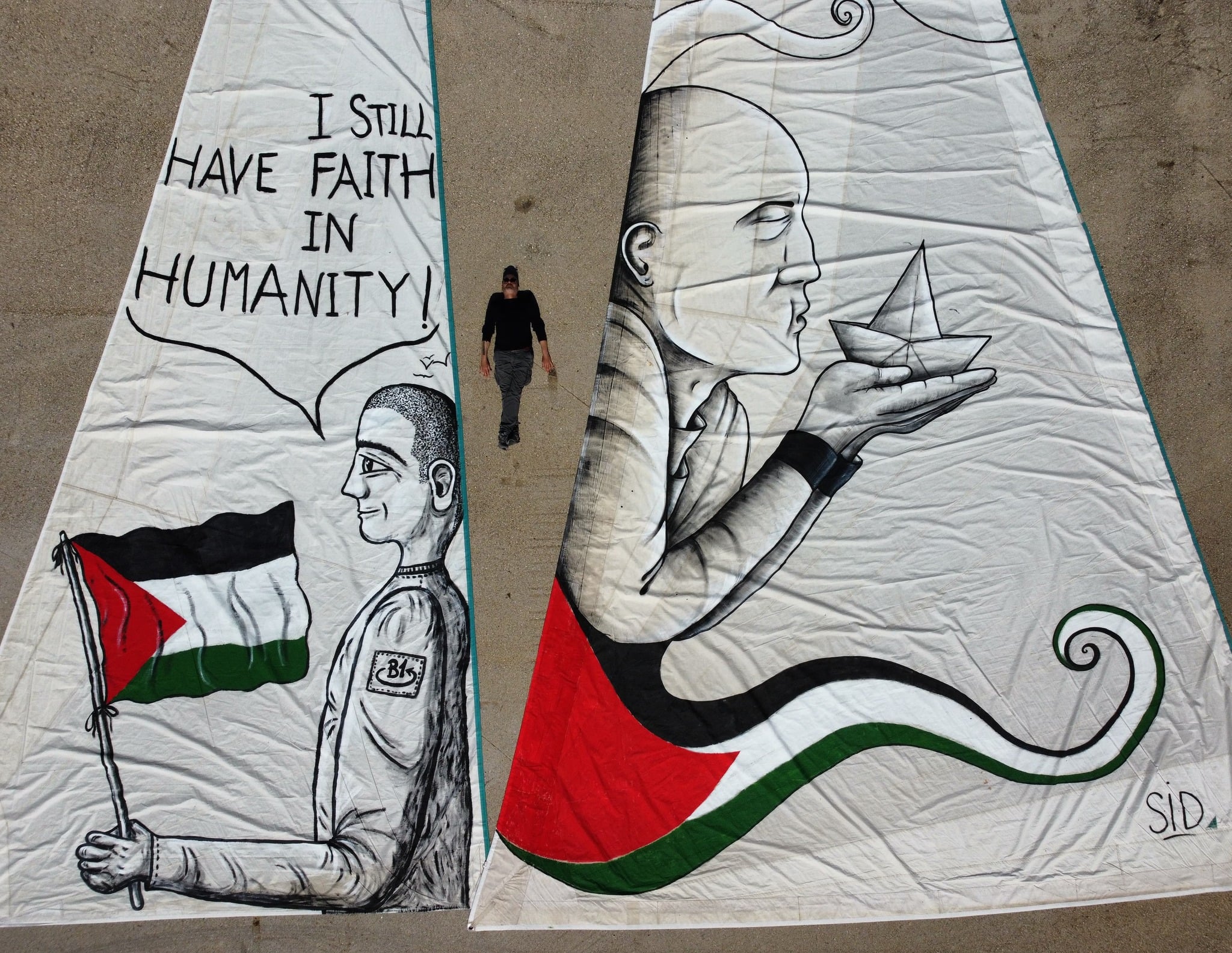
A new humanitarian mission by the Global Sumud Flotilla set sail on April 26 from Augusta, Sicily, with 59 Italian and Spanish boats heading toward Gaza. The flotilla, which follows a first attempt in September 2025 that ended with activists arrested by the Israeli military, aims to deliver humanitarian aid by early May. Twenty-one artists have joined the initiative, called Vele d'Arte, painting the sails of the boats with symbolic artworks. Among the participating artists are Gio Pistone, Antonio Curcio, Escif, Lydia Giordano, Glenda Costa, Millo, Elia Novecento, MP5, Matteo Todeschini, Alleg, Sam3, Okuda, Antonella Santonocito, Fabrizio Foti, Igor Scalisi Palmiteri, Andrea Sposari, and Salvo Ligama. The project was conceived by Carlo Alberto Giardina, who hopes the energy painted on the sails will transform into positive forces.

Venice Biennale chief under pressure

Venedig-Biennale-Chef unter Druck

Just before the opening of the Venice Art Biennale, its president Pietrangelo Buttafuoco is facing mounting criticism after the entire jury resigned. Italian Culture Minister Alessandro Giuli accused Buttafuoco of pursuing a form of "parallel foreign policy" by readmitting Russia to the six-month exhibition, calling him a "victim of a pacifist fantasy." The opening ceremony and the traditional Golden Lion awards have been canceled; prizes will now be decided by visitor vote at the end of the Biennale in November.

Israel Criticizes Venice Biennale Jury over Pavilion’s Exclusion

The international jury of the 61st Venice Biennale has excluded the Israeli and Russian pavilions from consideration for official prizes, citing that countries whose leaders are charged with crimes against humanity by the International Criminal Court will not be eligible. Israel’s foreign ministry condemned the decision as a political boycott, and Israeli representative Belu-Simion Fainaru called it a hostile act that exceeds the jury’s mandate. The Biennale’s president, Pietrangelo Buttafuoco, has distanced the institution from the jury’s action, insisting the exhibition remain open to all nations recognized by Italy.