filter_list Showing 14 results for "TK" close Clear
search
dashboard All 71 museum exhibitions 29article local 14candle obituary 14article culture 5rate_review review 2trending_up market 2article news 2person people 2article policy 1
date_range Range Today This Week This Month All
Subscribe

Georg Baselitz obituary

Georg Baselitz, the German painter and sculptor known for his provocative, expressionistic works and his iconic upside-down paintings, has died at the age of 88. The article traces his life from his childhood in war-torn Germany, through his early career as a rebellious artist in divided Berlin, to his rise as an international art star. It highlights his 1961 manifesto poster "Pandemonium I," his rejection of American abstraction, and his controversial 1963 exhibition that was raided by police for its explicit content.

Renowned feminist artist and film-maker Valie Export dies aged 85

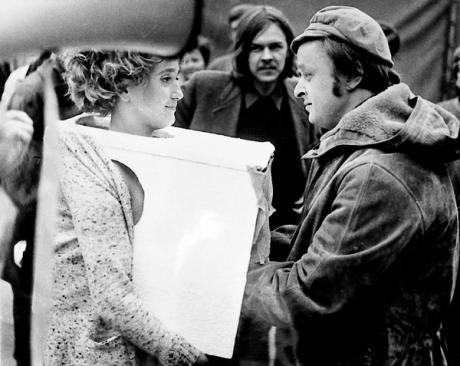
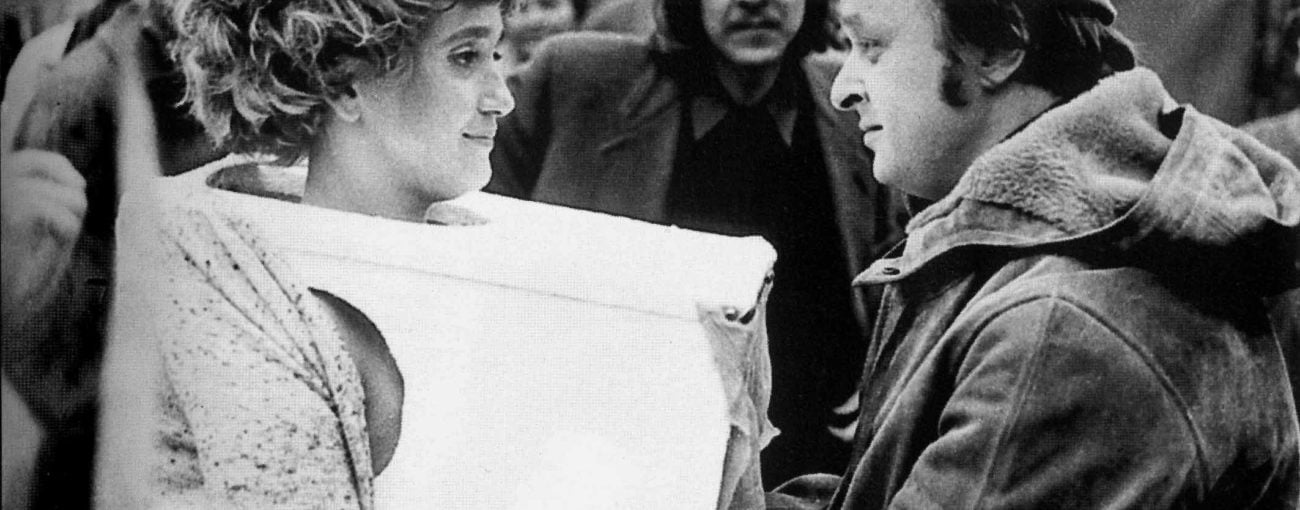
Valie Export, the Austrian performance artist and film-maker known for her provocative feminist works that challenged the male gaze, has died at age 85. Her foundation announced she died in Vienna on Thursday, three days before her 86th birthday. Export gained notoriety in the late 1960s for low-budget performances such as "Tapp und Tastkino" (1968), where she invited shoppers to touch her bare breasts through a tiny curtain strapped to her chest. She also co-founded the Austrian Filmmakers Cooperative, participated in documenta (1977, 2007) and the Venice Biennale (1980), and was a professor of multimedia and performance at the Academy of Media Arts in Cologne.

Georg Baselitz, German artist who turned figurative painting on its head, has died, aged 88

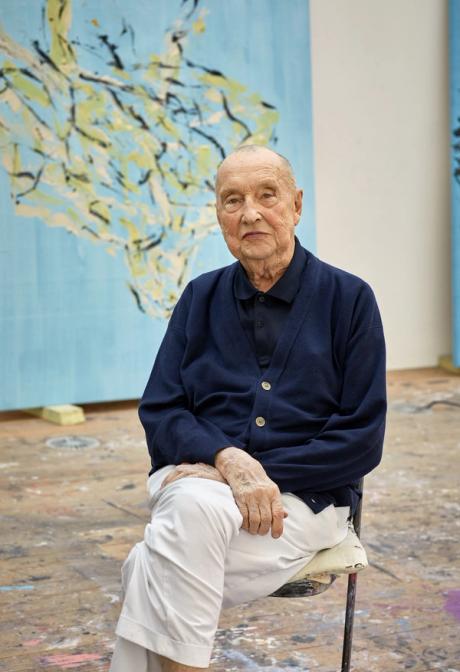
Georg Baselitz, the influential German painter and sculptor, died on 30 April at age 88. Born Hans-Georg Kern in 1938 in Deutschbaselitz, he grew up amid the ruins of Nazi Germany and later adopted his surname from his birthplace. Expelled from the East Berlin Academy for "sociopolitical immaturity," he moved to West Berlin, where he rejected both gestural abstraction and Expressionism. His first solo exhibition in 1963 was shut down for obscenity. In 1969 he pioneered his signature inverted paintings, turning subjects upside down to sever image from representation. He also created large carved sculptures using axes and chainsaws. His later series, from 2014 onward, are considered his most astonishing work, culminating in a sustained focus on his wife, artist Elke Kretzschmar.

VALIE EXPORT, Icon of Feminist Art, Dead at 85

VALIE EXPORT, the radical Austrian performance artist, filmmaker, and sculptor widely regarded as the most significant feminist artist of the postwar era, died in Vienna on May 14, just three days before her 85th birthday. Her death was confirmed by Thaddaeus Ropac gallery, which represents her. Known for provocative works such as *Tapp und Tastkino* (1968), in which she invited passersby to touch her bare breasts through a miniature theater, EXPORT faced hate mail, death threats, and indecency charges but remained undeterred in her mission to challenge patriarchal norms through the female body and sexual agency.

Georg Baselitz (1938-2026)

Georg Baselitz, born Hans-Georg Kern in 1938, has died at age 88. The German painter and sculptor, who changed his name in 1961, built a career on aesthetic dissent. Expelled from art school in East Berlin, he first gained notoriety with a 1963 exhibition at Galerie Werner and Katz in Berlin, where two works were seized for obscenity. His signature gesture—inverting his images, beginning with "Der Wald auf dem Kopf" in 1969—became his most recognizable trademark, shifting focus from subject to the act of painting itself. Baselitz also produced significant sculptures, often carved with a chainsaw and axe, and his work was the subject of major retrospectives at the Centre Pompidou (2021-2022) and the Musée d'Art Moderne de Paris (2011-2012).

The art world remembers Valie Export, Austrian pioneer of feminist performance art

VALIE EXPORT, the Austrian pioneer of feminist performance art, died on 14 May, three days before her 86th birthday. Her death was confirmed by her representative, Thaddaeus Ropac. Born Waltraud Lehner in Linz in 1940, she developed a radical artistic language centered on the female body, known for works such as *Tap and Touch Cinema* (1968–1971) and *Body Configurations* (1972–1976). Tributes have poured in from artists, writers, and institutions, including the Neue Nationalgalerie in Berlin and the Belvedere Museum in Vienna, where director Stella Rollig noted their ongoing collaboration on the exhibition *Feminist Futures Forever*.

Valie Export, Avant-Garde Icon and Feminist Trailblazer, Dies at 85

Valie Export, the Austrian avant-garde artist known for her radical feminist performances, films, and sculptures, has died at age 85. Her gallery, Thaddaeus Ropac, announced her death, noting her groundbreaking work in the 1960s and 1970s introduced a new form of embodied feminism to Europe. Export, born Waltraud Lehner in Linz, Austria, changed her name in 1967 and became known for provocative works such as "Aktionshose: Genitalpanik" (1969) and "Tap and Touch Cinema" (1968–1971), which challenged voyeurism and the sexualization of women's bodies. She also co-founded the Austrian Filmmakers Cooperative in 1968 and was commissioned by the Austrian Broadcast Corporation for her film "Facing the Family" (1971).

‘Her crotchless trousers are etched in my brain for ever’: Valie Export remembered by the artists she influenced

Valie Export, the pioneering Austrian feminist artist known for provocative performances like *Tapp-und-Tastkino* (1968) and *Genital Panic* (1969), is remembered by four artists she influenced: Peaches, Florentina Holzinger, Joan Jonas, and Candice Breitz. Each shares personal reflections on Export's radical use of the female body as a political weapon, her confrontational public interventions, and her legacy of civil disobedience against patriarchal structures.

Valie Export ist tot

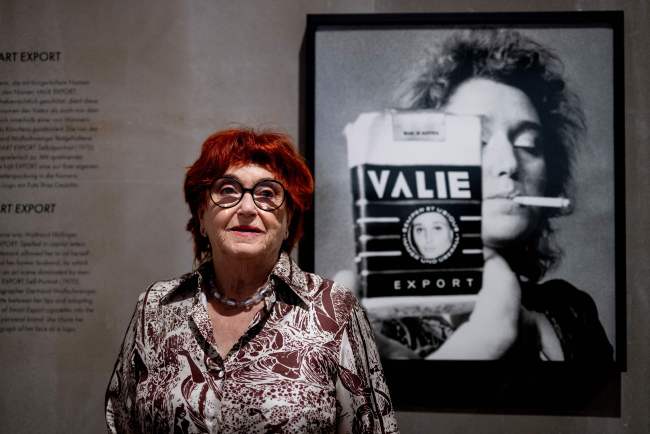
Valie Export, the pioneering Austrian media and performance artist, has died at age 85 in Vienna. Born Waltraud Lehner in Linz in 1940, she adopted the name Valie Export in the late 1960s, derived from a cigarette brand, and became internationally known for provocative works such as "Tapp- und Tastkino" (1968) and "Aktionshose: Genitalpanik." Her practice critically examined gender roles, power structures, and the representation of the female body through film, video, photography, and performance. She participated in major exhibitions including Documenta, the Centre Pompidou, and the Museum of Modern Art, and represented Austria at the Venice Biennale in 1980 alongside Maria Lassnig. She also taught as a professor of media and performance art in Berlin and Cologne, and the VALIE EXPORT Center opened in Linz in 2017.

Georg Baselitz, grande figure de l’art allemand, est mort à l’âge de 88 ans : retour sur sa vie et son œuvre

Georg Baselitz, one of Germany's most significant post-war artists, has died at age 88. Born Hans-Georg Kern in 1938, he grew up in Nazi-era Saxony and later rejected his father's ideology, fleeing to West Berlin in 1957. Known for his provocative, expressionist works and signature upside-down paintings, Baselitz challenged artistic conventions with brutalist techniques—attacking wood with chainsaws and axes—and created scandalous pieces like "Die große Nacht im Eimer" (1962–1963), which was banned from exhibition. His career included major retrospectives at the Musée d'Art Moderne de la Ville de Paris (2011) and Centre Pompidou (2021), and commissions for the Reichstag.

Artist Valie Export, Who Saw Right Through the Male Gaze, Dies at 85

Austrian artist Valie Export, a pioneering feminist performance and media artist, died on May 14, three days before her 86th birthday. Her death was confirmed by Thaddaeus Ropac Gallery. Export, born Waltraud Lehner in 1940, rejected traditional domestic roles and adopted her iconic all-uppercase name from a cigarette brand. She created guerrilla-style performances and films that directly confronted the male gaze and patriarchal society, often using her own body as a medium. Key works include “Genital Panic” (1968), in which she walked through a Munich cinema in crotchless pants, and “Tapp und Tastkino (Tap and Touch Cinema)” (1968), where she invited strangers to touch her bare breasts through a stage strapped to her chest.

VALIE EXPORT, icon of feminist art who placed the body at the center of her research, has died

È morta VALIE EXPORT, icona dell’arte femminista che ha messo il corpo al centro della sua ricerca

VALIE EXPORT, the Austrian artist and feminist icon known for using her body as a political and artistic tool, has died in Vienna at age 85. Born in Linz in 1940, she changed her name in 1967 and became a pioneer of performance, film, and media art, creating provocative works such as "Tapp-und Tastkino" (1968), where she turned her body into a touchable cinema screen, and "Aktionshose: Genitalpanik" (1969). Her career spanned over six decades, and she taught at institutions including the University of Wisconsin and the Berlin University of the Arts. In 2023, the Albertina Museum in Vienna held a major retrospective of her work.

Valie Export en 2 minutes

Valie Export (1940–2026), the Austrian avant-garde artist known for radical feminist body art and video, has died at age 85. Born Waltraud Lehner in Linz, she studied design in Vienna before adopting her iconic pseudonym from a Canadian cigarette brand in 1967. Export rose to prominence with her 1969 performance *Genitalpanik*, which critiqued the male gaze and women's societal roles. She became a key figure in body art alongside the Vienna Actionists, later expanding into film and photography. Her first feature *Unsichtbare Gegner* (1976) screened at the Berlinale, and she won the Golden Bear in 1985 for *Die Praxis der Liebe*. She taught in Cologne from 1995 and participated in Documenta 6.

The Many Sheddings of Valie Export

Die vielen Häutungen der Valie Export

Valie Export, the Austrian media and performance artist known for using her body as a site of social critique, has died at age 85 in Vienna. Her final works include a black-and-white photo series of her forearm resting on a stone snake sculpture at the University of Vienna, exploring themes of skin, transformation, and mimesis. From the 1970s onward, she created iconic "Body Configurations" in which she placed her body on streets and against buildings along Vienna's Ringstrasse, tracing architectural forms to expose institutional power and patriarchal authority.