
filter_list Showing 5 results for "RAM" close Clear
dashboard All 120 museum exhibitions 58article local 28article news 12article culture 5article policy 5person people 4trending_up market 4rate_review review 3candle obituary 1
date_range Range Today This Week This Month All
Subscribe

Pablo Diaz, directeur de Sciences Po Rennes : « L’acte II de l’INSEAC de Guingamp »

Pablo Diaz, director of Sciences Po Rennes, announces that the Institut national supérieur de l'éducation artistique et culturelle (INSEAC) in Guingamp has been transferred from the Conservatoire national des arts et métiers (Cnam) to Sciences Po Rennes as of January 1, 2026. The institute, which opened in 2021 and focuses on training, research, and resources for arts and cultural education, will now operate under public-sector governance with oversight from the French ministries of Culture, Education, and Higher Education. Diaz outlines plans to appoint a dedicated site director in Guingamp and establish a strategic orientation committee chaired by interministerial delegate Emmanuel Ethis, aiming to resolve past management and governance issues.

A U.S. agency that funds culture wins a judicial reprieve

Une agence américaine qui finance la culture gagne un répit judiciaire

A U.S. federal court has blocked the Trump administration's attempt to cut funding for the Institute of Museum and Library Services (IMLS), a key agency supporting museums and libraries nationwide. The lawsuit was brought by the American Library Association (ALA) and the AFSCME union, with support from the legal organization Democracy Forward, arguing that the executive branch cannot unilaterally reduce programs authorized by Congress. The ruling temporarily halts the funding reductions, which were part of broader efforts to slash federal cultural spending during Donald Trump's second term.

How the State Supports Provenance Research

Comment l’État soutient la recherche de provenance

The French Ministry of Culture has created two specialized missions to assist museums in researching the provenance of their collections, addressing looted artworks, human remains, colonial acquisitions, and illicit trafficking. The Mission for Research and Restitution of Looted Cultural Property (M2RS), established in 2019, focuses on Nazi-era spoliations (1933-1945) with a budget of €220,000 annually, while the newer Mission "Provenance," launched in 2024 under curator Catherine Chevillot, covers human remains, colonial-era objects, and illicit goods with a €450,000 budget. These missions provide expertise, funding, and coordination with institutions like the Commission for the Restitution of Property and Compensation of Victims of Anti-Semitic Spoliation (CIVS), though most museums still only initiate provenance checks during acquisitions or donations.

Monthlong celebration dedicated to museums, raising awareness of culture and the arts to kick off in May

South Korea's Ministry of Culture, Sports and Tourism announced a monthlong celebration called "2026 Museum Week," running from late April to May 31, 2026, to coincide with International Museum Day on May 18. A total of 310 museums will participate under the theme "Museums uniting a divided world," with programs divided into three sections: Museum X Encounter (highlighting stories behind artifacts), Museum X Enjoy (special exhibitions and performances), and Museum X Stroll (expanding cultural access beyond Seoul). The event is hosted by the ministry and ICOM Korea, organized by the Korean Museum Association.

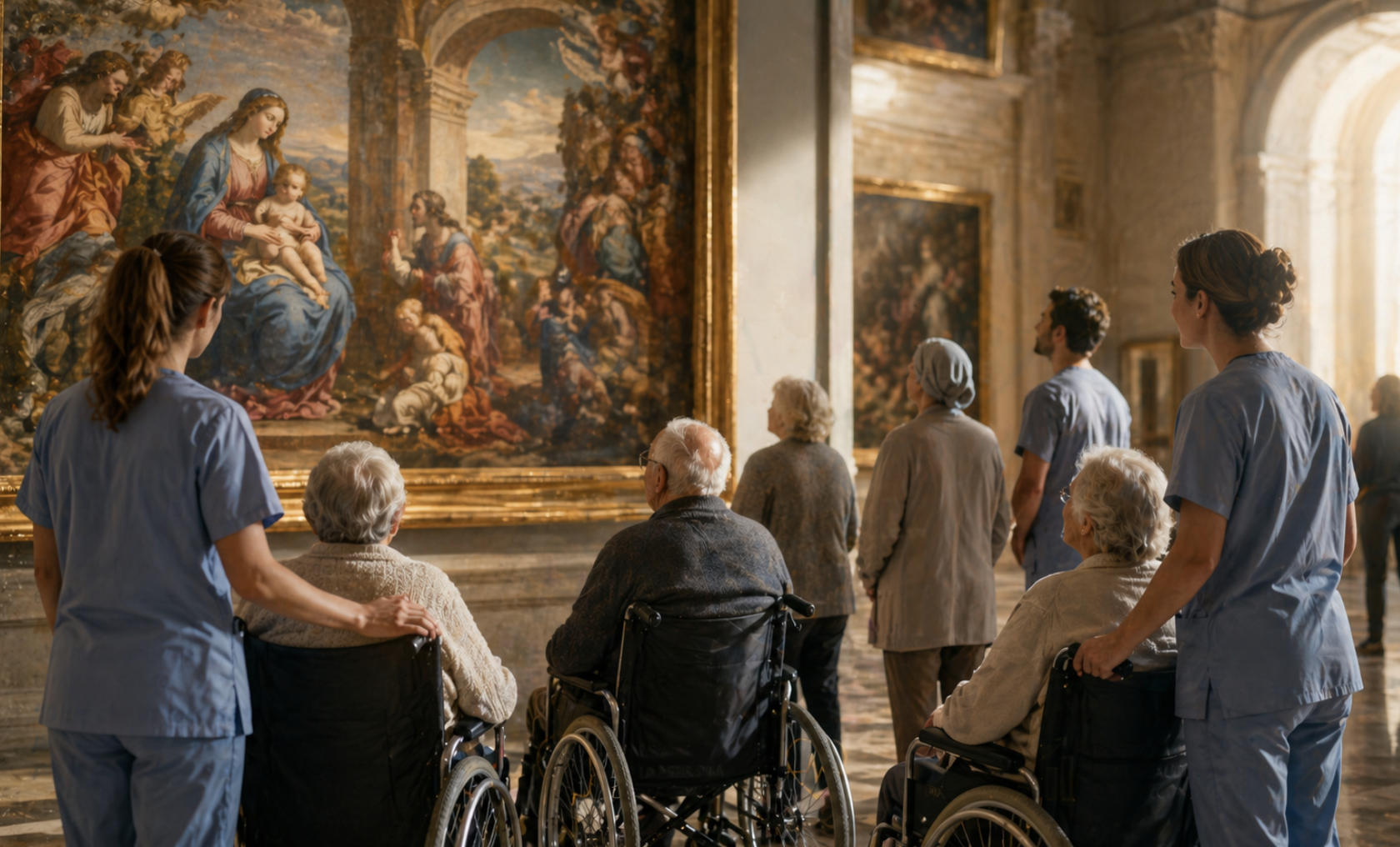
Art can officially be a form of therapy. Interview with Undersecretary of Culture Lucia Borgonzoni, godmother of the project

L’arte può essere ufficialmente una forma di cura. Intervista al Sottosegretario alla Cultura Lucia Borgonzoni madrina del progetto

The Italian Ministry of Culture and Ministry of Health have signed a formal protocol recognizing art as a form of therapy and care. The agreement, championed by Undersecretary of State for Culture Lucia Borgonzoni, mandates that museums, libraries, archives, and cultural institutions play a central role in developing therapeutic pathways using art to improve individual and community well-being. Borgonzoni, who has advocated for this initiative for nearly a decade, traces its origin to a 2018 study at the Sanctuary of Vicoforte that measured cortisol levels in visitors before and after viewing frescoes, showing significant stress reduction.