filter_list Showing 7 results for "french art" close Clear
search
dashboard All 167 museum exhibitions 85article news 23trending_up market 20article culture 11person people 10article policy 7candle obituary 4article local 4gavel restitution 2rate_review review 1
date_range Range Today This Week This Month All
Subscribe

british taxpayers to underwrite 1 billion loan to cover bayeux tapestry while its shown in the uk

France’s Bayeux Tapestry will be loaned to the British Museum in 2026, with the UK Treasury providing an indemnity guarantee of approximately £800 million ($1 billion) to cover potential damage or loss during transport and display. The guarantee, part of the UK government’s indemnity scheme, is a contingent liability—no upfront payment is required unless something goes wrong. The tapestry will travel by truck via the Channel Tunnel in a specially designed crate, displayed behind protective screening, and remain in London until July 2027. The loan is part of a broader cultural agreement between Britain and France, announced by President Emmanuel Macron during his July state visit to London.
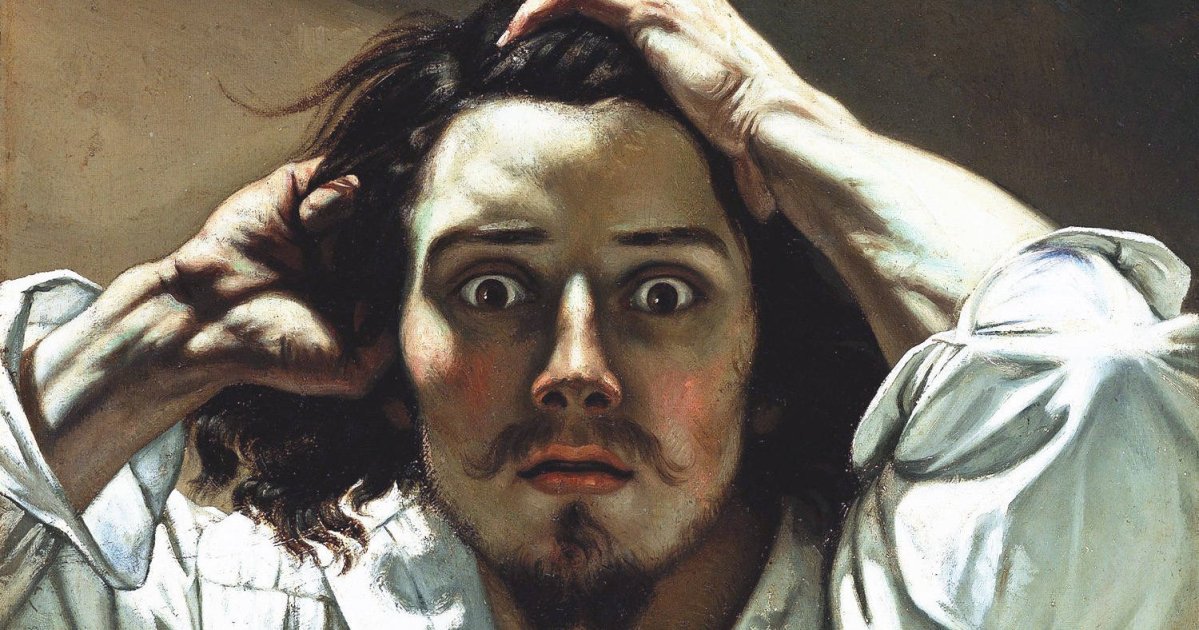
Pourquoi ce secret autour du Désespéré de Gustave Courbet ?

Gustave Courbet's painting *Le Désespéré* (1843-1845), owned by Qatar Museums Authority, was loaned to the Musée d'Orsay in Paris. The French art publication La Tribune de l'Art requested the loan agreement under transparency laws, but the museum refused, citing a confidentiality clause. The publication then appealed to the Commission d'Accès aux Documents Administratifs (CADA), which has not responded for five months. Separately, the heritage association Sites & Monuments made a similar request to the Ministry of Culture and received a negative response from CADA in March 2026, citing a Conseil d'État ruling that disclosure could harm France's foreign policy.

french art world opposes proposal new taxes

Two French parliamentarians, Jean-Paul Matteï and Philippe Juvin, have proposed a new tax regime on art as part of France's 2026 budget, which would make France the only major art market to impose a wealth tax on the mere possession of artworks. The French art world has strongly opposed the proposal, with 27 signatories including Art Basel, auctioneer Drouot, visual artists' rights organization ADAGP, the Association for the International Diffusion of French Art (ADIAF), and the Comité Professionel des Galeries d’Art (CPGA). Critics argue the tax is technically unenforceable, would drive collectors away, and harm the broader art ecosystem.

What Future for Art Centers?

Quel avenir pour les centres d’art ?

The article examines the uncertain future of contemporary art centers in France, a category that encompasses vastly different institutions from major venues like the Palais de Tokyo to smaller regional spaces. These non-collecting institutions, dedicated to exhibiting emerging artists and experimentation, face fragility due to heavy reliance on local government funding and difficulty proving their utility to elected officials. Their core mission is further challenged by more robust regional contemporary art funds (Fracs), which have greater resources for similar goals of exhibiting ultra-contemporary art and cultural democratization.

The Artists' Foundation Celebrates its 50th Anniversary

La Fondation des artistes célèbre ses 50 ans

The Fondation des artistes, a major independent French organization supporting visual artists, is celebrating its 50th anniversary. Founded in 1976, it operates from the Hôtel Salomon de Rothschild and the Nogent-sur-Marne estate, providing production grants, residencies, and support for elderly artists at the Maison nationale des artistes. Its anniversary program includes exhibitions, performances, and public events, with a key date on June 27 in Nogent-sur-Marne.

L’offre de formation se développe

French art training institutions are expanding their curricula to include provenance research, responding to a 2022 government report that identified gaps in conservator education. The Institut national du patrimoine (INP) now offers seminars on Nazi-era spoliation (1933-1945) and has added a five-day provenance research module for external competition students since 2024-2025. Paris-Nanterre University launched a master's-level diploma in 2022 covering legal, historical, and methodological aspects of provenance research. The École du Louvre now offers a specialized master's in "sensitive goods and provenance research" addressing spoliated works, human remains, colonial acquisitions, and illicit trafficking, while also integrating provenance methodology into its general curriculum from master's level one.

How nature is helping a rural French arts centre to reduce its carbon footprint

The Centre International d’Art et du Paysage—Île de Vassivière (CIAPV), a rural French arts centre on a forested island in Nouvelle-Aquitaine, is tackling its carbon footprint after a government-mandated analysis revealed that 95% of its emissions come from visitors driving to the remote site. Executive director Alexandra McIntosh is drawing on the island's manmade landscape—shaped by hydroelectric damming, agriculture, and logging—to implement ecological initiatives, including rewilding open fields, creating a self-managing test forest with botanist Francis Hallé, and planting pollinating flowers to boost biodiversity.