filter_list Showing 6 results for "Art" close Clear
search
dashboard All 999 museum exhibitions 537article local 160article culture 72trending_up market 71article news 64article policy 34person people 26rate_review review 21candle obituary 7gavel restitution 6article architecture 1
date_range Range Today This Week This Month All
Subscribe

No, the courts have not cleared the way for contemporary stained-glass windows at Notre-Dame

Non, la justice n'a pas laissé la voie libre aux vitraux contemporains de Notre-Dame

The article clarifies that legal challenges against installing contemporary stained-glass windows in Notre-Dame Cathedral are still ongoing, contrary to misleading headlines. Two judicial procedures remain active: an appeal by the heritage association Sites & Monuments after losing a first-instance ruling on procedural grounds, and a separate case contesting the legitimacy of the works themselves. Although an emergency injunction was denied because the judge found no urgency, the core legal arguments—that replacing Viollet-le-Duc's windows is not conservation or restoration—remain strong. The author warns that if the windows are installed before the appeals are resolved, they may later have to be removed at great expense.

Fifty years after Franco, Spain begins to give back art seized during the Civil War

A 2022 Spanish law has quietly triggered a wave of restitutions of art looted during the Spanish Civil War, more than 50 years after dictator Francisco Franco's death. The Museo del Prado has identified 166 confiscated artworks in its collection, including works by Joaquín Sorolla and Pedro Atanasio Bocanegra, and has begun returning pieces such as a panel painting by Maestro de Lupiana to the parish of Yebes. Scholar Arturo Colorado Castellary has uncovered over 26,000 confiscated objects, with around a third never returned to their owners, many deposited in museums, churches, and public administrations.

Controversy resurfaces in Colombia over treasure-filled San José shipwreck

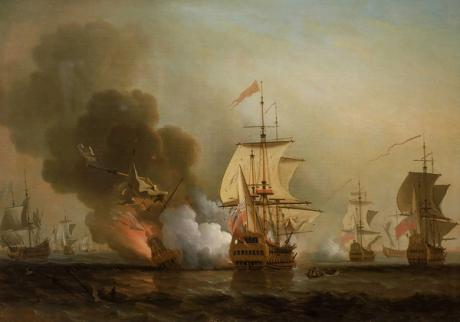
Controversy has resurfaced in Colombia over the San José, a Spanish galleon that sank in 1708 with a cargo of gold, silver, and emeralds. The oversight group Veeduría Nacional para el Control Social del Patrimonio Cultural Sumergido de Colombia (VNPCS) issued an open letter to the attorney general, alleging a lack of transparency, looting, and unauthorized interventions at the wreck site in 2016 and 2022. The group claims that the site's coordinates, considered a state secret, have been disclosed. The dispute involves multiple parties, including the Swiss treasure-hunting firm Maritime Archaeology Consultants (MAC), which helped locate the ship in 2015 and is now seeking compensation, and the US-based salvage company Sea Search Armada, which claims to have found the galleon in the 1980s and is seeking $10 billion. The ship was designated a protected archaeological area in 2024, placing it under the jurisdiction of the Colombian Institute of Anthropology and History (ICANH), but critics argue that earlier allegations of looting were ignored.

Authorities in New York return more than 650 looted antiquities, valued at nearly $14m, to India

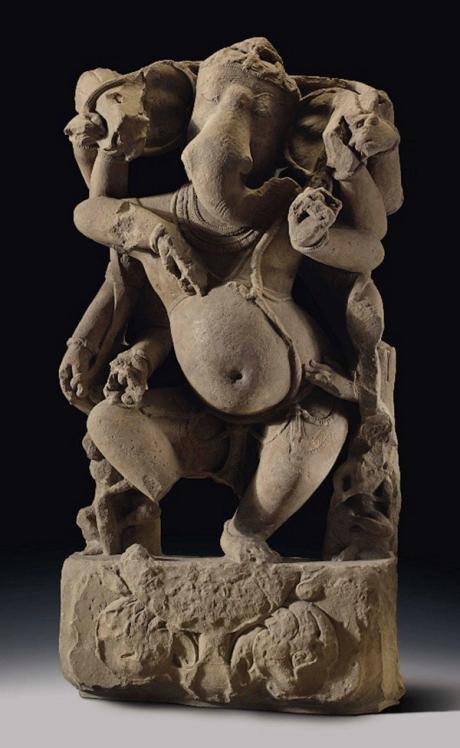
The Manhattan District Attorney's office, led by Alvin Bragg, returned 657 looted antiquities valued at nearly $14 million to Indian authorities in late March 2025. The pieces, recovered through investigations into criminal trafficking networks, include a $2 million bronze Avalokiteshvara stolen from a museum in Raipur, a $7.5 million red sandstone Buddha smuggled by convicted trafficker Subhash Kapoor, and a sandstone dancing Ganesha looted from a Madhya Pradesh temple that passed through dealer Doris Wiener and was sold at Christie's in 2012.

1,200-Year-Old Limestone Lintel was Inadvertently Repatriated to Mexico Instead of to Guatemala

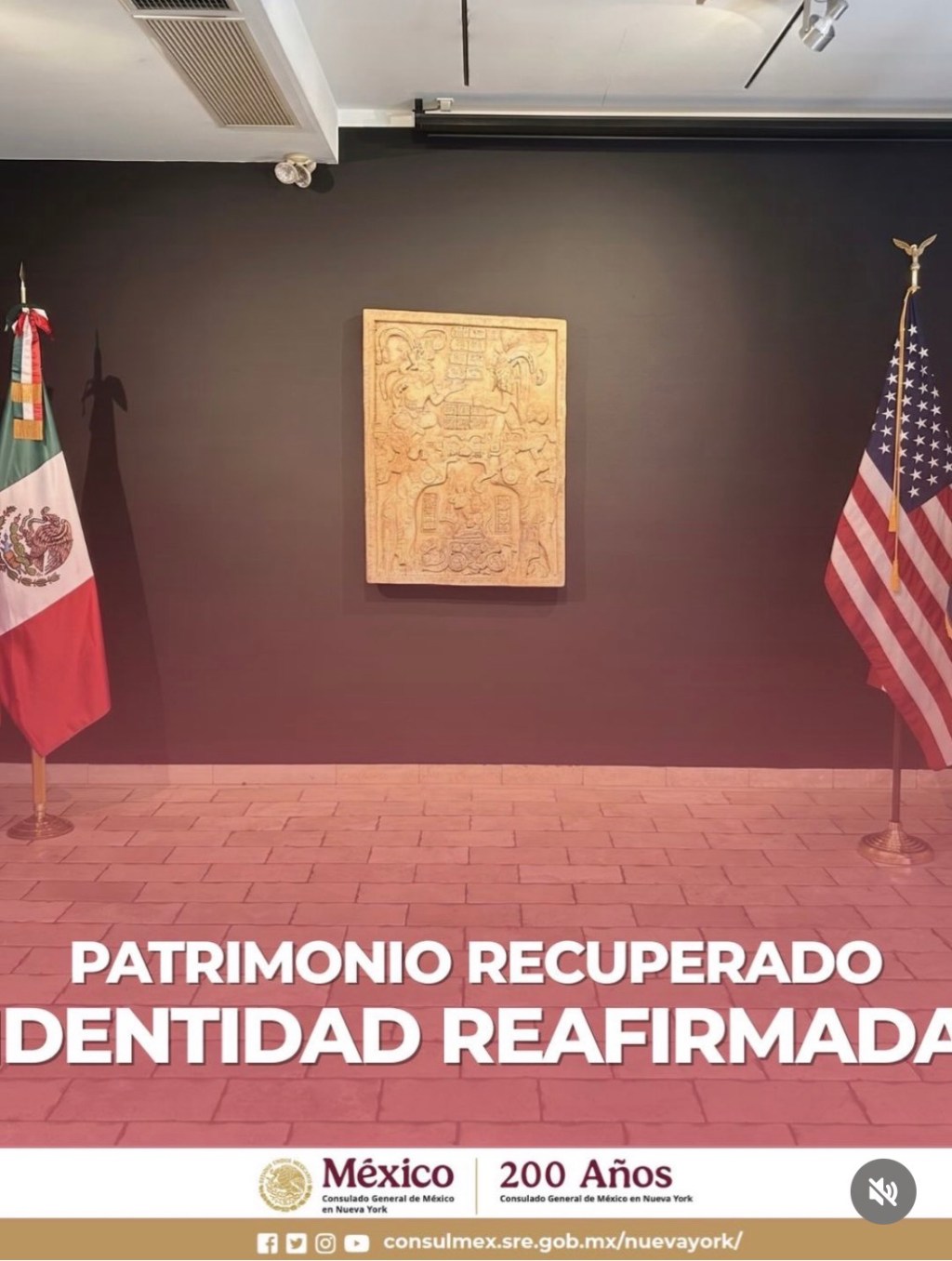
A 1,200-year-old limestone lintel, carved by the ancient Maya artist Mayuy and depicting a ruler of Yaxchilán, was repatriated from the United States to Mexico in mid-April after an American businessman turned it over to the Mexican consulate in New York. However, Guatemala's cultural minister has begun proceedings to reclaim the artifact, arguing that it was originally removed from the Guatemalan side of the Usumacinta River, not Mexico. The lintel was first documented by American explorers Dana and Ginger Lamb in the 1950s in an area called Laxtunich, and its exact provenance has been disputed by scholars.

Long-Lost 17th-Century Altarpiece Paintings Recovered After Nearly 100 Years

Spanish police have recovered two long-lost 17th-century altarpiece paintings by Baroque painter Lucas Valdés, which disappeared after being shown at the 1929 Ibero-American Exhibition of Seville. The works, depicting Old Testament scenes, were identified in an auction house catalog in September 2025, authenticated by the Spanish Historical Heritage Brigade, and returned to the Hospital of the Venerable Priests in Seville on May 20, 2026, after a mediation process with the consignors.