filter_list Showing 6 results for "Design" close Clear
search
dashboard All 866 museum exhibitions 490article local 125article culture 78article news 65trending_up market 41person people 17candle obituary 15article policy 15rate_review review 14gavel restitution 6
date_range Range Today This Week This Month All
Subscribe

Art Publisher Owes $102.2 Million in Damages for Late Robert Indiana Works

A Manhattan jury has ordered art publisher Michael McKenzie to pay $102.2 million in damages for creating unauthorized or adulterated versions of works by the late Pop artist Robert Indiana. The lawsuit, brought by Indiana’s former business partner the Morgan Art Foundation, alleged that McKenzie produced Indiana-related junk products that infringed trademark and copyright, including reproductions of Indiana’s iconic “LOVE” design and the artworks *The Ninth American Dream* (2001) and *USA FUN* (1965). The jury found McKenzie liable for exploiting Indiana in the final years of his life, after the artist granted power of attorney to his caretaker, Jamie Thomas.
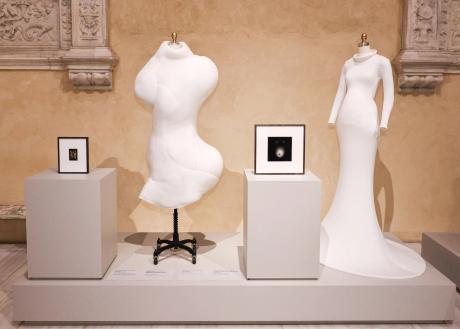
British artist says the Met ‘should take responsibility’ for dress copyright dispute

British artist Anouska Samms has publicly criticized the Metropolitan Museum of Art in New York over a copyright dispute involving a dress displayed in the Met Gala opening exhibition. Samms claims the museum included a garment called the Nervina Hair Dress, which she says is a copy of her collaborative work Hair Dress, created with fashion designer Yoav Hadari during their residency at the Sarabande Foundation. The Met had expressed interest in acquiring the original dress for its Costume Art exhibition but shelved those plans in December. Samms says she was not credited or paid, while Hadari acknowledges her IP rights over the textile but asserts the design and construction are his own. The Met has declined to comment, directing the artists to resolve the matter themselves.

Judge Orders Prado to Hold Disputed Velázquez Painting in Divorce Case

A Spanish judge has ordered the Museo del Prado in Madrid to take custody of a painting attributed to Diego Velázquez, which is at the center of a divorce dispute between steel magnate José María Aristrain and his ex-wife Gema Navarro. The work, a portrait of Philip IV linked to Velázquez’s early years in Madrid, was removed from Aristrain’s residence on March 17 and transferred to the Prado’s storage after Navarro filed a complaint alleging it had been wrongly withheld from her. The Ministry of Culture, acting with court and prosecutorial support, designated the museum as custodian until ownership is resolved. The painting had previously surfaced at auction, failing to sell in 2007 amid attribution doubts, before being acquired by Navarro in 2015 for €878,000.

$100 Million Award Made in Suit Over Unlicensed Robert Indiana Art

A New York jury has awarded $100 million in damages to the company that managed artist Robert Indiana's copyrights, ruling that an art publisher produced and sold unlicensed works derived from Indiana's iconic images. The publisher had created derivative pieces based on Indiana's designs without authorization, infringing on the exclusive rights held by the artist's longtime partner.

Une souscription pour la Maison-atelier Lurçat

The Académie des beaux-arts has launched a subscription campaign to acquire a monumental tapestry by Jean Lurçat, recently rediscovered by Christie's. The tapestry, titled *Bestiaire* (1930), measures 3 by 6.45 meters and was originally created for the artist's home-studio in Paris's 14th arrondissement. It will be publicly unveiled at Christie's Paris on May 6–7, 2025, before a private sale between the Académie and the auction house for €110,000. Donations are being collected online or by check to fund the purchase.

Man who pocketed tiles from medieval priory as boy returns them 60 years later

Simon White, now 68, returned three fragments of medieval clay tiles he took as a nine-year-old from Wenlock Priory in Shropshire during a family outing in the late 1960s. The tiles, dating from the late 13th to early 14th century, were discovered in an old toffee tin during a house move. White contacted English Heritage, which confirmed the provenance using family diaries and historical analysis. One fragment features a previously unknown dragon motif, exciting medievalists.