filter_list Showing 14 results for "Design" close Clear
search
dashboard All 864 museum exhibitions 490article local 124article culture 77article news 65trending_up market 41person people 17candle obituary 15article policy 15rate_review review 14gavel restitution 6
date_range Range Today This Week This Month All
Subscribe

The Big Review | Lacma's David Geffen Galleries ★★★★

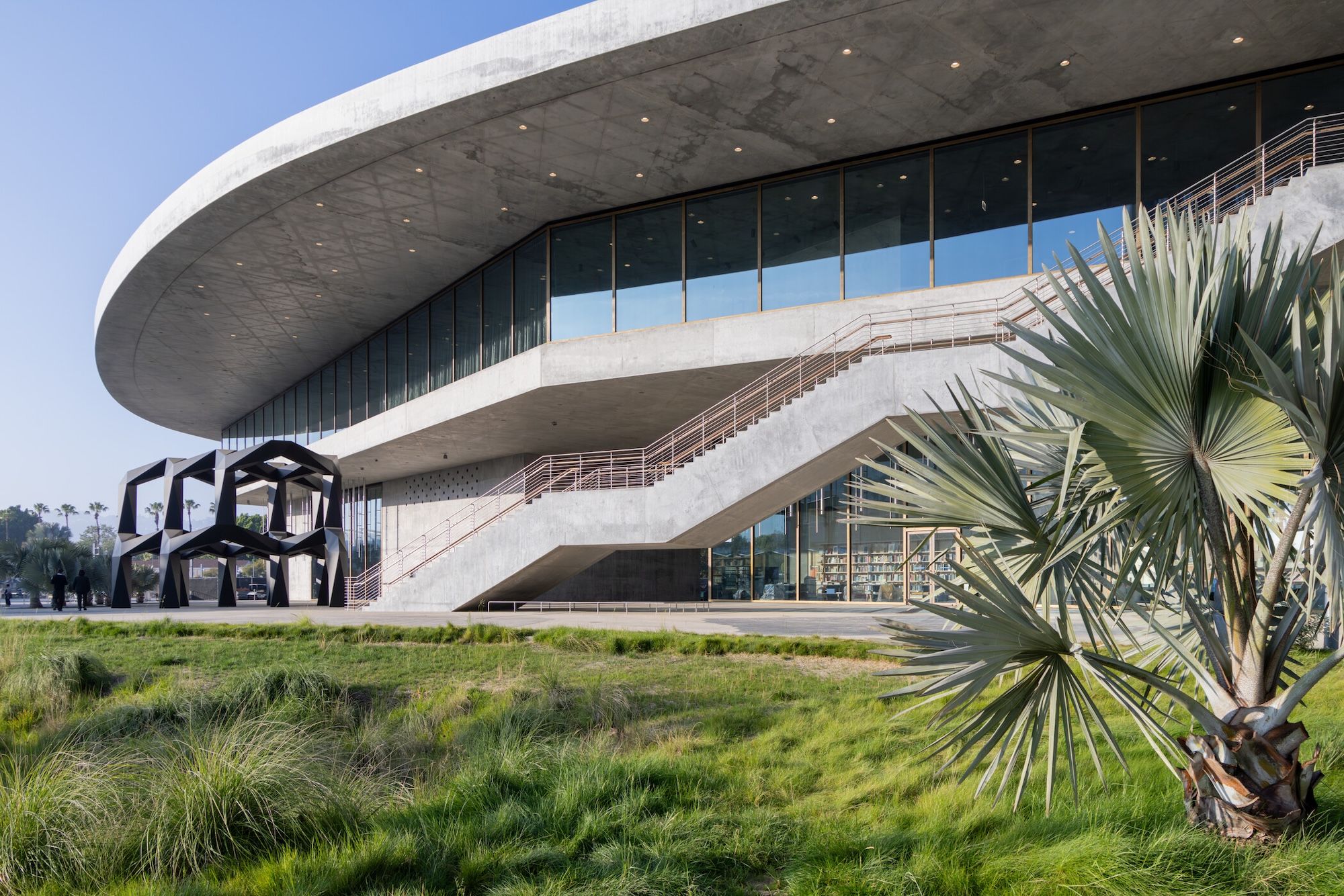
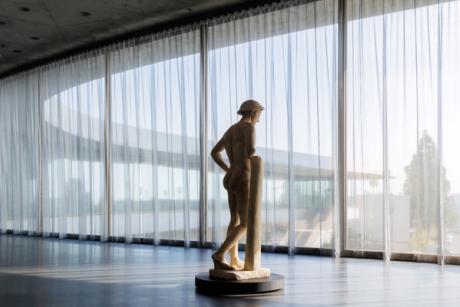
The Swiss architect Peter Zumthor's new $724 million building for the Los Angeles County Museum of Art (Lacma), now called the David Geffen Galleries, has opened after nearly two decades of anticipation. The swooping concrete-and-glass structure is praised for its harnessing of natural light and horizontality, creating a stunning showcase for antiquities and inviting the city inside with floor-to-ceiling windows offering views of the La Brea Tar Pits and Wilshire Boulevard. The building performs best with sculpture and decorative objects, with standout works including Liz Glynn's "The Futility of Conquest" (2023) and Manjunath Kamath's "Vikatonarva" (2024).

V&A Rising Voices review – can decades of stunning global art really be squished into three rooms?

The V&A Museum in London has mounted an exhibition titled "Rising Voices" that attempts to summarize three decades of the Asia Pacific Triennial, a vast survey of contemporary art from Asia, Australia, and the Pacific organized by Queensland Art Gallery. The show crams works from multiple continents, island nations, and Indigenous cultures into just three rooms, featuring bark cloth paintings from Papua New Guinea, Indigenous Australian abstracts, shark sculptures from the Torres Strait, and Tahitian textiles. Many works address colonialism, political oppression, and tyranny, with artists like Elisabet Kauage, Pala Pothupitiye, and Svay Ken using art as resistance. The exhibition includes pieces by Maryam Ayeen, Abbas Shahsavar, Lila Warrimou, Pennyrose Sosa, Aline Amaru, Brenda V Fajardo, and Heri Dono.

The Met’s Costume Institute Needs an Art History Lesson

The Metropolitan Museum of Art's Costume Institute spring exhibition, "Costume Art," pairs fashion with artworks from the Met's collection, including ancient Greek statues and Andy Warhol screenprints, alongside garments by designers from Charles James to CFGNY. Curator Andrew Bolton aims to suggest that fashion can expand understanding of art, but the show's juxtapositions often feel vague and sloppy, with only occasional resonant pairings like a Jean Paul Gaultier shirt and Joe Brainard drawing linked by queer artist lineage.

The Making of a Maintenance Artist

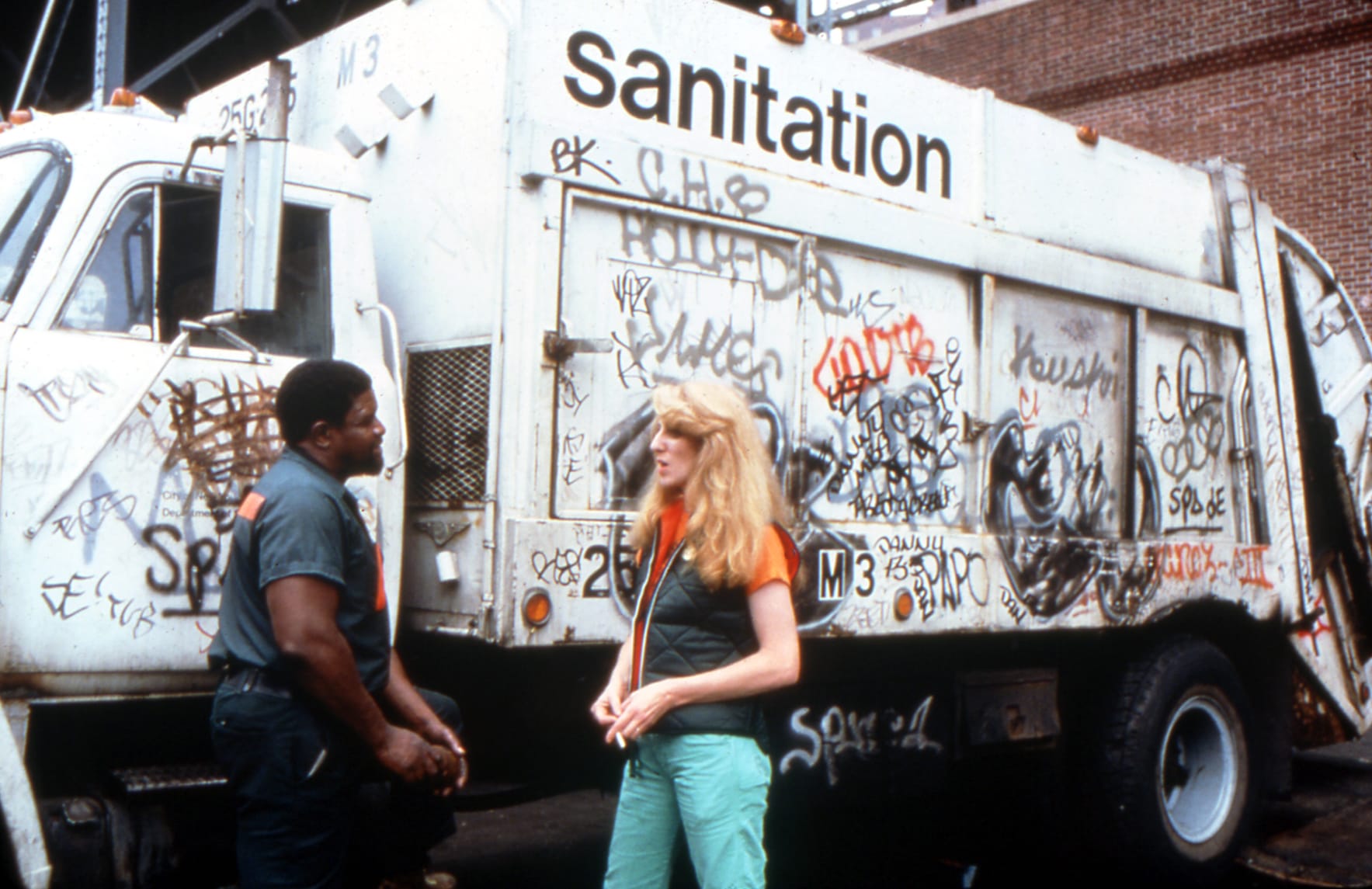
A new documentary titled "Maintenance Artist" (2025) traces the decades-long practice of Mierle Laderman Ukeles, a pioneering artist who focused on marginal, unpaid, and feminine labor. The film covers her career from her 1969 "CARE" manifesto, through her role as artist-in-residence at the New York City Department of Sanitation, to her first retrospective at the Queens Museum in 2017. It highlights her critique of art-world gender biases and her efforts to recognize discounted labor in all fields.

When the story has already been told -- ‘Gordon Parks: The South in Color’ at Jackson Fine Art

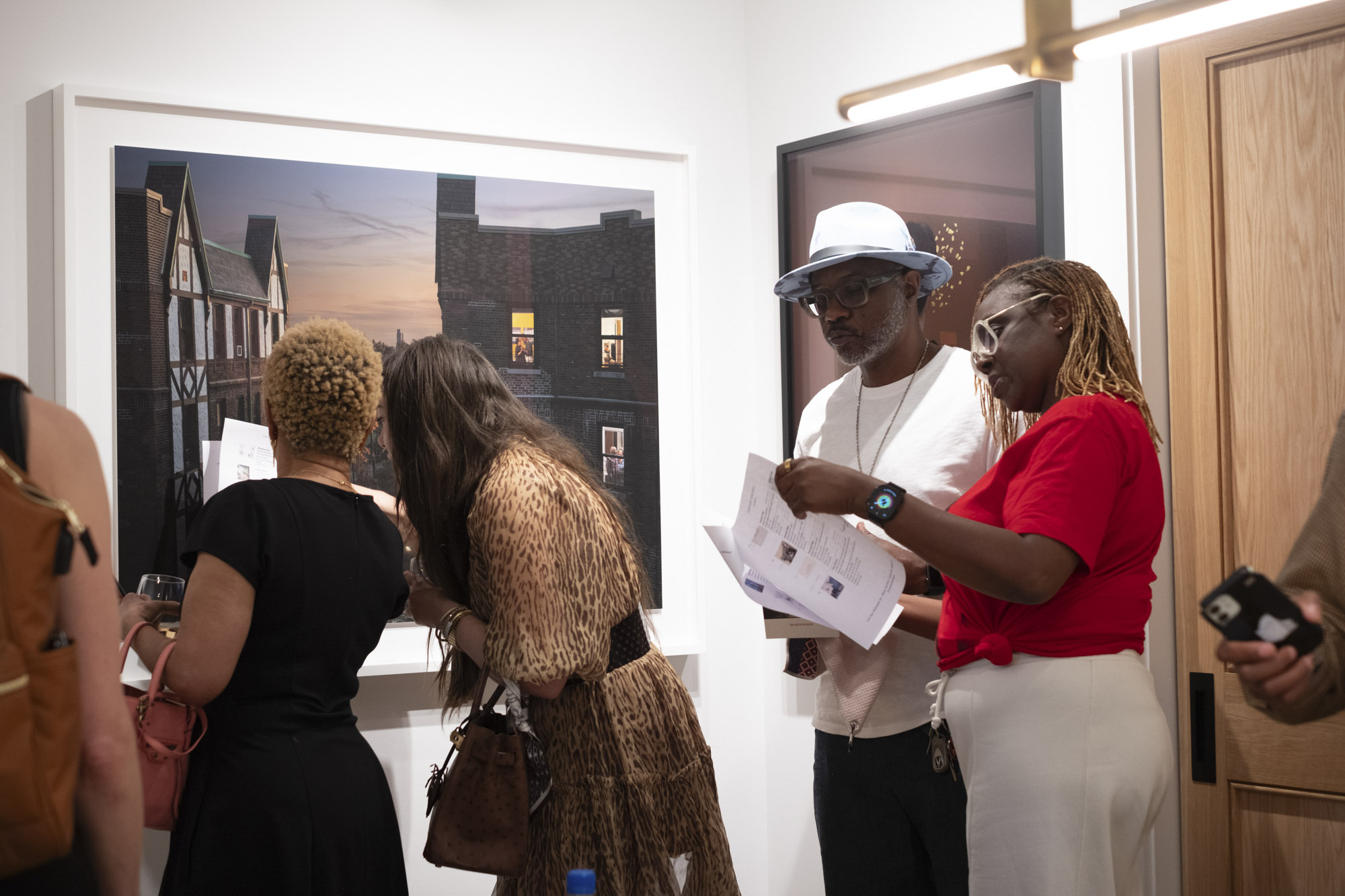
Gordon Parks: The South in Color, curated by Dawoud Bey, is on view at Jackson Fine Art in Atlanta through June 13. The exhibition celebrates the 20th anniversary of The Gordon Parks Foundation and the 70th anniversary of Parks’ 1956 Life magazine feature on segregation in the South. The show presents a broader selection of Parks’ photographs than the original magazine spread, including iconic works like In-Home Barbershop, Shady Grove, Alabama, 1956. The article, written by a photographer and writer for ArtsATL, reflects on the experience of seeing Parks’ work in person and contrasts the gallery presentation with the editorial framing of the Life feature.

Anni Albers Wasn’t Afraid to Start From Zero

Nicholas Fox Weber's new biography, *Anni Albers: A Life*, draws on his nearly 25-year friendship with the artist to offer an intimate, nuanced portrait of the pioneering textile artist. The book traces Albers's journey from her birth in Berlin in 1899, through her studies and teaching at the Bauhaus and Black Mountain College, her escape from Nazi Germany in 1933, and her later years in Connecticut. Weber, who serves as executive director of the Josef & Anni Albers Foundation, fills the biography with lively anecdotes—from her love of Kentucky Fried Chicken to her sharp wit—while correcting the "stock stories" she often repeated, revealing her personality and artistic dedication with rare depth.

Is This What “Made in America” Looks Like?

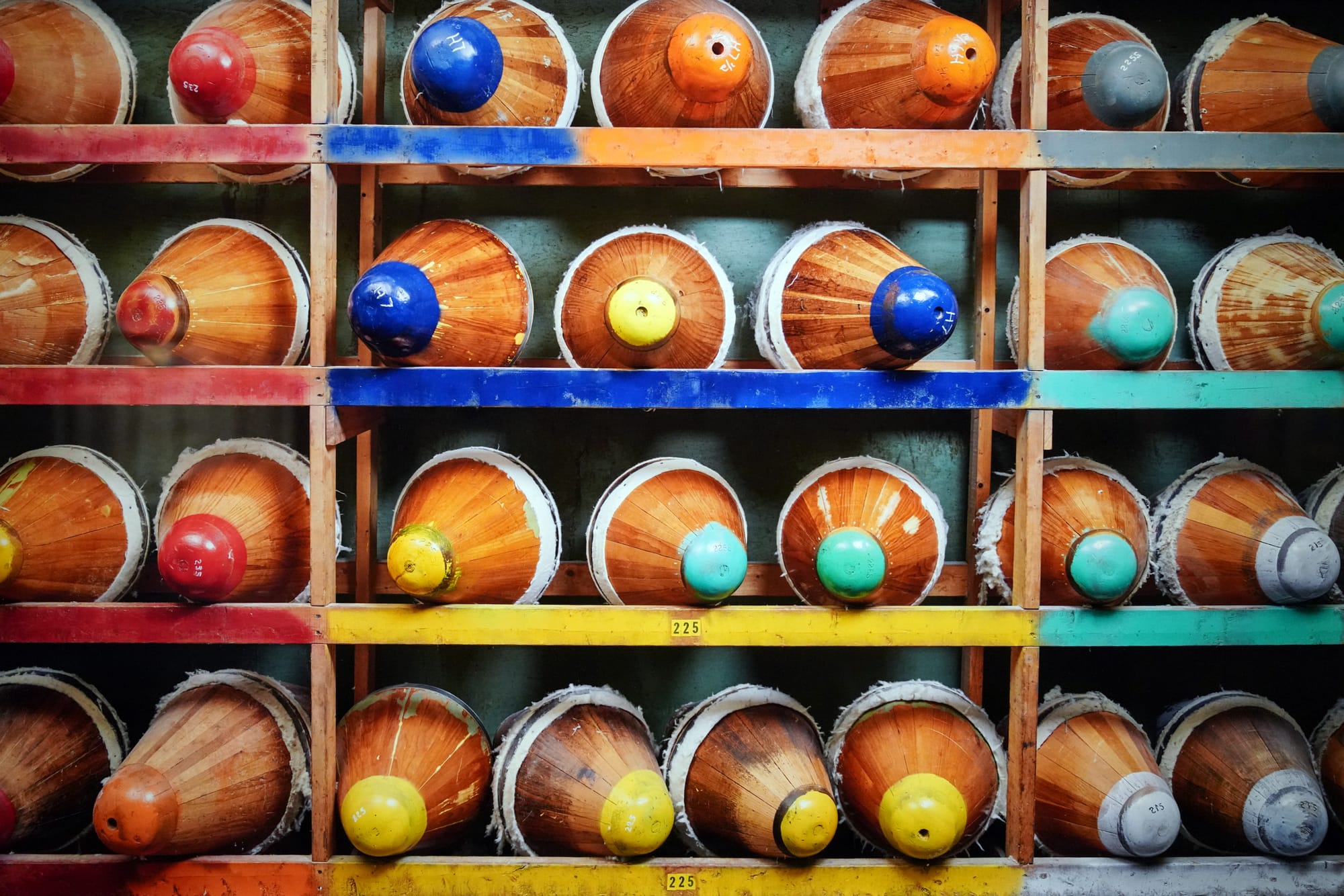
Christopher Payne's exhibition "Made in America: The Industrial Photography of Christopher Payne" at the Cooper Hewitt, Smithsonian Design Museum showcases 72 large-format photographs documenting active American factories and manufacturing processes. The trained architect turned photographer spent a decade visiting dozens of production sites across the United States, from the New York Times printing plant in Queens to the Bollman Hat Company in Pennsylvania, capturing workers' craftsmanship and the intricate steps involved in making everything from Peeps candies to jet engines. The exhibition is organized into three sections—traditional handcraft, large-scale production, and cutting-edge technologies—and coincides with the Smithsonian's celebration of the nation's 250th anniversary.

How Former Fashion Designer Emma Safir Turns Fabric into Beguiling Paintings

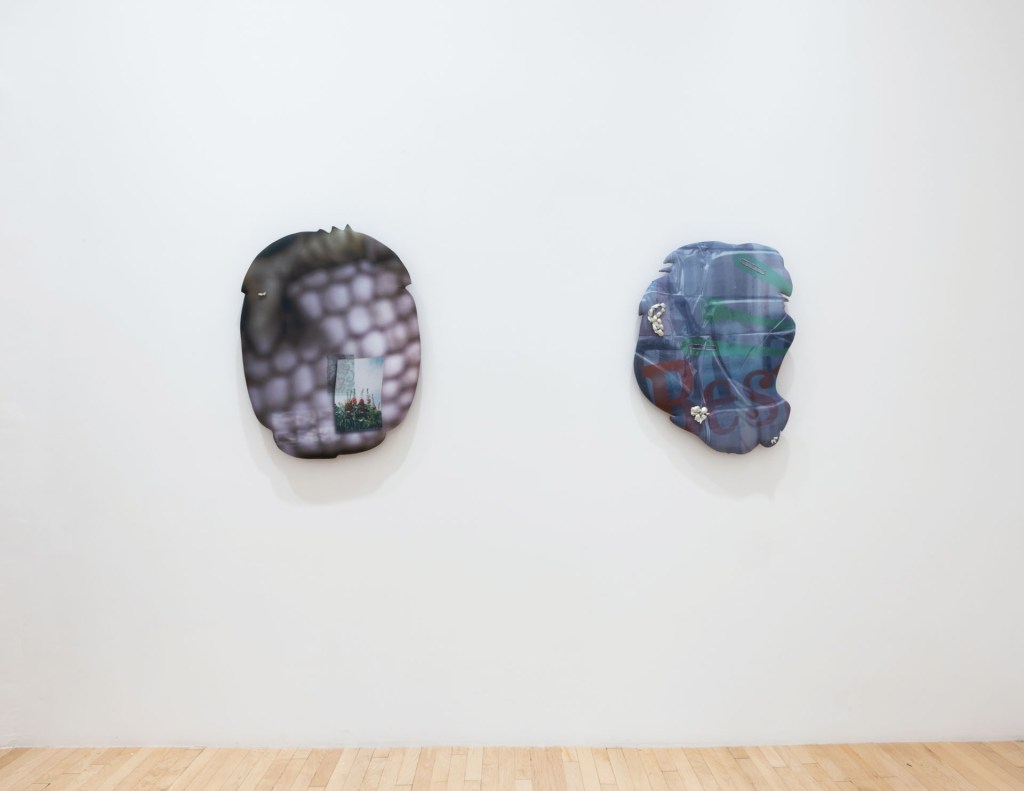
Emma Safir, a former fashion designer and printmaker, creates beguiling paintings and tapestries that blend textiles, digital printing, and traditional embroidery techniques. Her works, such as "APRICOT SILK" (2025) and "BABY DARLING" (2025), use smocking, glass beads, and shells to produce organic, jewel-toned surfaces that resist easy reflection or entry, challenging viewers to engage with layered material hierarchies.

Is there really an energy transformation in Marina Abramović's exhibition in Venice?

Nella mostra di Marina Abramović a Venezia c’è davvero una trasformazione di energia?

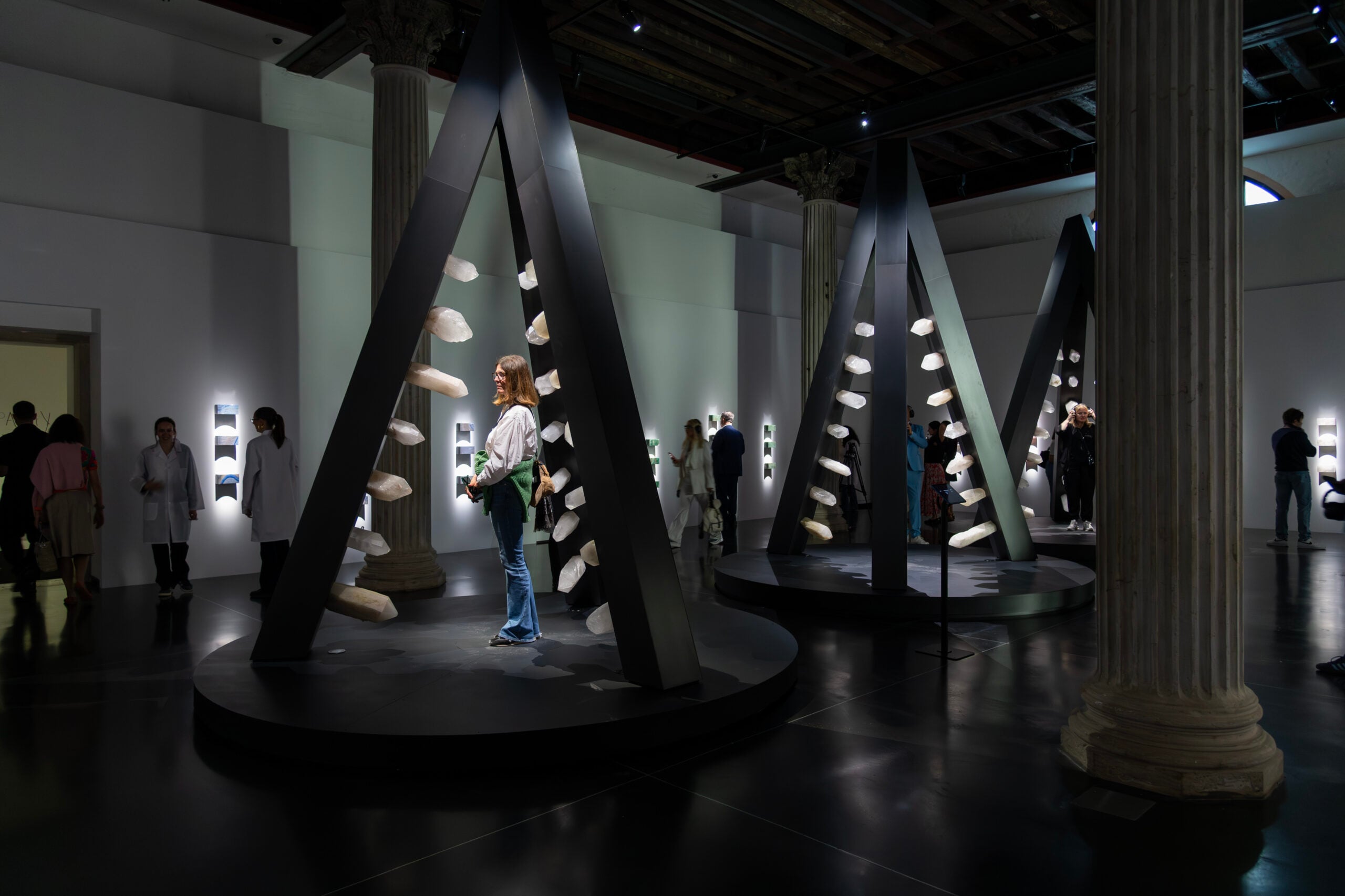
At the Gallerie dell'Accademia in Venice, Marina Abramović's exhibition "Transforming Energy" opens to the public from May 9 to September 30, 2026, as part of the 2026 Venice Biennale. The show is designed as an experiential device that moves beyond traditional exhibition formats, inviting viewers to determine their own presence through a sequence of rooms built around relationships between body, materials, and time. Crystals and locks of hair function not as decoration but as presences to be inhabited, demanding radical attention rather than spectacular participation. During the press conference, Abramović and curator Shai Baitel insisted that the materials, especially the crystals, possess real energy capable of directly affecting the viewer's body and perception, not merely as metaphor but as an active condition.

Blank Spaces. Sung Tieu by Sarah Johanna Theurer

Sung Tieu's installations, characterized by austere, bureaucratic surfaces, explore the hidden architectures of power embedded in everyday systems. The article examines her series of works that deconstruct administrative forms used in asylum procedures, reducing them to blank spaces and quantified grids to expose how institutional power operates through seemingly neutral documents. Her exhibition "In Cold Print" at Nottingham Contemporary physically manifests these themes by using steel fences to control viewer movement, drawing direct parallels between minimalist sculpture and the dehumanizing design of border controls.

Between Tropes and Treats at NADA New York

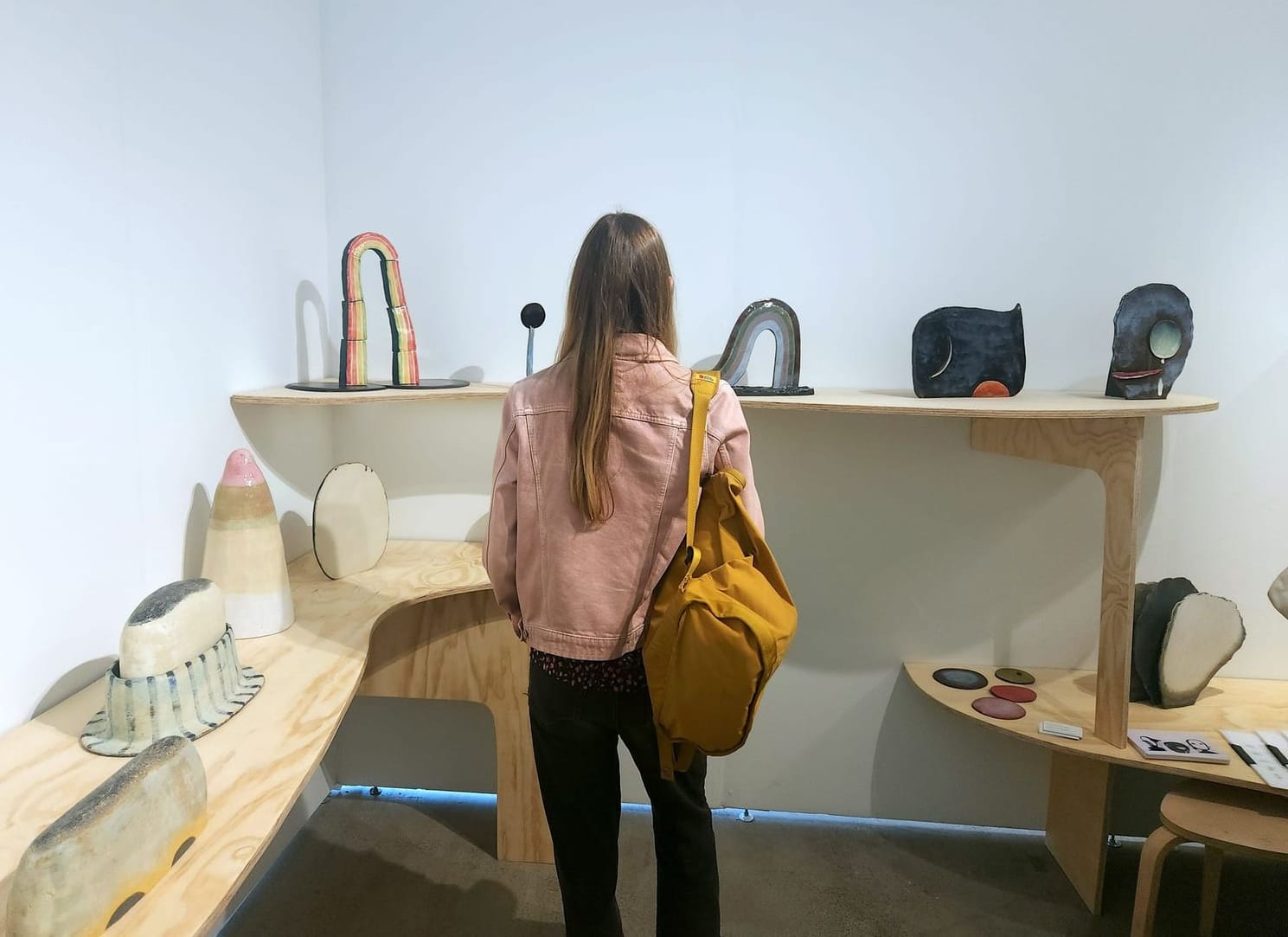
The 12th annual New Art Dealers Alliance (NADA) fair opened at the Starrett-Lehigh Building in Manhattan, featuring a wide array of contemporary works. Critic Rhea Nayyar notes that while many booths felt interchangeable due to prevalent trends like zany sculptures, shiny materials, and kitschy vibrancy, several standout pieces offered genuine engagement. Highlights include Elena Roznovan's maternal ephemera embedded in concrete with bondage tape, Kelly Tapia-Chuning's deconstructed serapes addressing colonial violence, and Niniko Morbedadze's folkloric illustrations.

The Anti-Pop Art of Domenico Gnoli

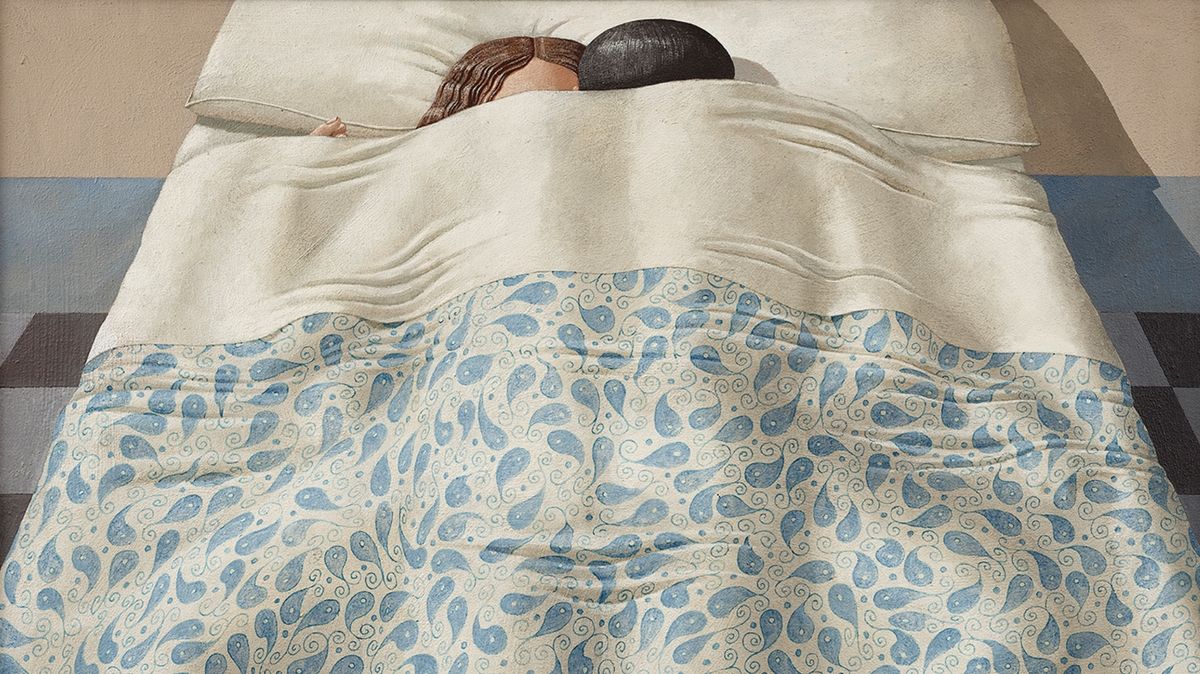
The article reviews "The Adventure of Domenico Gnoli," a retrospective at Lévy Gorvy Dayan in New York, focusing on the Italian artist's 1967 painting *L'inverno (Couple au lit)* and other works featuring intimate, fabric-rich domestic scenes. Gnoli (1933–1970), born into an art-world family, is often associated with Pop Art, but the author argues his work depicts a private, almost childlike world of memory and longing, contrasting with Pop's mass-produced commodities.

A Whole Lot of Nothing at the US Pavilion

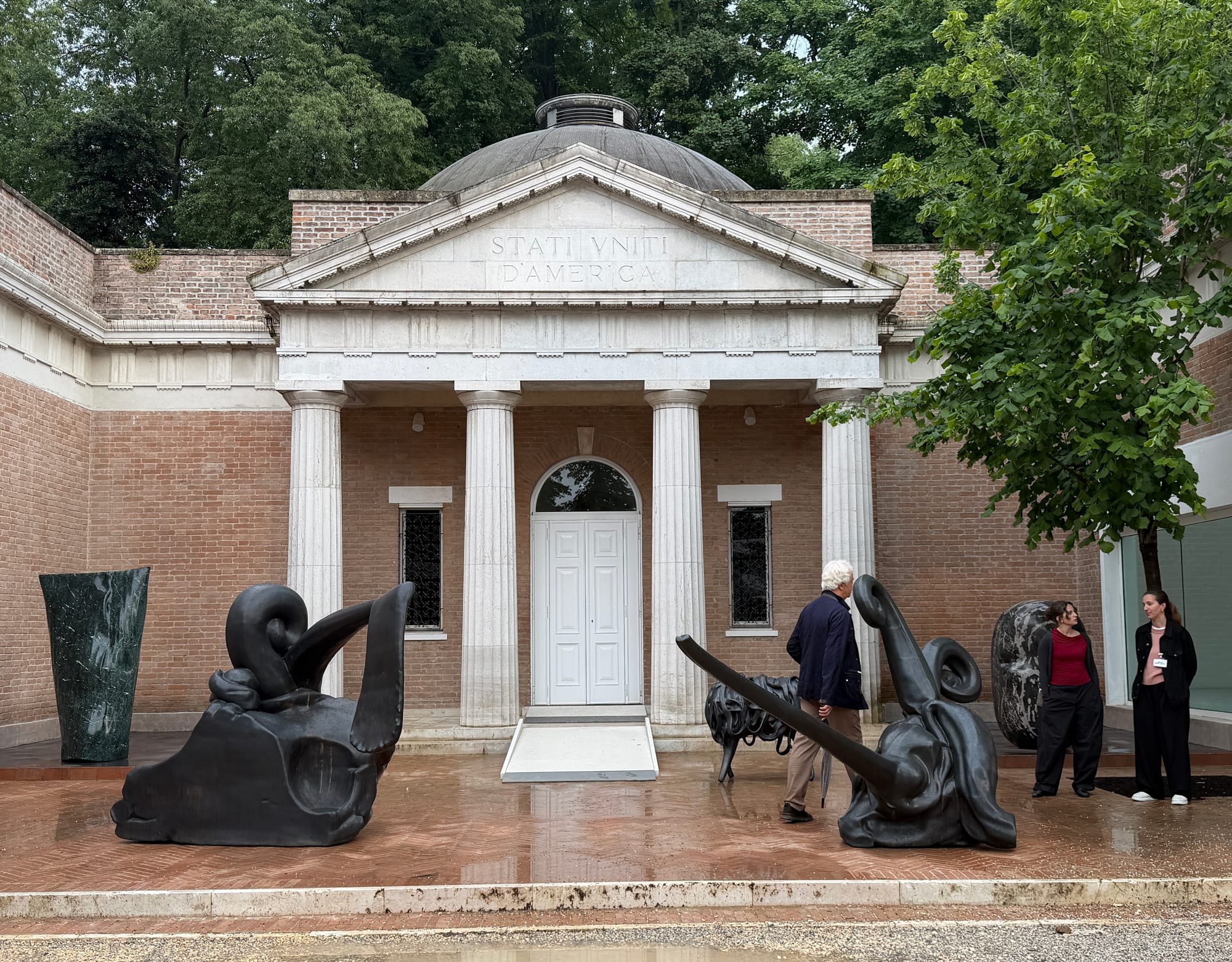
The US Pavilion at the 2026 Venice Biennale features sculptor Alma Allen's exhibition "Call Me the Breeze," curated by Jeffrey Uslip. The show presents untitled, amorphous sculptures in bronze, wood, and stone, including Colorado Yule marble. The selection process was controversial: after the Trump administration excluded the National Endowment for the Arts, the State Department initially picked artist Robert Lazzarini and curator John Ravenal, but that plan collapsed. The American Arts Conservancy, a new nonprofit led by Jenni Parido (a former pet food store operator with Mar-a-Lago ties), then took over, hiring Uslip, who approached Barbara Chase-Riboud and William Eggleston before settling on Allen. Donors include businessman John Phelan and fashion designer Tommy Hilfiger.

I wanted to hate the new LACMA. Then I went back

The article describes the author's evolving impression of the newly opened David Geffen wing at the Los Angeles County Museum of Art (LACMA), designed by architect Peter Zumthor. Initially visiting at 11am, the author found the $724 million, 110,000 sq ft building to be a "dismal, dated, inelegant brute," with thick bronze windows, dark concrete slabs, and bunker-like galleries. However, returning at 4pm, the author experienced a transformation: golden afternoon light warmed the concrete, illuminated the interiors, and revealed the building as a "brilliant innovation and true gift to the city." The article details the building's 20-year design evolution, challenges including fossil discoveries on site, and Zumthor's public frustrations with the compromised details.