filter_list Showing 10 results for "Washington" close Clear
search
dashboard All 703 museum exhibitions 288article news 84article policy 81trending_up market 79article local 68article culture 52person people 22rate_review review 10gavel restitution 10candle obituary 9
date_range Range Today This Week This Month All
Subscribe

georg kolbe museum to restitute nazi looted sculpture to heirs of holocaust victim

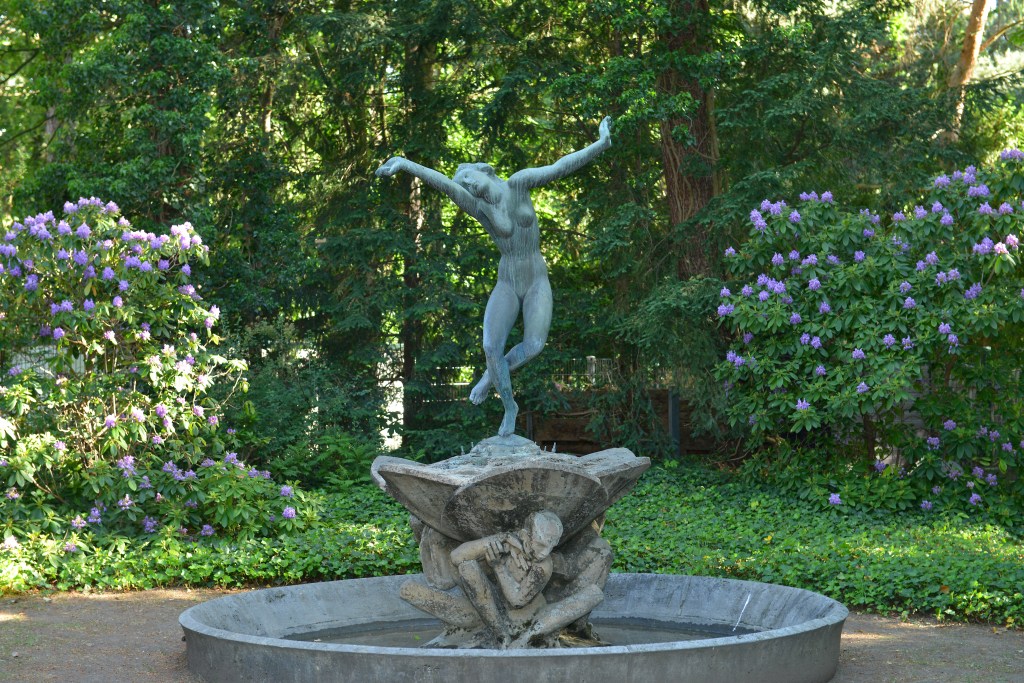
The Georg Kolbe Museum in Berlin has announced the restitution of the 1922 bronze sculpture 'Tänzerinnen-Brunnen' (Dancers’ Fountain) to the heirs of its original owner, a Jewish art collector and insurance executive named Stahl. Following an extensive provenance investigation, the museum determined that Stahl was forced to sell his villa and the sculpture under Nazi persecution and economic coercion in 1941, shortly before he was deported and murdered at the Theresienstadt concentration camp.

national gallery artemisia gentileschi provenance

The National Gallery in London is preparing to unveil Artemisia Gentileschi's 'Self-Portrait as Saint Catherine of Alexandria,' a major 2018 acquisition. However, the museum has quietly added the painting to its list of works that could have been looted during the Nazi era due to a gap in its provenance from 1615 to the 1940s, specifically concerning its ownership by the French Boudeville family during the war.

nefertiti bust egypt zahi hawass demands return

Egyptian archaeologist Zahi Hawass has renewed his demand for the return of the ancient bust of Nefertiti from Berlin's State Museums, citing the recent full opening of the Grand Egyptian Museum (GEM) near Giza as proof that Egypt can properly safeguard its artifacts. The bust, dating to ca. 1351–1334 BCE and discovered in 1912 by German Egyptologist Ludwig Borchardt, has been on display at the Neues Museum since 2009. Hawass, who has shifted his position over time—calling the bust not looted in 2010 but “brazenly stolen” in 2024—argues that Western museums can no longer claim Egyptian institutions lack adequate climate control and display standards.

msk ghent declines to return nazi looted painting

The Museum of Fine Arts (MSK) in Ghent has refused to return Gaspar de Craye's Nazi-looted *Portrait of Bishop Triest* to the heirs of its original owner, Samuel Hartveld. An independent commission found the painting was sold under duress after the German occupation of Belgium in 1940, but concluded that Hartveld and his family were later financially compensated by the city, leading MSK to retain the work. Jewish groups EJA and JID are contesting the decision, arguing that international principles mandate restitution regardless of compensation.

switzerland buhrle foundation settlement manet jewish heirs

The foundation overseeing the Emil G. Bührle collection has reached a settlement with the heirs of Jewish collector Max Silberberg over Édouard Manet's painting *La Sultane* (c.1871), allowing the work to remain on view at the Kunsthaus Zurich. Bührle, a German Swiss industrialist who profited from arms sales to Nazi Germany and used slave labor, amassed a collection now known to include many Nazi-looted artworks. The settlement follows a 2021 report by Raphael Gross finding that over a quarter of the 205 loaned works likely belonged to Jewish owners, sparking public protests and artist Miriam Cahn's withdrawal of her works from the museum.

mfa boston returns benin bronze robert owen lehman

The Museum of Fine Arts Boston has returned two Benin Bronzes—a 16th/17th-century terracotta and iron Commemorative Head and a 16th-century bronze Relief Plaque—to the Kingdom of Benin. The works were looted by British soldiers during the 1897 attack on Benin City, later acquired by collector Robert Owen Lehman Jr., and donated to the MFA in 2013 and 2018. The repatriation ceremony took place on June 27 at Nigeria House in New York, with the items handed over to Prince Aghatise Erediauwa and Ambassador Samson Itegboje. The MFA closed its Benin Kingdom Gallery in April and noted that three other Benin works donated by Lehman remain in its collection pending further provenance research.

national museum of asian art returns sculptures to cambodia

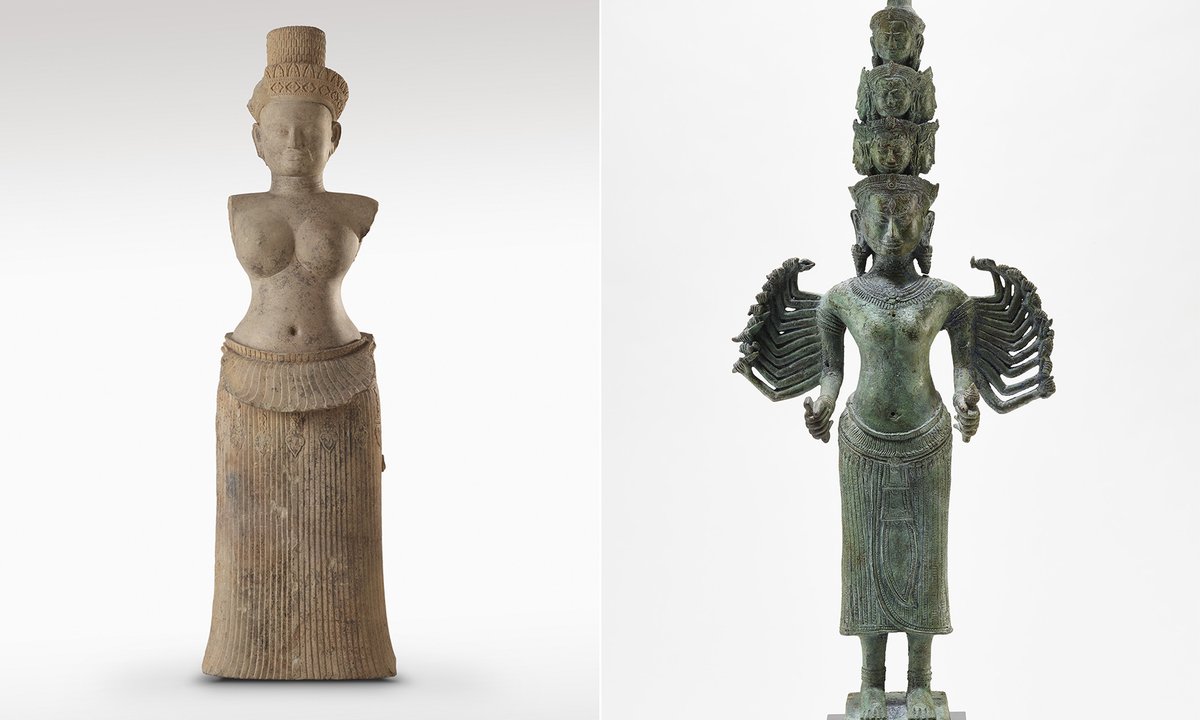
On December 11, the National Museum of Asian Art (NMAA), part of the Smithsonian Institution in Washington, D.C., announced it is returning three Khmer period sculptures to Cambodia. The works—a 10th-century Uma, a 10th-century Harihara, and a circa-1200 Prajnaparamita—were determined to have been likely looted during Cambodia’s civil war (1967–1975), based on research with Cambodian authorities, lack of export documentation, and links to dealers known for trafficking looted antiquities.

united state returned 7 ancient artifacts egypt mummified fish falcon head

The United States repatriated seven ancient artifacts to Egypt, including two mummified fish, a falcon head from the Ptolemaic period, a bronze amulet of Set, a basald scarab, a carved face, a painted wooden funerary figurine, and a stone head from a statue. The objects had been smuggled out of Egypt in separate cases between 2017 and 2018, and were returned through collaboration between U.S. and Egyptian government agencies. Two items were voluntarily handed over by an unnamed American citizen to the Egyptian embassy in Washington, D.C. The artifacts were formally transferred to Ambassador Wael el-Naggar at a ceremony reaffirming Egypt's commitment to recovering smuggled cultural property.

Smithsonian’s National Museum of Asian Art returns three sculptures to Cambodia

The Smithsonian’s National Museum of Asian Art (NMAA) in Washington, DC, has voluntarily returned three sculptures to the Cambodian government after an internal provenance investigation determined the objects were likely removed from Cambodia during the country’s civil war (1967-75). The returned artifacts include a tenth-century sandstone head of Harihara, a tenth-century sandstone sculpture of the goddess Uma, and a bronze statue of Prajnaparamita from around 1200. The museum’s director, Chase F. Robinson, stated that strong evidence linked the pieces to problematic dealers and a context of war and violence, and that no documentation supported their lawful export. The objects were donated to the NMAA by Arthur M. Sackler and Gilbert and Ann Kinney without proper provenance papers.

Smithsonian’s National Museum of Asian Art repatriates ancient silk manuscript to China

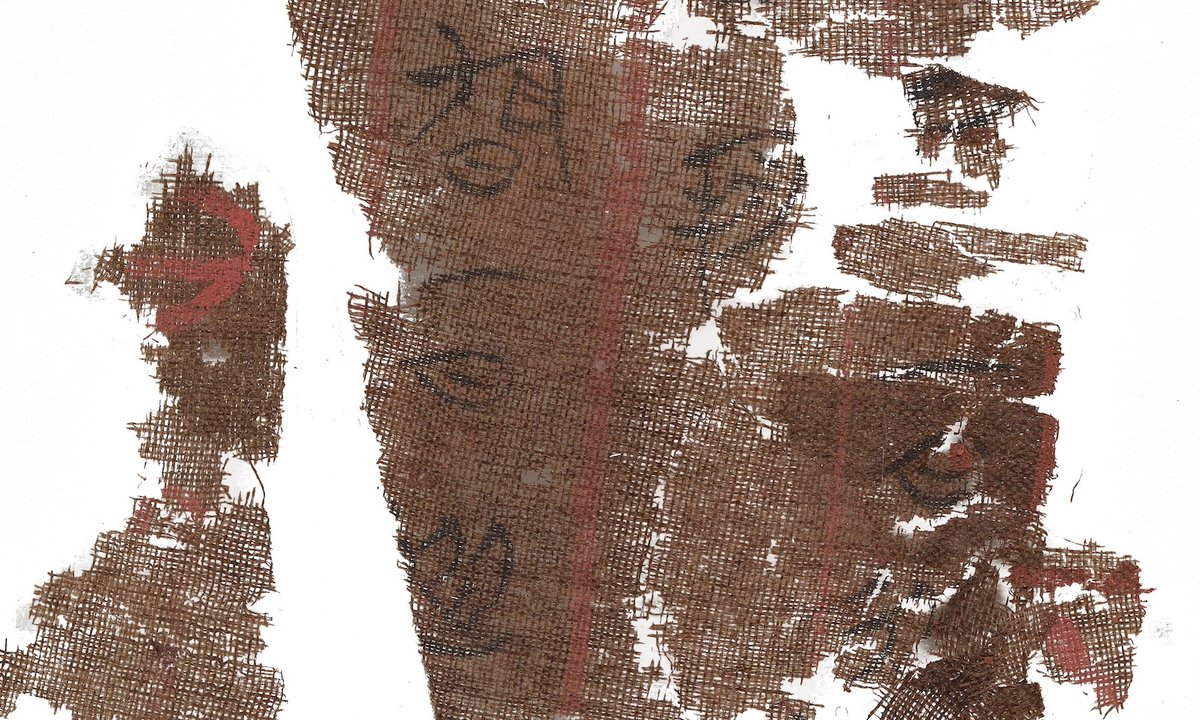
The Smithsonian’s National Museum of Asian Art (NMAA) in Washington, DC, has repatriated fragments of the ancient Zidanku Silk Manuscripts to China. The artifacts, dating from the fourth to third century BCE, were looted from a tomb near Changsha, Hunan Province, and smuggled into the US in 1946. The NMAA deaccessioned Volumes II and III of the manuscripts, which were given to the Arthur M. Sackler Gallery by an anonymous donor in 1992. The transfer was formalized in a ceremony at the Chinese embassy following an agreement signed earlier this month, with the fragments handed over to the National Cultural Heritage Administration (NCHA) of China.